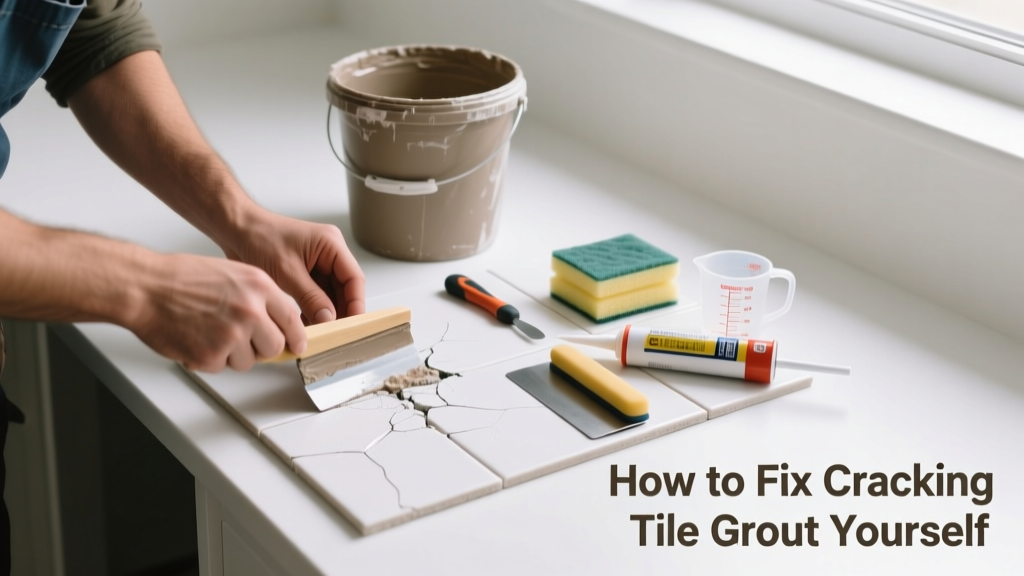
Cracked grout isn’t just ugly—it’s a red flag for moisture intrusion, mold risk, and eventual tile loosening. If you spot hairline splits or crumbling joints in your kitchen backsplash or bathroom floor, don’t wait: small cracks grow fast, especially in high-moisture zones. The good news? Most cases are fixable in under two hours with basic tools and $20 in supplies.
Quick Diagnosis
Before grabbing tools, identify the root cause—otherwise, your repair won’t last. Grout cracks rarely happen in isolation; they’re symptoms of underlying stress or failure.
- Movement in substrate (e.g., plywood subfloor flexing under weight)
- Poor initial installation (grout mixed too dry or applied over dusty tile edges)
- Excessive moisture exposure without proper sealing (common in showers and laundry rooms)
- Thermal expansion/contraction in unheated garages or sunrooms
- Impact damage from dropped tools or heavy furniture legs
Tools & Materials Needed
| Item | Purpose | Estimated Cost |
|---|---|---|
| Grout removal tool (oscillating multi-tool with carbide blade) | Cuts out old grout cleanly without chipping tile edges | $15–$45 |
| Epoxy or urethane-based grout (e.g., Spectralock or TEC Power Grout) | Flexible, waterproof, and crack-resistant—ideal for wet areas | $25–$38 per 1-lb bag |
| Grout float (rubber-edged) | Presses new grout into joints evenly and removes excess | $8–$14 |
| Microfiber grout sponge + bucket | Wipes haze without scratching; avoids mineral buildup | $6–$12 |
| pH-neutral grout sealer (e.g., Aqua Mix Sealer's Choice Gold) | Blocks water absorption while allowing vapor transmission | $18–$24 per quart |
Step-by-Step Fix
There are three reliable methods—choose based on crack severity and location:
- Surface Re-grouting (for hairline cracks & shallow damage): Clean joint with vinegar solution, apply thin layer of unsanded epoxy grout with finger or caulk gun, smooth with damp sponge, cure 24 hrs, then seal.
- Full Joint Replacement (most common): Remove ⅛"–¼" depth of old grout using oscillating tool, vacuum debris, mix new sanded grout to peanut butter consistency, force into joints with float at 45°, wipe diagonally after 15 mins, buff haze at 3 hrs, seal after 72 hrs.
- Grout Caulk Hybrid (for movement-prone corners & transitions): Replace cracked grout in inside corners or where tile meets tub with 100% silicone caulk rated for kitchens/baths (e.g., GE Silicone II). Tool smooth before skinning, let cure 48 hrs before wetting.
When to Call a Pro
DIY grout repair crosses into dangerous or ineffective territory when:
- More than 30% of grout lines are cracked, powdery, or missing—this signals substrate failure or improper thinset coverage beneath tiles
- Adjacent tiles are loose, hollow-sounding, or lifting (tap with coin; dull thud = delamination)
- Cracks reappear within 4 weeks of repair, especially in shower floors or exterior patios
- You discover black mold behind grout or under tiles—requires containment and remediation beyond surface repair
According to the Insurance Institute for Business & Home Safety's 2023 report, 68% of premature grout failures stem from inadequate substrate preparation—not poor grout choice.
Prevention Tips
Long-term grout integrity depends less on what you use and more on how you maintain it:
- Seal grout every 12–18 months in wet areas (test with water droplet—if it soaks in within 5 minutes, it’s time)
- Use a squeegee on shower walls after each use to reduce standing moisture
- Avoid abrasive cleaners like Comet or Magic Eraser on grout—sodium carbonate erodes cementitious binders
- Install movement accommodation joints every 24 ft in large tile floors (per ANSI A108.02)
Can I use bleach on cracked grout?
No. Bleach breaks down grout’s polymer additives and accelerates micro-fracturing. It also masks mold instead of killing roots—leading to regrowth behind the surface. Use hydrogen peroxide (3%) or a dedicated grout cleaner like Zep Grout Cleaner instead.
How long does new grout need to cure before sealing?
Cement-based grouts require full 72-hour cure before sealing; epoxy and urethane grouts can be sealed after 24 hours. Skipping this step traps moisture and causes hazing or efflorescence. Always check manufacturer specs—TEC Power Grout allows sealing at 12 hours, but most sanded grouts require longer.
Why does grout crack near the shower curb?
This is almost always due to lack of a proper expansion joint. Tile installed tight against the curb creates a rigid bond that can’t accommodate seasonal wood framing movement. The fix requires cutting a ¼" gap and filling it with color-matched silicone caulk—not grout.
Is there a grout that never cracks?
No grout is truly crack-proof, but epoxy and urethane formulations resist cracking up to 5x longer than standard cement grout in high-stress zones. Still, they won’t compensate for structural movement. For problem areas, consider flexible tile adhesive during full reinstallation.
Can I grout over old grout?
Only if the existing grout is solid, clean, and at least ⅛" deep. Surface-level regrouting fails 9 times out of 10 because new grout lacks mechanical bond. Always remove compromised material first—even if it means grinding back to sound substrate.
Does cracked grout mean my tiles are ruined?
Not necessarily. Cracked grout alone doesn’t indicate tile failure—but it’s a warning sign. Check for loose tiles by gently rocking corners with a flathead screwdriver. If any move, the thinset bond has failed and you’ll need tile lifting repair or replacement.
Fixing cracked grout isn’t glamorous, but it’s one of the highest-ROI home repairs you can do—stopping water damage before it reaches subfloors or drywall. Treat it like preventative maintenance, not cosmetic patching, and you’ll extend your tile’s life by a decade or more. Keep a grout touch-up kit in your utility closet: a small bag of sanded grout, a mini float, and a bottle of sealer make future fixes effortless.