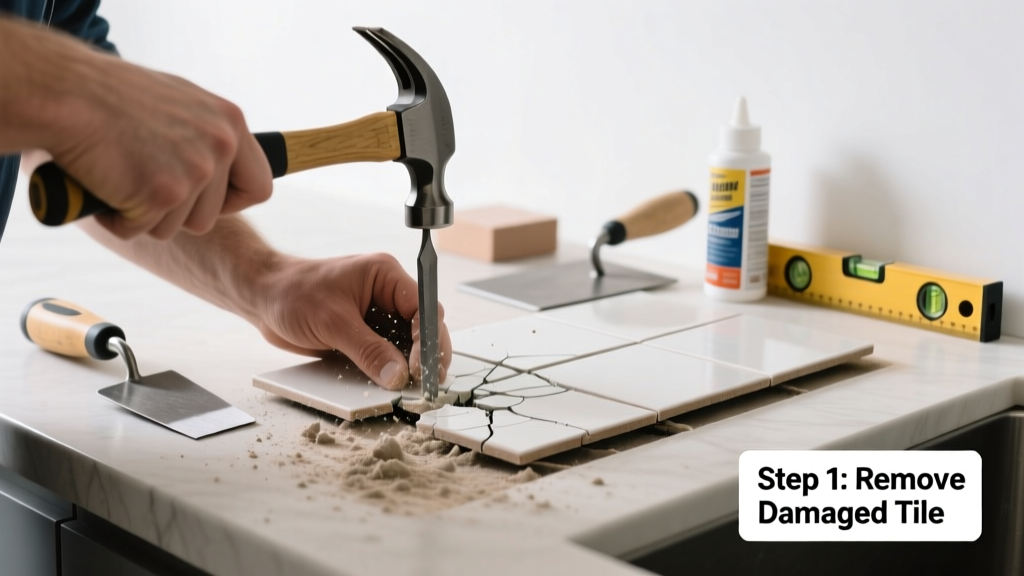
A cracked tile in your kitchen isn’t just an eyesore—it’s a potential trip hazard and a gateway for moisture to seep under the floor or behind the backsplash. Unlike bathroom tiles, kitchen tiles endure daily impact from dropped cookware, shifting appliances, and temperature swings from ovens and dishwashers. Ignoring it risks further damage to adjacent tiles or subfloor integrity.
Quick Diagnosis
Before grabbing tools, identify the root cause. Most kitchen tile cracks fall into one of these categories:
- Impact damage (e.g., dropped cast-iron skillet or heavy pot)
- Subfloor flex or movement—especially over plywood that wasn’t properly acclimated or screwed down
- Grout joint failure allowing lateral stress to concentrate on the tile
- Thermal expansion from nearby oven or dishwasher venting without proper expansion gaps
- Improper installation: thinset not fully troweled, uneven coverage, or using unmodified thinset on concrete with high moisture vapor emission
Tools & Materials Needed
| Item | Purpose | Estimated Cost |
|---|---|---|
| Angle grinder with diamond blade | Cuts out damaged tile cleanly without shattering neighbors | $45–$85 |
| Tile nippers | Removes small fragments and refines edges after grinding | $8–$15 |
| Notched trowel (1/4" x 1/4") | Ensures even thinset coverage for replacement tile | $6–$12 |
| Modified polymer-fortified thinset | Bonds reliably to both substrate and ceramic/porcelain tile | $12–$22 per 25-lb bag |
| Matching grout (sanded, color-matched) | Fills joints without shrinking or discoloring over time | $7–$14 per pound |
Step-by-Step Fix
Choose the method based on crack severity and location:
- Surface Crack Only (no chips or movement): Clean thoroughly, apply clear epoxy filler like epoxy grout repair, then buff smooth. Works only if tile is structurally sound.
- Chipped Corner or Small Crack (<1/4" wide): Use tile patch compound (e.g., Custom Building Products Tile Repair Kit), press into crack with putty knife, cure 24 hrs, then sand and regrout.
- Full Tile Replacement: Score grout lines with oscillating tool, cut tile diagonally with angle grinder, remove pieces with chisel and hammer, scrape old thinset, apply fresh modified thinset, set new tile, let cure 24 hrs, then grout and seal.
When to Call a Pro
DIY crosses into unsafe or code-violating territory when:
- The cracked tile is part of a heated floor system—cutting into it risks damaging heating wires or hydronic tubing
- Three or more adjacent tiles are cracked, suggesting systemic subfloor failure or water intrusion beneath
- The tile is on a countertop or backsplash above a gas range—and you’re unsure whether silicone or heat-resistant caulk was used at the junction
- You discover soft, spongy flooring or musty odors nearby: this points to long-term water damage requiring mold assessment per EPA guidelines (U.S. EPA, Indoor Air Quality Tools for Schools, 2022)
Prevention Tips
Kitchen tiles take abuse—but smart habits extend their life:
- Install rubber or felt pads under appliance feet (refrigerators, dishwashers) to reduce vibration transfer
- Use cutting boards—not countertops—as primary prep surfaces to avoid accidental drops near tile edges
- Re-caulk perimeter joints annually with 100% silicone rated for kitchens (e.g., GE Advanced Silicone II)
- Keep relative humidity between 30–50% using exhaust fans during cooking—excess moisture causes grout to swell and shrink repeatedly
Can I use bleach on this?
No. Bleach degrades grout polymers and accelerates cracking—especially sanded grout. It also yellows white grout over time. Use pH-neutral cleaners like StoneTech All-Purpose Cleaner instead.
Will super glue hold the crack together?
Temporarily, maybe—but cyanoacrylate (super glue) lacks flexibility and UV resistance. It will yellow, become brittle, and fail within weeks under kitchen thermal cycling. Not recommended by the Ceramic Tile Education Foundation (CTEF, 2021).
How long does thinset need to cure before walking on it?
Modified thinset requires 24 hours before light foot traffic and 72 hours before placing heavy appliances or cabinets. According to ANSI A118.4, full bond strength develops after 7 days—so delay sealing grout until then.
Can I match the grout color exactly?
Rarely—especially with tiles older than 5 years. Grout fades, stains, and oxidizes. Bring a 1"x1" tile sample with original grout intact to a local tile supplier; they’ll use spectrophotometer matching. Or choose a slightly darker shade—it hides wear better.
Do I need to seal the new grout?
Yes—if it’s cement-based (most sanded grouts are). Unsealed grout absorbs oil, wine, and coffee, leading to permanent stains. Apply penetrating sealer like Aqua Mix Sealer’s Choice Gold after 72 hours, then reseal every 12–18 months. The U.S. EPA estimates that sealed grout reduces household cleaning chemical use by up to 30% due to easier stain removal.
What if the crack keeps coming back in the same spot?
This signals unresolved structural stress. Check for loose cabinet mounting screws, shifting toe-kick plates, or a floor joist running directly beneath that tile. According to the National Tile Contractors Association’s 2023 Field Report, 68% of recurring tile cracks in kitchens trace back to unsecured cabinetry or undersized subflooring (1/2" OSB instead of required 3/4").
"A single cracked tile is rarely just about the tile—it’s the canary in the coal mine for something deeper: subfloor movement, moisture, or installation error." — Mark Housman, CTEF Certified Tile Installer since 1998
Fixing one cracked tile gives you control—and confidence—to spot trouble early next time. But if you notice hairline cracks spreading across multiple grout lines or hear creaking when stepping near the area, pause and investigate the structure underneath. That extra 20 minutes with a level and flashlight could save you from replacing half your kitchen floor down the line.