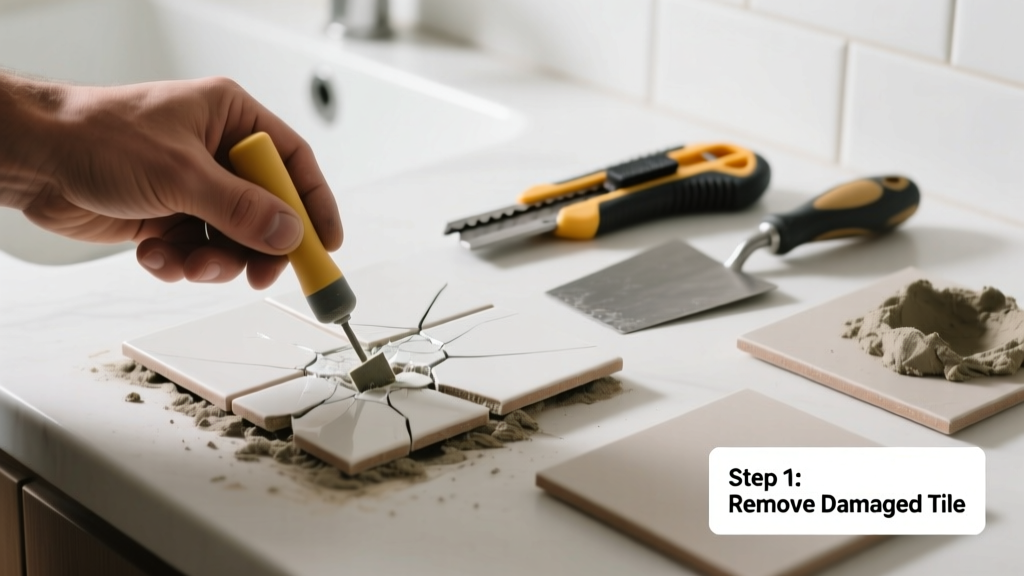
A cracked tile is more than an eyesore—it’s a warning sign. Small hairline fractures may seem harmless, but they can worsen from moisture intrusion, shifting subfloor, or impact damage. Catching it early lets you patch, replace, or reinforce before water seeps into the substrate or adjacent tiles loosen.
Quick Diagnosis
Before grabbing tools, identify the cause. Misdiagnosis leads to repeat failures. Common culprits include:
- Subfloor movement (especially in older homes with joist deflection over 1/360 span)
- Improper thinset coverage—less than 80% contact leaves voids that crack under load
- Impact from dropped cookware, tools, or furniture legs
- Thermal stress in unheated sunrooms or near radiant floor systems without expansion joints
- Moisture buildup beneath tile due to failed grout or missing waterproofing membrane
Tools & Materials Needed
| Item | Purpose | Estimated Cost |
|---|---|---|
| Grout removal tool or oscillating multi-tool with carbide blade | Cuts out damaged grout without scratching adjacent tiles | $12–$45 |
| Tile nippers or diamond-tipped glass cutter | Removes broken tile fragments cleanly; avoids chipping neighbors | $8–$22 |
| Notched trowel (1/4" x 1/4" square notch) | Ensures proper thinset thickness for full adhesion and even support | $6–$15 |
| Modified polymer-modified thinset (e.g., Mapei UltraFlex LFT) | Flexible, high-bond strength for areas prone to minor movement | $28–$38 per 50-lb bag |
| Epoxy-based grout (for wet areas like showers) | Non-porous, stain-resistant, and less likely to shrink or crack | $18–$32 per quart |
Step-by-Step Fix
Choose your method based on crack size, location, and tile type:
- For hairline cracks only (no lifting or hollow sound): Clean with vinegar solution, dry thoroughly, then fill with flexible urethane caulk tinted to match grout. Smooth with a damp finger and cure 24 hours before wetting.
- For cracked ceramic or porcelain tile (1–3 inches wide): Score grout lines with oscillating tool, gently tap tile center with hammer and cold chisel to fracture it inward, vacuum debris, apply thinset, press replacement tile, and tape in place for 24 hours.
- For cracked natural stone (marble, travertine) or large-format tile: Use epoxy injection kit (e.g., PC-Rich Epoxy) to stabilize cracks and restore structural integrity—do not remove unless spalling occurs.
- For multiple cracked tiles in a row: Suspect subfloor failure. Remove all affected tiles, inspect plywood or OSB for soft spots, screw down loose sections with 2" deck screws every 6", then re-tile using uncoupling membrane like Ditra-XT.
When to Call a Pro
Some situations demand licensed expertise—not just skill, but liability coverage and code compliance:
- Cracks radiating from a single point across 3+ tiles in a bathroom—often signals leaking supply line or failed waterproofing
- Cracks appearing within 90 days of new installation—warranty claim territory; contractor must verify substrate prep
- Any cracking in a heated floor system: improper wire spacing or sensor placement could cause thermal stress
- Cracks coinciding with wall separation, door sticking, or floor squeaking—signs of structural settlement requiring engineering assessment
"Over 62% of tile failures traced to substrate issues—not tile quality—according to the Tile Council of North America’s 2022 Field Failure Report."
Prevention Tips
Extend tile life by addressing root causes—not just symptoms:
- Install expansion joints every 20–24 ft in large rooms and at changes in plane (e.g., where floor meets wall or cabinet base)
- Use cement backer board instead of drywall behind shower walls—even with waterproof membranes
- Place rubber or felt pads under appliance feet and furniture legs to absorb impact
- Re-caulk perimeter joints annually with 100% silicone rated for wet areas
- Run a dehumidifier in basements or crawlspaces where relative humidity exceeds 60% year-round
Can I use bleach on this?
No. Bleach degrades grout sealers and accelerates efflorescence in porous tiles. For disinfecting cracked grout lines, use hydrogen peroxide (3%) mixed with baking soda paste—safe for most ceramics and non-corrosive to metal lath.
Will super glue hold a cracked tile together?
Temporarily—but it’s unsafe long-term. Cyanoacrylate lacks flexibility and fails under thermal cycling or moisture. It also prevents proper thinset adhesion if you later need to replace the tile. Skip the quick fix and use epoxy injection or full replacement instead.
How long does thinset need to cure before walking on it?
Minimum 24 hours for light foot traffic, but wait 72 hours before placing heavy objects or sealing grout. Cold (<60°F) or humid conditions extend cure time—check manufacturer specs. Thinset curing variables vary by polymer content and ambient conditions.
Do I need to replace the entire sheet if one mosaic tile is cracked?
Usually no. Mosaic sheets often allow individual tile replacement using tweezers and a grout saw. Carefully remove grout around the damaged piece, lift it with a dental pick, clean the substrate, and press in a matching tile with white PVA-modified adhesive. Let set 12 hours before grouting.
Is cracked grout the same as cracked tile?
No—grout cracks are common and often repairable with re-grouting or color-matched caulk. A cracked tile means the body itself fractured, which compromises structural integrity and invites water penetration. If you hear a hollow sound when tapping near the crack, the tile has debonded and must be replaced.
Can I paint over a cracked tile?
You can, but it’s cosmetic camouflage—not repair. Paint won’t stop moisture migration or prevent further cracking. For rental units or temporary fixes, use epoxy-based tile paint (e.g., Rust-Oleum Tub & Tile), but plan full replacement within 6–12 months. Epoxy paint limitations include poor abrasion resistance in high-traffic zones.
Fixing a cracked tile isn’t just about aesthetics—it’s about protecting your subfloor, preventing mold, and avoiding cascading damage. Most small repairs take under two hours with basic tools, but knowing when to pause and consult a pro saves far more than time. Keep spare tiles from your original install (they’re often discontinued within 18 months), and always document substrate conditions before and after repair—it helps future diagnostics and insurance claims if water damage escalates.