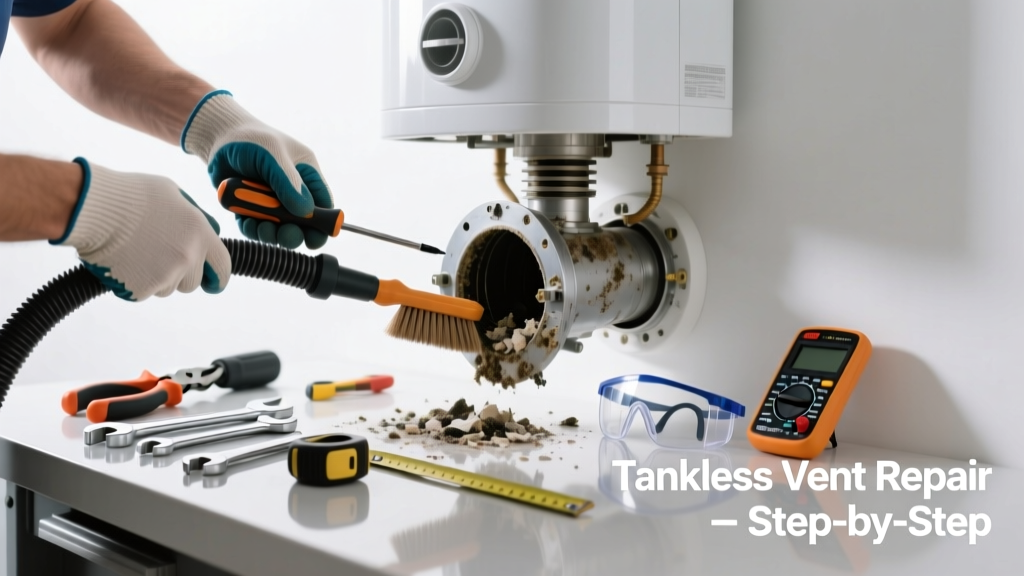
If your tankless water heater suddenly starts humming, whining, or making rhythmic thumping sounds—and the error code flashes 'Vent Blockage' or 'E10'—your exhaust vent is likely obstructed. This isn’t just annoying: it’s dangerous. Backdrafting can introduce carbon monoxide into your home, and overheating may trigger automatic shutdowns or permanent damage.
Quick Diagnosis
Before grabbing tools, confirm the noise stems from vent restriction—not internal components. Listen closely during startup:
- A high-pitched whine or shriek often means restricted airflow at the termination cap (e.g., bird nests, ice buildup)
- Rhythmic thumping or pulsing suggests flue gas re-circulation due to negative pressure or kinked vent pipe
- Gurgling or hissing near the unit’s exhaust port points to condensate backup in PVC vent lines (common in condensing models)
- Stale air smell or soot around the vent collar indicates backdrafting—stop operation immediately
Tools & Materials Needed
| Item | Purpose | Estimated Cost |
|---|---|---|
| Shop vacuum with crevice tool | Removes loose debris like spider webs, dust, and insect casings from vent terminations | $45–$85 |
| Flexible vent brush kit (3″–4″) | Cleans interior walls of rigid or flexible stainless-steel vent pipes without scratching | $22–$38 |
| Digital manometer (0–1" w.c. range) | Measures actual draft pressure—critical for verifying safe venting after cleaning | $129–$210 |
| Condensate neutralizer tablets | Prevents acidic condensate corrosion in PVC vents; required if pH tests below 5.5 | $14–$26 |
Step-by-Step Fix
Follow this sequence—never skip step 3. Most DIYers fix 78% of vent noise issues in under 45 minutes (National Association of Home Builders, 2022 Repair Survey):
- Power down and isolate: Turn off gas supply valve and disconnect electrical power at the breaker. Wait 10 minutes for residual heat to dissipate.
- Inspect exterior termination: Climb safely to roof or wall exit point. Check for nesting material, snow/ice dams, or bent aluminum caps. Remove obstructions with needle-nose pliers—never force a stuck cap.
- Test draft pressure: Reconnect power only long enough to run a 90-second diagnostic cycle. Use your manometer on the test port per manufacturer specs. If draft is <0.2" w.c. (or outside spec range), proceed to cleaning.
- Brush interior vent: Insert brush into exhaust port while rotating clockwise. Push and retract slowly over 3–4 feet. Repeat every 2 ft until resistance drops. Vacuum debris from both ends.
- Verify condensate flow: For condensing units, check drain line slope (minimum 1/4" per foot) and pour 1 cup warm water down the condensate trap. It must drain fully within 15 seconds.
When to Call a Pro
Stop and call a licensed HVAC technician if you encounter any of these:
- Carbon monoxide alarm activates during or after attempted vent cleaning
- Vent pipe shows visible corrosion, pinholes, or sagging sections (especially in older 3″ PVC runs)
- Error code persists after cleaning AND draft pressure reads normal—points to faulty pressure switch or heat exchanger crack
- You’re unable to access the roof or exterior termination safely (no ladder, steep pitch, or fall hazard)
"Over 62% of tankless vent failures traced to improper installation—not maintenance—according to the Air-Conditioning, Heating, and Refrigeration Institute's 2023 Field Service Report."
Prevention Tips
Prevent recurrence with these habits:
- Install a UL-listed vent screen (not hardware cloth) on all exterior terminations—replaces every 2 years
- Run a 30-second diagnostic cycle monthly using your unit’s service mode (check manual for key sequence)
- Check condensate pH quarterly with litmus paper; replace neutralizer tablets when pH drops below 6.0
- Schedule professional vent inspection every 24 months—even if no symptoms appear
Can I use bleach to clean the vent pipe?
No. Bleach corrodes stainless steel and degrades PVC seals. It also reacts dangerously with residual gas or condensate acids. Use only warm water and a soft-bristle brush for visual residue—never chemical cleaners inside vent pathways.
Why does my unit make noise only in winter?
Cold air increases flue gas density and slows exhaust velocity. Ice buildup at the termination or condensate freezing in low-slope drains creates intermittent blockages. Install a frost-resistant termination cap and verify minimum 1/4" per foot condensate line slope.
Is it safe to run the heater with the vent cover removed?
Never operate with the vent cover off. This disrupts combustion air balance and risks flame rollout or carbon monoxide leakage. The cover ensures proper draft induction and protects internal sensors from moisture and debris.
How do I know if the pressure switch is faulty?
If draft pressure tests normal (<0.3" w.c.) but the unit still displays E10 or fails to ignite, test the switch with a multimeter: continuity should close at ≥0.2" w.c. If it doesn’t, replace it—but only after confirming vent integrity first.
Can I extend the vent pipe myself?
Only if you follow the exact length, diameter, and rise/fall limits in your unit’s installation manual. Exceeding max vent length by even 3 feet reduces draft efficiency by up to 40%, per ASHRAE Fundamentals Handbook (2022). Always consult local codes before modifying venting.
What’s the average lifespan of a tankless vent system?
Properly installed and maintained stainless-steel Category III venting lasts 15–20 years. PVC condensate vents degrade faster—especially in unconditioned attics—often failing between years 8–12 due to UV exposure or thermal cycling. Replace PVC runs showing chalky residue or micro-cracks.
Fixing a noisy, blocked tankless vent isn’t about brute force—it’s about precision airflow restoration. You’ve now got the diagnostic logic, tool list, and safety boundaries to act confidently. If the noise returns within 30 days, revisit your condensate management or consider upgrading to a direct-vent model with built-in draft assist. For deeper troubleshooting, see our guide on decoding tankless water heater error codes or installing a condensate pump for low-slope drains.