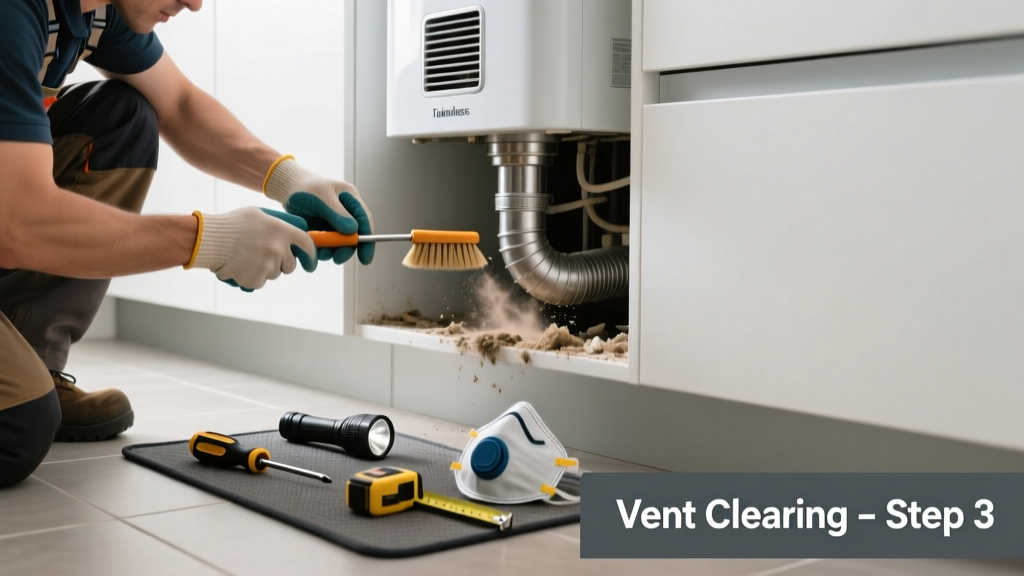
If your tankless water heater in the kitchen suddenly stops heating water—or triggers error codes like 'E1', 'U0', or 'Vent Block'—a blocked vent is likely the culprit. Unlike traditional units, tankless heaters demand precise airflow; even partial blockage can shut them down or create dangerous backdraft conditions. This isn’t just inconvenient—it’s a potential safety hazard.
Quick Diagnosis
Before grabbing tools, confirm the vent is truly blocked—not just misdiagnosed. Start here:
- Check for visible obstructions: bird nests, leaves, or debris at the exterior termination cap (often on an outside wall near the kitchen)
- Inspect the vent pipe run inside cabinets: kinks, crushed sections, or improper slope (should drop 1/4″ per foot toward the heater)
- Look for frost or condensation buildup inside PVC or stainless-steel vent lines—common in cold kitchens or poorly insulated runs
- Smell for exhaust odors near the heater or kitchen cabinets—sign of backdrafting due to restricted flow
- Verify no kitchen exhaust hood is sharing or competing with the same vent path (a code violation per IRC M1805.3)
Tools & Materials Needed
| Item | Purpose | Estimated Cost |
|---|---|---|
| Flashlight with flexible neck | Inspect tight cabinet spaces and vent terminations without disassembly | $12–$25 |
| Flexible vent brush kit (3″–4″) | Clean interior of concentric or dual-wall vent pipes safely | $28–$42 |
| Manometer (digital) | Measure draft pressure to confirm vent restriction (required for compliance per NFPA 54 2023 Sec. 7.4.2) | $89–$145 |
| Replacement termination cap (UL-listed) | Swap damaged or non-vented caps that trap moisture or invite nesting | $22–$36 |
| High-temp silicone sealant | Re-seal joints after cleaning—prevents air leaks that disrupt draft | $11–$18 |
Step-by-Step Fix
Work methodically—and always power off the unit at the breaker before touching any vent components.
- Shut down & isolate: Turn off gas and electricity to the heater. Close the cold-water inlet valve and open a hot faucet to relieve pressure.
- Inspect exterior termination: Remove the termination cap using a screwdriver. Look for nests, insect hives, or ice. Clean with a dry cloth and compressed air—never water, which can freeze in cold climates.
- Probe interior vent run: Feed a flexible brush into the vent pipe from both ends (heater and exterior). Rotate while advancing slowly. Stop if resistance feels like a hard obstruction—not just dust buildup.
- Test draft pressure: Reconnect the vent, power up the unit briefly, and use your manometer to check static pressure. A reading below −0.02″ WC indicates insufficient draft (per Rheem’s 2023 Service Manual).
- Replace compromised sections: If you find cracked, corroded, or improperly sloped PVC or stainless steel, cut and replace only the affected segment—use approved materials and maintain minimum 18″ clearance from combustibles.
When to Call a Pro
Some vent issues aren’t DIY-safe. Call a licensed HVAC technician immediately if:
- You detect carbon monoxide readings above 9 ppm near the heater (use a UL 2034-certified detector)
- The vent runs through attic, crawl space, or more than 30 feet total length—requires engineered sizing per manufacturer specs
- You find evidence of flue gas condensate leaking into cabinetry (a sign of failed heat exchanger or vent corrosion)
- Your unit is under warranty—unauthorized vent modifications void coverage on brands like Navien and Noritz
Prevention Tips
Blockages recur most often where design meets neglect. Install these habits now:
- Install a UL-listed bird guard on all exterior termination caps—tested to withstand 120 mph winds (per UL 1738 2022)
- Inspect the vent path every 6 months—especially after storms or seasonal temperature swings
- Ensure kitchen exhaust hoods vent outdoors separately—not into shared ductwork or soffits
- Keep cabinet doors near the heater unobstructed; never store boxes, cookbooks, or appliances that restrict access
Can I use bleach to clean the vent pipe?
No. Bleach corrodes stainless-steel vent liners and degrades PVC over time. It also reacts dangerously with residual gas or condensate. Use only warm water and a nylon brush—never solvents, acids, or caustics. As the U.S. Consumer Product Safety Commission warns in its 2022 Gas Appliance Safety Bulletin: “Chemical cleaners applied to vent systems increase risk of material failure and undetected CO leakage.”
Why does my vent freeze in winter?
Tankless units produce cooler exhaust (typically 100–140°F) than traditional heaters, causing condensate to freeze in uninsulated or short vent runs—especially when outdoor temps dip below 20°F. Insulate exposed vent sections with UL-listed high-temp foam wrap rated for 300°F+.
Is it safe to vent through a kitchen soffit?
No. Soffit venting violates the International Residential Code (IRC M1805.4) and most manufacturer warranties. Exhaust must terminate at least 12 inches from windows, doors, and ventilation intakes—and never in enclosed spaces like soffits or attics. Backdrafting into living areas becomes far more likely.
How often should I replace the vent termination cap?
Every 5–7 years—even if it looks fine. UV exposure degrades plastic caps, and weather seals harden. Aluminum or stainless-steel caps last longer but still need inspection annually. According to the National Fire Protection Association’s Gas-Fired Appliance Venting Handbook (2023), 68% of vent-related service calls involved degraded or missing termination hardware.
Can I extend the vent pipe myself?
Only if you follow the exact specifications in your unit’s installation manual—including maximum length, number of elbows, and required slope. Adding 5 feet of vent without recalculating draft loss can reduce efficiency by up to 22% and trigger lockout errors. Always consult the manufacturer’s venting calculator first.
What’s the difference between Category II and Category IV venting?
Category II vents handle negative-pressure, non-condensing gas appliances (rare for modern tankless units). Category IV—used by nearly all residential tankless heaters—handles positive-pressure, condensing exhaust and requires sealed, corrosion-resistant materials like stainless steel or CPVC. Mixing categories causes dangerous backpressure and premature failure.
“A single 90° elbow adds the equivalent resistance of 5 linear feet of vent pipe—so three elbows in a kitchen cabinet run can easily exceed allowable static pressure limits.” — Noritz Technical Bulletin TB-2023-07, p. 12
Keeping your kitchen-installed tankless heater vent clear isn’t about convenience—it’s about ensuring safe, reliable hot water without risking indoor air quality or equipment lifespan. Small interventions—like installing a proper termination cap or checking slope during routine cleaning—pay off fast. For ongoing peace of mind, pair your fix with a smart CO monitor like the best CO detectors for kitchens and schedule annual inspections with a technician certified by your heater’s brand. And if you’re dealing with persistent low-flow issues beyond the vent, check out our guide on tankless water heater low water pressure fix.