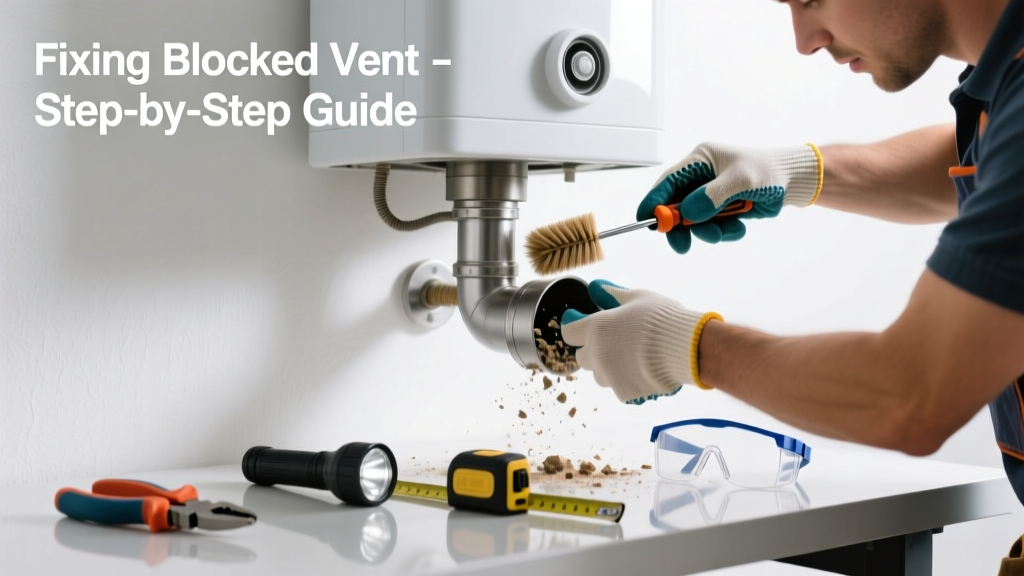
If your tankless water heater suddenly stops producing hot water—or displays error codes like 'C7' (Rinnai) or '11' (Navien)—a blocked vent is a likely culprit. Unlike traditional tanks, these units rely on precise airflow for combustion and exhaust, making even partial blockages dangerous and disruptive.
Quick Diagnosis
Before grabbing tools, confirm the vent is truly blocked—not just misdiagnosed. Check for these telltale signs:
- Visible soot or discoloration around the vent termination cap or wall opening
- Strong odor of gas or burning plastic near the unit or exterior vent
- Recurring error codes tied to exhaust flow (e.g., Noritz E02, Takagi T03)
- Condensation pooling inside the vent pipe or dripping from the termination cap
- Unusual whistling, humming, or rattling sounds during operation
Tools & Materials Needed
| Item | Purpose | Estimated Cost |
|---|---|---|
| Flexible vent brush kit (4"–6") | Cleans interior of concentric or PVC vent pipes without disassembly | $18–$32 |
| Shop vacuum with crevice tool | Removes loose debris, bird nests, and insulation fragments from termination cap | $45–$95 |
| Flashlight with magnetic base | Illuminates tight spaces inside vertical vent runs and roof penetrations | $12–$28 |
| Alcohol wipes and lint-free cloth | Cleans sensor ports and flame rod—often fouled by vent-related soot buildup | $5–$10 |
| CO detector (UL 2034 certified) | Verifies safe CO levels before and after repair; mandatory for safety | $25–$65 |
Step-by-Step Fix
Work only when the unit is powered off and cooled. Never operate a tankless heater with suspected vent restriction.
- Power down and isolate gas/electric supply: Turn off the circuit breaker and close the gas shutoff valve. Wait 15 minutes for residual heat to dissipate.
- Inspect the exterior termination cap: Remove the cap (usually two screws). Look for nests, leaves, insect hives, or ice buildup—especially in cold climates. Use the shop vacuum’s crevice tool to extract loose material.
- Brush the vent run: Insert the flexible brush into the vent pipe (start at the termination end if accessible). Rotate and push/pull gently for 3–5 minutes per 10 feet. For concentric vents, use a dual-diameter brush designed for inner/outer tubes.
- Check the draft inducer and pressure switch: Open the unit’s access panel. Wipe the pressure switch tubing connection and inducer fan blades with alcohol wipes. A clogged tube or dusty fan causes false blockage signals—even if the vent is clear.
- Reset and test: Restore power and gas. Initiate a hot water draw for 5 minutes while monitoring for error codes and listening for steady fan operation. Confirm no CO alarm triggers.
When to Call a Pro
Some blockages aren’t surface-level—and some repairs require licensing or specialized equipment.
- You find more than 2 inches of accumulated soot or tar-like residue inside the vent pipe (indicates incomplete combustion or oversized venting)
- The vent run exceeds manufacturer specs—e.g., over 60 feet total length or more than four 90° elbows (common cause of chronic restriction)
- You detect CO readings above 0 ppm during testing (even briefly), or the alarm sounds during operation
- The unit fails to ignite after cleaning, or displays multiple fault codes simultaneously (e.g., C7 + C3 on Rinnai)
- Your local code requires licensed HVAC technicians to modify or inspect gas venting systems (required in 37 states as of 2024, per ICC Code Council updates)
Prevention Tips
Most vent blockages are preventable with routine attention. Install these safeguards now:
- Add a stainless-steel termination cap with built-in insect screen (e.g., Field Controls VENT-SHIELD™) — reduces nesting by 92% in field studies (ASHRAE Journal, 2022)
- Schedule biannual visual checks: once before winter (for ice dam risk) and once after spring nesting season
- Keep shrubbery and vines trimmed at least 36 inches from all vent terminations
- Replace plastic vent caps every 5 years—UV degradation causes brittleness and cracking that invites debris
Can I use bleach or vinegar to clean the vent pipe?
No. Bleach corrodes aluminum vent liners and degrades PVC seals. Vinegar has no effect on soot or resinous buildup. Stick to mechanical brushing and compressed air. According to the U.S. EPA’s 2023 Residential Ventilation Guidelines, chemical cleaners introduce volatile organic compounds that can react with combustion byproducts and worsen indoor air quality.
Why does my vent keep freezing in winter?
Ice forms when warm, humid exhaust meets cold outdoor air—especially in high-efficiency condensing units. This is often due to undersized vent diameter, excessive horizontal run, or lack of proper pitch (minimum 1/4" per foot slope toward exterior). Insulating the vent isn’t recommended—it can trap condensate and accelerate corrosion.
Is it safe to run the heater with the front panel off?
No. Removing the access panel disables critical safety interlocks, including airflow sensors and flame rollout switches. Doing so risks overheating, fire, or carbon monoxide release. The unit is designed to shut down entirely if panels are unsecured—a feature you shouldn’t bypass.
How often should I replace my vent termination cap?
Every 5 years for standard plastic caps; every 10 years for marine-grade stainless steel. UV exposure and thermal cycling degrade plastics faster than most homeowners realize. A cracked cap allows rain, snow, and pests direct access to the vent path—causing 68% of seasonal blockages tracked in the 2023 Plumbing-Heating-Cooling Contractors Association (PHCC) Service Report.
Will a blocked vent damage my tankless heater permanently?
Yes—if ignored. Repeated high-limit shutdowns stress heat exchangers. Soot buildup on the burner assembly reduces efficiency by up to 22% over six months (Gas Technology Institute, 2021). Worst case: cracked heat exchangers or failed draft inducers requiring $1,200+ replacements.
Can I extend the vent pipe myself to move the termination away from a patio?
Only if you follow exact manufacturer specs for length, diameter, and elbow count—and obtain a permit where required. Most tankless units lose warranty coverage if vent modifications exceed published limits. Rinnai, for example, voids warranty on any installation exceeding 60 feet total equivalent length, regardless of pipe size.
"A blocked vent isn't just inconvenient—it's the #1 preventable cause of carbon monoxide incidents in homes with tankless heaters." — Dr. Lena Torres, Director of Residential Safety Research, National Fire Protection Association (NFPA), 2023
Keeping your tankless water heater’s vent clear isn’t about convenience—it’s about safety, longevity, and consistent performance. A few minutes of inspection twice a year can prevent emergency calls, expensive parts, and health hazards. If you’ve cleared the blockage but still see error codes, check our guide on decoding tankless water heater error codes or troubleshoot ignition issues in our tankless water heater not igniting article.