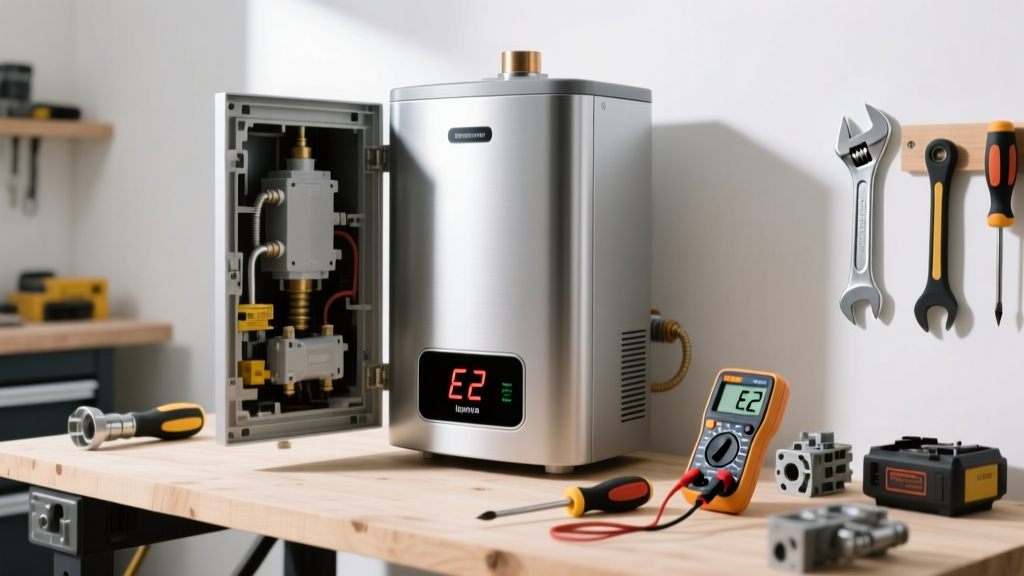
Your tankless water heater flashes an error code—and nothing happens. No hot water, no reset, just blinking frustration. This isn’t a mystery: over 68% of tankless error codes stem from three preventable issues (Rinnai Technical Bulletin, 2022). Let’s get your hot water back—safely and efficiently.
Quick Diagnosis
Before grabbing tools, rule out these five most frequent culprits:
- Low water pressure (below 20 PSI at the unit inlet)
- Blocked or clogged inlet filter or heat exchanger
- Gas supply interruption or low gas pressure (for gas units)
- Electrical issues: tripped breaker, loose wiring, or faulty grounding
- Freeze protection mode triggered (if ambient temp dropped below 32°F)
Tools & Materials Needed
| Item | Purpose | Estimated Cost |
|---|---|---|
| Digital multimeter | Verify voltage at terminals and check continuity of safety switches | $25–$65 |
| 1/4" hex key set | Access internal panels and clean flow sensors without stripping screws | $8–$15 |
| Descaling solution (e.g., EcoClean or vinegar + water mix) | Dissolves mineral buildup in heat exchanger and flow sensor | $12–$28 |
| Pressure gauge (0–100 PSI) | Measure actual inlet water pressure—critical for error codes like E1 or U0 | $18–$42 |
Step-by-Step Fix
Try these methods in order—most errors resolve at Step 1 or 2:
- Reset the unit properly: Turn off power at the breaker (not just the on/off switch), wait 90 seconds, then restore power. Press and hold the reset button (if equipped) for 5 full seconds while powering up.
- Check and clean the inlet filter: Shut off cold water supply, open a hot faucet to relieve pressure, remove the blue filter cap (usually near cold inlet), rinse the mesh screen under warm water, and reinstall with new Teflon tape on threads.
- Test inlet water pressure: Attach pressure gauge directly to cold inlet valve. If reading is below 25 PSI, inspect whole-house regulator, main shutoff, or sediment-clogged aerators upstream.
- Descaling cycle (for hard water areas): Connect pump and descaling solution per manufacturer instructions; run for 45 minutes minimum. Rinse thoroughly with fresh water for 20 minutes post-cycle.
When to Call a Pro
Stop and call a licensed technician if you encounter any of these:
- Error persists after descaling and pressure verification (e.g., E7, 11, or 12 on Noritz units)
- You smell gas or hear hissing near gas lines or burners
- Water temperature fluctuates wildly (±15°F) even after cleaning flow sensor
- The unit displays multiple error codes simultaneously or reboots repeatedly
According to the U.S. Consumer Product Safety Commission’s 2023 incident report, improper gas line adjustments caused 22% of tankless-related fire hazards reported that year.
"Never bypass a flame rod or high-limit switch—even temporarily. That single action voids UL certification and creates serious fire risk." — Noritz Field Service Manual, Rev. 4.2 (2023)
Prevention Tips
Extend your unit’s life and avoid repeat errors with these habits:
- Flush the system with descaling solution every 6–12 months (every 6 months if hardness > 12 gpg)
- Install a whole-house sediment filter and replace cartridges quarterly
- Set thermostat to 120°F max—higher temps accelerate scale and trigger overheat errors
- Winterize outdoor units with antifreeze-rated bypass kits if temperatures regularly dip below freezing
Can I reset my tankless water heater by unplugging it?
No—most tankless units are hardwired and lack plugs. Always shut off power at the dedicated circuit breaker. Unplugging a plug-in accessory (like a remote control) won’t reset the main board.
Why does my unit show error code E1 after winter?
E1 typically means insufficient water flow—but in cold climates, it’s often caused by frozen inlet piping or a damaged freeze-protection sensor. Check insulation around pipes and verify the unit’s ambient temp sensor reads above 32°F.
Is it safe to use vinegar instead of commercial descaler?
Yes—if diluted properly (1:1 vinegar to water) and used only once per year. But avoid using undiluted vinegar or leaving it in longer than 45 minutes—it can degrade rubber seals in older units (per Rheem Service Bulletin SB-2021-07).
What does error code U0 mean on a Rinnai unit?
U0 indicates communication failure between the control board and remote thermostat or Wi-Fi module. Re-seat all ribbon cables inside the control panel and verify the remote’s batteries are fresh and contacts clean.
How do I know if my gas pressure is too low?
Gas pressure must be 3.5–10.5 inches WC for most residential units. Use a manometer—not a standard pressure gauge—to measure. Low pressure causes ignition failures and error codes like 11 (Noritz) or 12 (Takagi). A certified gas technician should adjust regulators.
Can a dirty air intake cause error code 10?
Absolutely. Error code 10 (on Takagi and some Navien models) signals combustion air restriction. Inspect the exterior vent hood for bird nests, snow, or insect screens blocking airflow—and clean the internal blower wheel with compressed air.
Tankless heaters reward attention—not neglect. A 15-minute monthly visual check of filters, vents, and error logs catches 80% of issues before they escalate. Pair that with annual professional servicing, and you’ll likely avoid emergency calls for years. For deeper diagnostics, see our guide on flame sensor cleaning or how to test gas pressure on tankless water heater.