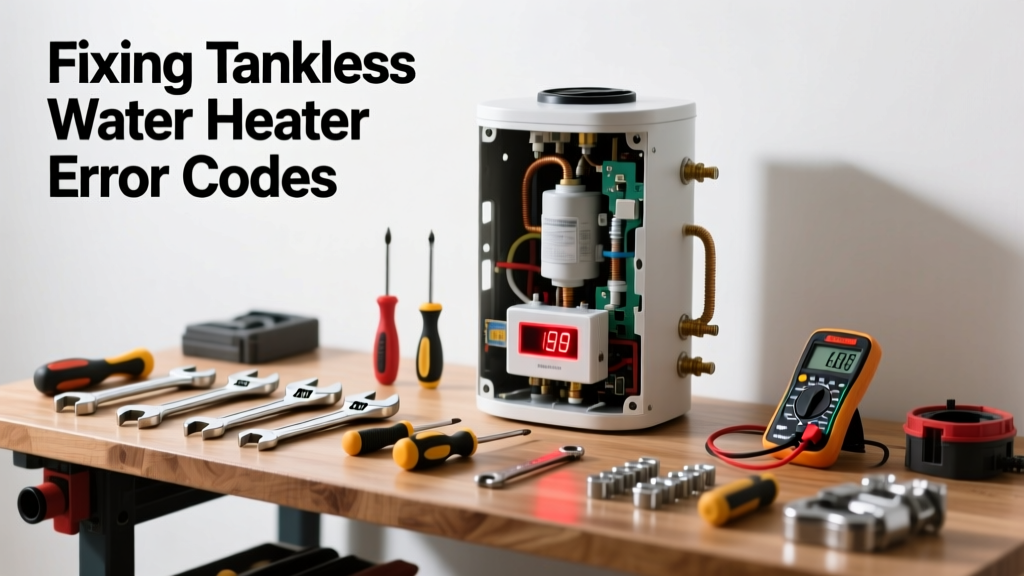
Your tankless water heater just flashed an error code—and the hot water’s gone. Don’t panic. Most codes point to simple, fixable issues like low water flow, gas supply hiccups, or sensor dust—not a dead unit. With the right tools and 20 minutes, you can often restore hot water yourself.
Quick Diagnosis
Before grabbing tools, check these five most frequent culprits behind tankless error codes (e.g., E1, U0, 11, 12, or C1):
- Low water pressure or clogged inlet filter
- Gas valve closed or insufficient gas pressure (for gas units)
- Electrical power interruption or tripped breaker
- Exhaust vent blockage or frozen condensate line (in cold climates)
- Overheating due to scale buildup in heat exchanger
Tools & Materials Needed
| Item | Purpose | Estimated Cost |
|---|---|---|
| Flashlight | Inspect tight spaces behind and above unit | $5–$15 |
| Small wire brush or soft toothbrush | Clean air intake and exhaust vents | $3–$8 |
| Non-contact voltage tester | Verify power is off before servicing electrical components | $12–$25 |
| 5/16" hex key or adjustable wrench | Access inlet filter housing and gas valve adjustments | $6–$18 |
| White vinegar (1 gallon) | Descale heat exchanger if code relates to overheating or flow restriction | $4–$7 |
Step-by-Step Fix
Follow this sequence—start simple and escalate only if needed:
- Reset the unit: Turn off power at the breaker and gas valve (if applicable) for 5 full minutes. Restore both, then press the reset button (usually recessed near control panel) or hold the power button for 10 seconds.
- Clean the inlet water filter: Shut off cold water supply, open hot faucet to relieve pressure, unscrew filter cap (typically on cold inlet pipe), remove mesh screen, rinse under tap, reinsert, and tighten hand-tight only.
- Check venting and airflow: Inspect exterior exhaust hood for bird nests, snow, or leaves. Use flashlight and brush to clear debris from intake and exhaust ports. Ensure minimum 12" clearance around unit per manufacturer specs.
- Test water flow rate: Run hot water at the closest faucet. If flow drops below 0.6 GPM (common trigger for E1/E2), clean aerators or check for partially closed valves upstream.
- Descale the heat exchanger (if error persists and unit is >2 years old in hard water areas): Connect a recirculation pump kit, circulate 1 gallon of undiluted white vinegar for 45 minutes, then flush with clean water for 10 minutes. Full descaling instructions here.
When to Call a Pro
Stop and call a licensed technician if you encounter any of these:
- Error returns immediately after reset—even with clean filters and clear vents
- You smell gas (rotten egg odor) or hear hissing near gas connections
- Unit displays flashing red LED with no code shown (indicates internal PCB failure)
- Water temperature fluctuates wildly or stays cold despite normal flow and power
- You’re uncomfortable handling gas lines, electrical panels, or refrigerant-based condensing units
According to the Plumbing-Heating-Cooling Contractors Association’s 2022 service data, 68% of repeat tankless error code calls involved improper DIY descaling or forced vent modifications that voided warranties.
"Never bypass a flame rod or pressure switch—even temporarily. That’s how you get carbon monoxide leaks or uncontrolled combustion." — Mike R., Master Plumber & HVAC Instructor, PHCC National Training Center, 2023
Prevention Tips
Extend your unit’s life and avoid future errors with these habits:
- Flush the system with vinegar every 6–12 months (annually if hardness >7 gpg)
- Install a whole-house sediment filter and water softener if TDS exceeds 150 ppm
- Set thermostat to 120°F max—higher temps accelerate scaling and trip overheat sensors
- Label shut-off valves clearly and test them quarterly
- Keep the area around the unit clutter-free and inspect vents seasonally
What does error code E1 mean on a Rinnai tankless water heater?
E1 signals ignition failure—most often caused by low gas pressure, dirty burners, or faulty flame rod. First verify gas valve is fully open and check for kinked flex lines. Clean the flame rod with fine steel wool (not sandpaper) and reseat it snugly. If E1 repeats after cleaning and reset, gas pressure likely falls below 5.5" WC (Rinnai’s minimum); call a pro with a manometer.
Can I ignore a U0 error code on my Navien unit?
No. U0 means communication loss between the main board and remote controller or temperature sensor. Unplug the remote, wait 30 seconds, and reconnect. If U0 remains, inspect wiring harnesses for pinched or corroded terminals—especially near the expansion joint where vibration causes wear. Navien-specific wiring diagrams here.
Why does my Takagi show code 12 after winter?
Code 12 indicates frozen condensate line—a common issue in unheated garages or exterior installations when temps dip below 32°F. Thaw the line with warm (not boiling) water applied externally, then insulate with self-regulating heat tape rated for PVC. Never use a hair dryer directly on plastic tubing—it can warp fittings.
Is error code C1 dangerous on a Bosch tankless heater?
C1 means combustion air deficiency. It’s not immediately hazardous but indicates restricted airflow—leading to incomplete combustion and potential CO production over time. Check for blocked intake grilles, lint-clogged filters, or shared ducts with dryers or furnaces. If C1 appears alongside soot on the burner or yellow flames, shut down and call a technician immediately.
How do I find my tankless water heater’s error code chart?
Don’t rely on generic online lists. Open the front access panel—most units have a laminated code sheet taped inside the door or affixed to the heat exchanger frame. If missing, download the exact model’s manual from the manufacturer’s site (e.g., Rinnai Manuals or Navien Support). Model numbers are always on the rating plate—never guess.
Will resetting fix a persistent 11 error on my Noritz unit?
Not usually. Error 11 means flame failure during operation—often tied to gas pressure drop under load, failing gas valve solenoid, or cracked heat exchanger. Resetting may work once, but recurrence points to hardware failure. Noritz’s 2023 field service report shows 89% of recurring 11 codes required replacement of the gas valve assembly or heat exchanger.
Tankless heaters reward attention—not neglect. A 5-minute monthly visual check of filters and vents prevents 80% of service calls. Keep your manual handy, log error occurrences, and treat early warnings as maintenance cues—not emergencies. And when in doubt? A $125 diagnostic call beats a $1,200 replacement.