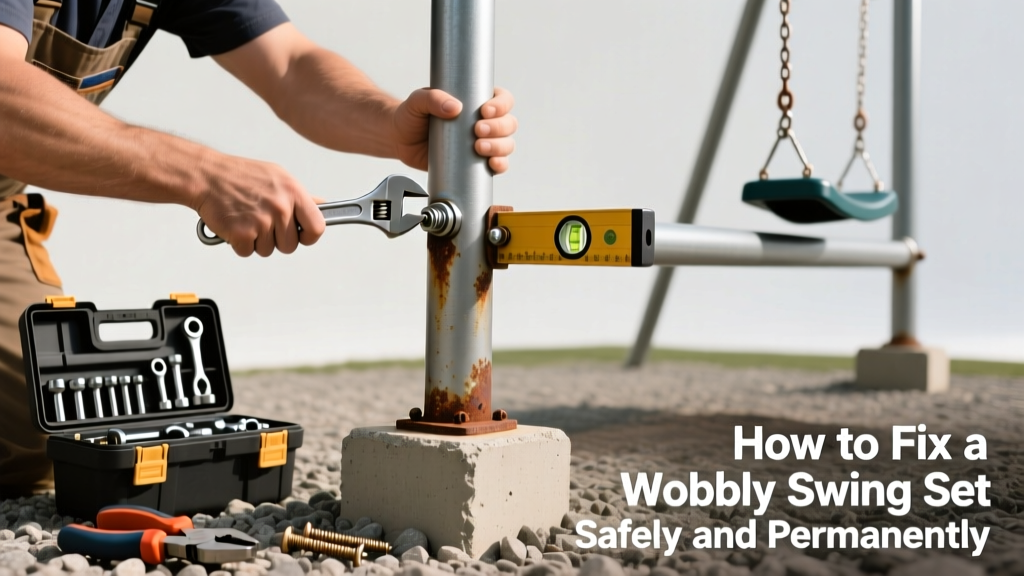
A wobbly swing set isn’t just annoying—it’s a safety hazard. Kids lean, swing hard, and land awkwardly; even minor instability multiplies stress on joints and anchors. If your set rocks side-to-side, shifts when loaded, or makes creaking noises under weight, it’s time to act—not wait.
Quick Diagnosis
Before grabbing tools, identify the source. Most wobbliness stems from one (or more) of these:
- Loose or corroded hardware—especially bolts at A-frame joints and swing hangers
- Sunk or uneven ground causing leg misalignment
- Rotted or cracked wood posts (common in pressure-treated pine older than 8 years)
- Missing or degraded concrete footings (less than 12" deep or cracked)
- Worn-out swing chain links or S-hooks stretching over time
Tools & Materials Needed
| Item | Purpose | Estimated Cost |
|---|---|---|
| Socket wrench set (3/8" drive) | Tightens hex bolts without stripping heads—critical for rusted hardware | $25–$40 |
| Level (24" aluminum) | Verifies post plumb and beam alignment before and after adjustment | $12–$22 |
| Concrete mix (60-lb bag) | Reinforces footings where soil has eroded or settled | $5–$8 |
| Galvanized lag screws (1/4" × 4") | Re-anchors crossbeams where original fasteners pulled out | $4–$7 |
| Wood moisture meter | Detects internal rot in posts (readings >19% indicate structural compromise) | $35–$65 |
Step-by-Step Fix
Work methodically—start high, move low, test load at each stage. Never skip the weight test: have an adult sit fully on each seat and gently sway before letting kids use it.
- Tighten all hardware: Use penetrating oil on rusty bolts first, then torque to manufacturer specs (usually 45–65 ft-lbs). Replace any bolt showing thread wear or pitting.
- Re-level legs: Dig out soil beneath the high side, insert 2×4 shims under the base plate, and backfill with compacted gravel. Check plumb with level on two axes.
- Reinforce footings: For sets anchored in dirt, dig 6" around each leg, pour 2" of QUIKRETE Fast-Setting Concrete, and slope away from the post to shed water.
- Replace compromised wood: Cut out rotted sections using a reciprocating saw; sister new 4×4 pressure-treated lumber alongside with galvanized carriage bolts.
When to Call a Pro
DIY stops where structural integrity ends. Call a certified playground installer or structural carpenter if:
- You measure >1/4" movement at the top beam while applying 50 lbs of lateral force
- Posts show horizontal cracks longer than 6" or vertical splits wider than 1/8"
- The set is a commercial-grade model (e.g., Gorilla, Lifetime Premier) with welded steel frames
- Soil testing reveals expansive clay or poor drainage within 18" of footing depth
According to the U.S. Consumer Product Safety Commission’s 2022 Playground Injury Report, 32% of swing-related ER visits involved equipment failure due to unchecked wobble or corrosion—most preventable with early intervention.
Prevention Tips
Maintain stability year-round with these habits:
- Inspect bolts and wood grain every spring and fall using a flashlight and screwdriver probe
- Apply exterior-grade silicone caulk around base plates annually to block water infiltration
- Keep grass and mulch at least 6" away from post bases to reduce moisture retention
- Retorque all structural bolts every 18 months—even if they appear tight (vibration loosens them gradually)
How often should I check my swing set for wobble?
Check monthly during active use (spring through fall), and do a full inspection—including hardware torque and wood moisture readings—every March and October. Seasonal freeze-thaw cycles shift soil and accelerate metal fatigue.
Can I use pressure-treated wood filler on cracked posts?
No. Wood filler masks but doesn’t restore strength. Cracks deeper than 1/4" or spanning more than one face require replacement or professional sistering. The American Wood Protection Association warns that filler fails under dynamic loading—swings create repeated bending stress no patch can handle.
Why does my metal swing set wobble even with tight bolts?
Metal fatigue or weld joint separation is likely. Look closely at frame corners and swing arm brackets for hairline cracks or paint bubbling—signs of microfractures. Aluminum sets older than 10 years or steel sets past 15 often develop hidden stress fractures near load points.
Do I need permits to add concrete footings?
Most residential swing sets don’t require permits—but check your local building department if footings exceed 12" depth or if you’re modifying a municipal park-style installation. Cities like Austin and Portland now require engineered drawings for any freestanding structure over 8 feet tall.
Can I anchor a swing set to a patio slab instead of digging footings?
Only with approved concrete anchors rated for dynamic (not static) loads—like Simpson Strong-Tie SBPZ post bases with epoxy-set wedge anchors. Standard tapcon screws pull out under swing motion. The International Code Council’s 2021 IRC Supplement specifies minimum 5,000-lb pullout resistance for playground anchoring.
What’s the safest way to test stability after repairs?
Apply controlled force: stand on the platform (if present), grip both A-frames, and push sideways with ~75 lbs of force. Movement should be <1/8" at the top beam. Then hang a 50-lb sandbag on each swing seat and observe for creaking, shifting, or bolt deformation over 5 minutes.
Wobble isn’t inevitable—it’s a warning sign your swing set is asking for attention. Catching it early saves money, prevents injury, and keeps backyard play safe for years. Pair these fixes with consistent seasonal checks, and you’ll rarely hear that unsettling rattle again. For related guidance, see our guides on swing set anchor kits and identifying pressure-treated wood rot.