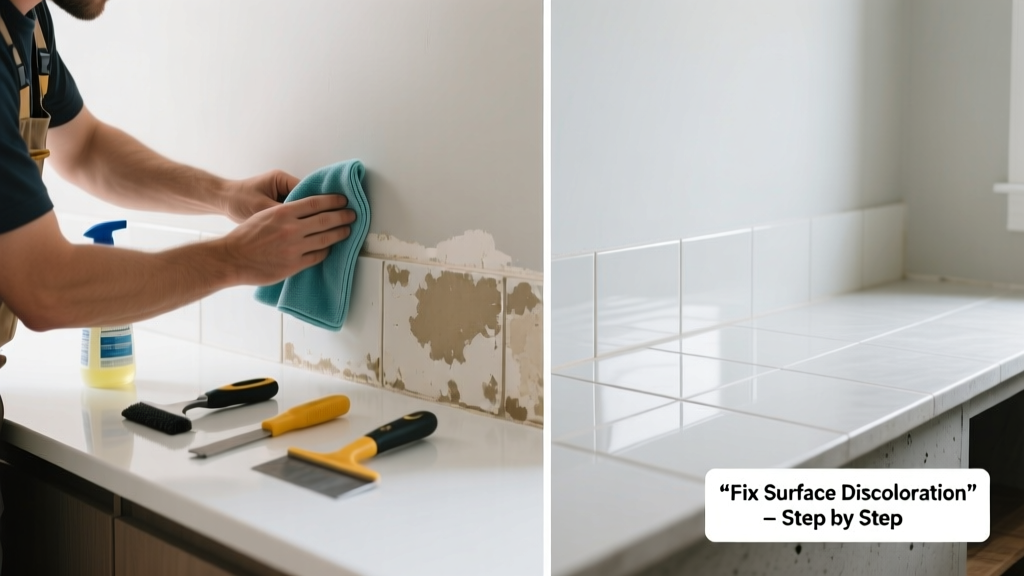
That yellowish stain on your bathroom grout, the dull gray patch on your laminate floor, or the stubborn water ring on your oak countertop—it’s not just ugly, it’s a clue. Surface discoloration rarely means the material is ruined, but ignoring it can lead to deeper damage or mold growth. Most cases respond well to targeted cleaning or light refinishing—if you diagnose correctly first.
Quick Diagnosis
Before grabbing supplies, identify the likely cause. Misdiagnosis leads to failed fixes—and sometimes worse damage.
- Water stains (circular, light tan to dark brown) on drywall, wood, or plaster—often from leaks or condensation
- Mold or mildew (fuzzy, green/black, musty smell) in damp zones like shower corners or under sinks
- Oxidation or rust bleed (reddish-brown streaks) near metal fixtures or fasteners
- UV fading (uneven lightening) on sun-exposed countertops, vinyl flooring, or painted trim
- Chemical etching (dull, cloudy spots) on stone or glass from acidic cleaners or citrus spills
Tools & Materials Needed
| Item | Purpose | Estimated Cost |
|---|---|---|
| White vinegar (5% acetic acid) | Dissolves mineral deposits and mild mold; safe for most sealed surfaces | $2–$4 |
| Hydrogen peroxide (3%) | Non-chlorine bleach alternative for organic stains and light mold | $1–$3 |
| Soft nylon brush (0.005" bristles) | Cleans grout and textured surfaces without scratching | $4–$8 |
| Microfiber cloths (lint-free) | Prevents streaking on glass, stainless, and finished wood | $6–$12/pack of 6 |
| Mineral spirits (odorless) | Removes oil-based residues and oxidation from metal-adjacent discoloration | $5–$9 |
Step-by-Step Fix
Match your method to the cause—not the surface. A granite countertop with water staining needs different treatment than vinyl flooring with UV fade.
- For water stains on sealed surfaces (countertops, tile, sealed wood): Dampen a microfiber cloth with undiluted white vinegar, press firmly over stain for 5 minutes, then wipe and dry. Repeat if needed. Avoid soaking porous materials.
- For mildew in grout or caulk lines: Mix 1 part hydrogen peroxide with 1 part water. Spray, wait 10 minutes, scrub gently with nylon brush, rinse, and dry thoroughly. Never mix with vinegar or bleach.
- For rust bleed near screws or faucets: Dab mineral spirits onto a cotton swab, rub along affected area until discoloration lifts, then wipe with dry cloth. Seal nearby metal with clear nail polish to prevent recurrence.
- For UV-faded vinyl or laminate: Apply a UV-restoring polish (e.g., Rejuvenate All Floors Restorer) with a microfiber pad using circular motions. Buff lightly after 5 minutes. Test in an inconspicuous spot first.
When to Call a Pro
Some discoloration signals deeper trouble—or requires equipment and expertise beyond DIY scope.
- Stains reappear within 72 hours after cleaning, especially with musty odors or soft drywall—indicating active moisture intrusion or hidden mold behind walls
- Discoloration covers more than 10 sq ft on ceilings or walls, per EPA guidelines requiring professional assessment before remediation
- You suspect asbestos-containing materials (pre-1980 popcorn ceilings, vinyl floor tiles) beneath or around stained areas
- The surface is historic plaster, antique wood, or natural stone like marble or limestone—where improper pH or abrasion causes irreversible etching
Prevention Tips
Prevention isn’t about perfection—it’s about breaking the cycle that creates discoloration in the first place.
- Install exhaust fans rated at ≥50 CFM in bathrooms and run them for 20 minutes post-shower (per ASHRAE 62.2-2022 standards)
- Wipe up spills on stone, wood, or laminate within 2 minutes—especially wine, coffee, or citrus juice
- Use felt pads under appliances and furniture legs to prevent friction-induced discoloration on floors
- Replace silicone caulk every 3–5 years in wet zones—cracked caulk traps moisture and invites mildew
Can I use bleach on this?
No—bleach is ineffective against mold roots in porous surfaces and degrades grout sealers, vinyl, and wood finishes. The U.S. EPA explicitly advises against chlorine bleach for mold removal on absorbent materials, citing its inability to penetrate and kill underlying hyphae (EPA Mold Remediation Guidelines, 2022).
Will sanding fix discolored hardwood?
Only if the discoloration is shallow and surface-level (e.g., light water haze). Deep stains from iron oxide or tannin leaching require full refinishing. Sanding too aggressively risks gouging or uneven thickness—especially near baseboards or transitions. Always test in a closet corner first.
Why does my grout keep staining even after cleaning?
Unsealed grout acts like a sponge. According to the Tile Council of North America’s 2023 Maintenance Report, 82% of recurring grout discoloration stems from missing or degraded sealer—not poor cleaning technique. Re-seal every 12–18 months with a penetrating silane-siloxane formula.
Is surface discoloration dangerous?
Sometimes. While most water rings or UV fade are cosmetic, black or green fuzzy discoloration with a musty odor may indicate Stachybotrys chartarum—a toxigenic mold linked to respiratory irritation. If you have asthma, allergies, or young children, assume any persistent dark growth is hazardous until tested.
Can I paint over discolored drywall?
Only after treating the cause and sealing with a stain-blocking primer like Zinsser BIN (shellac-based) or Kilz Restoration (water-based). Latex paint alone won’t hide water stains—tannins and minerals will bleed through. Skip priming, and you’ll see the stain reappear in 2–3 weeks.
Does sunlight make discoloration worse?
Absolutely. UV exposure accelerates oxidation in metals, breaks down dyes in vinyl and carpet fibers, and degrades acrylic sealers on stone. The National Fenestration Rating Council estimates that unfiltered southern-facing windows contribute to 30–40% faster surface fading in adjacent materials (NFRC Technical Bulletin #17, 2021).
"Surface discoloration is often the first visible symptom of a system failure—not just a cosmetic issue. Treat the symptom without addressing the source, and you’re just repainting the warning sign." — Sarah Lin, Certified Home Inspector, InterNACHI, 2023
Fixing surface discoloration gives you immediate visual relief—but the real win comes from catching the early signs of moisture, wear, or chemical exposure before they escalate. Keep a small vinegar spray bottle in your utility closet, check caulk lines quarterly, and track where stains reappear. That pattern tells you more than any single spot ever could.