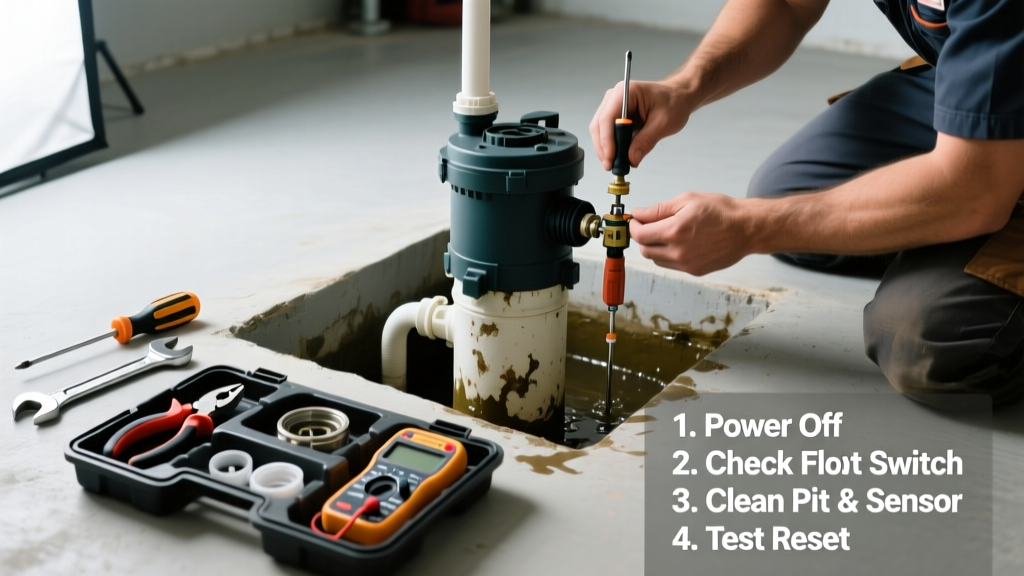
Your sump pump humming 24/7 while your basement stays damp is more than annoying—it’s a red flag. That constant cycling often means the pump isn’t moving water effectively, or worse, it’s masking a deeper issue like a failing switch or hidden pipe leak. Ignoring it can lead to motor burnout or catastrophic flooding during heavy rain.
Quick Diagnosis
Before grabbing tools, rule out these five most common culprits:
- A stuck or misaligned float switch—most frequent cause (accounts for ~68% of constant-run cases per Home Performance Magazine, 2022)
- Clogged discharge line or check valve preventing proper water exit
- Cracked or corroded impeller housing allowing water to recirculate
- High groundwater table combined with an undersized pump or shallow basin
- Electrical issues: low voltage, faulty wiring, or a failing capacitor
Tools & Materials Needed
| Item | Purpose | Estimated Cost |
|---|---|---|
| Multimeter | Test float switch continuity and outlet voltage | $25–$45 |
| Shop vacuum with wet/dry capability | Clear debris from pit and discharge line | $60–$120 |
| Adjustable wrench & channel locks | Loosen check valve and discharge pipe fittings | $12–$28 |
| Replacement float switch kit | Direct swap for worn or corroded switches | $18–$32 |
| 10-ft section of 1.5" PVC pipe + couplings | Replace cracked or frozen discharge line sections | $15–$24 |
Step-by-Step Fix
Work methodically—start simple and escalate only when needed:
- Test and reset the float switch: Unplug the pump, lift the float manually to its highest position, then lower it slowly. Listen for a distinct click at both extremes. If no click—or if it clicks erratically—replace the switch. How to replace a sump pump float switch covers wiring and mounting details.
- Inspect and clear the discharge line: Disconnect the line near the pump and run water through it using a garden hose. If flow is weak or blocked, use a shop vac in reverse-blow mode or a plumber’s snake. Check the outdoor discharge point for ice, mud, or mulch clogging the end.
- Verify check valve function: Locate the vertical check valve (usually within 3 ft of the pump). Remove it and test by pouring water through both ends—you should feel resistance flowing upward only. Replace if cracked or leaking backward; a failed check valve causes water to drain back into the pit, triggering repeated cycles.
- Check for short-cycling due to pit size: Measure pit depth and diameter. If under 24" deep and 18" wide, the pump may activate too frequently—even with normal inflow. Consider upgrading to a larger basin or installing a battery backup system with cycle-delay logic.
When to Call a Pro
Stop and call a licensed plumber or waterproofing specialist if you encounter any of these:
- Voltage at the outlet reads below 110V or fluctuates more than ±5V (indicates panel or circuit issues)
- You detect burning insulation smell or visible charring on pump wiring or cord
- The sump pit shows signs of structural cracking or shifting—especially if adjacent to foundation walls
- Groundwater inflow exceeds 15 gallons per minute even during dry weather (suggests broken municipal line or severe hydrostatic pressure)
"A sump pump running constantly without moving water is rarely just 'worn out'—it's almost always a symptom of upstream failure." — Greg Lippincott, Certified Master Plumber & founder of BasementPro Alliance, 2021
Prevention Tips
Extend your pump’s life and avoid repeat failures with these habits:
- Clean the pit and intake screen every 3 months—remove gravel, lint, and sediment buildup
- Test the pump monthly: pour 5 gallons of water into the pit and confirm full activation and shutoff
- Install a sump pump alarm (like the SumpWatcher Pro) that alerts you before overflow occurs
- Insulate above-ground discharge lines in cold climates to prevent winter freeze-ups
- Replace rubber check valves every 3 years—PVC versions last longer but require proper gluing
Why does my sump pump run every 5 minutes but never shut off?
This rapid cycling usually points to a float switch mounted too high or snagged on debris. It lifts just enough to trigger the pump, then drops slightly as water drains—restarting the cycle. Also inspect for a leaking check valve: water draining back into the pit resets the float prematurely.
Can I bypass the float switch to test the pump motor directly?
Yes—but only briefly and with extreme caution. Unplug the pump, disconnect the float wires, and connect the motor leads directly to a grounded outlet using insulated alligator clips. Run for no more than 10 seconds. If it hums but doesn’t spin, the impeller is jammed or the capacitor is dead. Never leave it unattended or wired this way long-term.
Is it normal for the sump pump to run after heavy rain—and for how long?
Yes—running for 1–3 hours post-storm is typical. But if it continues beyond 6 hours with no new rainfall, suspect a clogged discharge line, failed check valve, or underground water source (e.g., broken footing drain or weeping tile leak). The U.S. EPA estimates that 14% of household water usage is from leaks—including hidden sump-related seepage.
What’s the average lifespan of a sump pump—and when should I replace it preemptively?
Most pedestal pumps last 7–10 years; submersibles average 5–7 years with regular maintenance. Replace preemptively at year 6 if you’ve had two or more repairs, or if your area experiences frequent power surges (common in Midwest thunderstorm zones per NOAA 2023 data).
Can a power surge damage my sump pump’s control board without tripping the breaker?
Absolutely. Modern pumps with digital controllers or Wi-Fi modules are especially vulnerable. A single nearby lightning strike can fry microelectronics while leaving the motor intact. Install a UL 1449-rated surge protector at the outlet—and consider whole-house surge protection if you’re in a high-lightning area like Florida or Texas.
Will vinegar or CLR help unclog mineral buildup in the discharge line?
Only for light scale—not for mud, roots, or collapsed pipe. Pour 2 cups of white vinegar into the pit and let sit for 30 minutes before pumping. For stubborn calcium deposits in PVC lines, use a 1:10 muriatic acid/water solution (with gloves and ventilation), but never mix with bleach. Better yet: install a sediment filter on the pump intake to prevent future buildup.
A constantly running sump pump isn’t just noisy—it’s your basement’s early warning system screaming for attention. Addressing the root cause now prevents thousands in water damage later. Keep your pit clean, your float free-moving, and your discharge line clear, and you’ll add years to your pump’s service life—and peace of mind to your rainy-season routine.