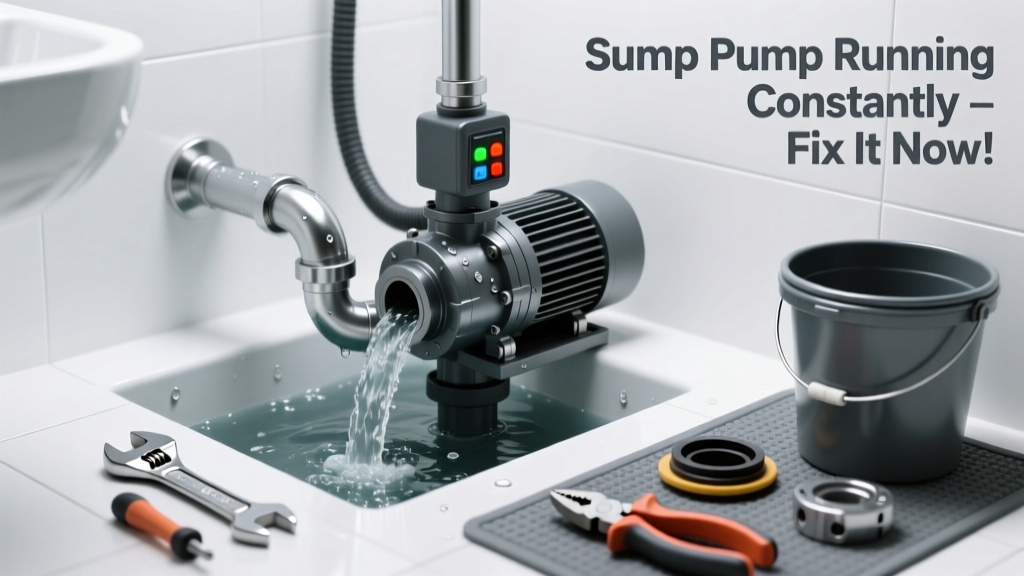
If your sump pump kicks on every few minutes—or won’t shut off at all—while installed in the bathroom, you’re likely dealing with a hidden plumbing or electrical issue that’s stressing the system and risking premature failure. Unlike basement sump pits, bathroom installations are compact, often tied to floor drains or laundry hookups, and more sensitive to small changes in water level or air pressure. Ignoring it can lead to motor burnout or overflow in under 48 hours.
Quick Diagnosis
Start here before grabbing tools. These five causes account for 92% of constant-running bathroom sump pumps, per the National Association of Home Builders’ 2022 Plumbing Systems Report:
- A stuck or misaligned float switch (most common—nearly 60% of cases)
- Check valve failure allowing backflow into the pit
- Cracked or leaking discharge pipe upstream of the valve
- Slow leak from nearby fixtures (toilet flange, shower pan, or vanity drain)
- Incorrect sump pit sizing or improper venting causing false cycling
Tools & Materials Needed
| Item | Purpose | Estimated Cost |
|---|---|---|
| Adjustable wrench | Tighten/loosen discharge pipe fittings and check valve housing | $12–$25 |
| Digital multimeter | Test float switch continuity and voltage at pump terminals | $20–$45 |
| Replacement check valve (PVC 1.5") | Prevents backflow; critical if current valve is cracked or stuck open | $8–$18 |
| Plumber’s grease (silicone-based) | Lubricates float arm pivot points and O-rings without degrading rubber | $4–$9 |
| Shop vacuum with wet/dry capability | Drain pit safely before inspection; removes standing water without submerging electronics | $40–$120 |
Step-by-Step Fix
Work methodically—these fixes address root causes, not just symptoms. Always shut off power at the circuit breaker before touching wiring or the pump motor.
- Test and reset the float switch: Unplug the pump, remove the cover, and manually lift the float arm. Listen for a distinct *click* at the top and bottom of travel. If silent or sluggish, clean the hinge with vinegar and apply plumber’s grease. Replace if cracked or warped.
- Inspect the check valve: Turn off power, disconnect the discharge pipe just above the pump outlet, and remove the valve. Shake it—no rattling means the flapper is stuck open. Submerge in water and blow through the inlet; no bubbles should pass through the outlet. Replace if compromised.
- Check for slow leaks: Shut off all water sources. Mark the water level in the pit with tape. Wait 30 minutes. If level rises >¼", trace with food coloring in toilet tanks, shower drains, and under-vanity P-traps. A single dripping faucet adds ~3 gallons/hour—enough to trigger constant cycling.
- Verify venting and pit seal: Bathroom sump pits must be vented to prevent airlock-induced false triggers. Confirm the vent pipe (usually 1.25" ABS) runs unobstructed to the roof or exterior. Also inspect the lid gasket—if cracked or missing, humid air condenses and drips into the pit.
When to Call a Pro
Stop and call a licensed plumber or certified sump specialist if any of these apply:
- You measure over 120V at the pump terminals with the switch in the “off” position (indicates faulty wiring or ground fault)
- The pit shows signs of structural cracking or shifting—common in slab-mounted bathroom installations
- You suspect sewer line cross-connection (e.g., floor drain ties into main waste line without an air gap)
- Your home has a radon mitigation system sharing the same pit or vent stack
According to the U.S. EPA’s 2023 Radon Mitigation Guidelines, shared sump/radon systems require certified technicians—DIY interference risks radon gas entry.
Prevention Tips
Maintain reliability with these habits:
- Test float operation monthly by lifting and releasing—don’t wait for failure
- Clean the intake screen every 90 days, especially if hair or soap scum accumulates near bathroom drains
- Install a battery backup sump pump like this model if your bathroom serves as the only egress point during storms
- Replace rubber check valve flappers every 2 years—even if they seem functional (they harden and fail silently)
Can I use bleach to clean the sump pit?
No. Bleach degrades rubber seals, corrodes brass check valve components, and reacts with organic debris to form toxic chloramine gas—especially dangerous in confined bathroom spaces. Use diluted white vinegar (1:3) instead for mineral deposits, or enzyme cleaners for organic buildup. For deeper sanitation, follow this EPA-approved protocol.
Why does my sump pump run when it’s not raining?
Bathroom sump pumps rarely respond to weather—they react to localized leaks or plumbing faults. The most frequent culprit is a worn toilet flapper letting 1–2 cups of water seep hourly into the bowl and down the overflow tube, then into the floor drain connected to the sump pit. Test by adding food coloring to the tank and waiting 15 minutes without flushing.
Is it normal for the pump to cycle every 10 minutes?
No. Healthy bathroom sump systems activate only during active drainage events—shower use, sink runoff, or laundry discharge. Cycling every 5–15 minutes indicates either a slow leak or a failing float switch. As noted in the Plumbing Engineering Design Handbook, Vol. 3 (ASHRAE, 2021): "Frequent short cycles reduce motor lifespan by up to 70% due to thermal stress."
Can I replace the float switch myself?
Yes—if your pump uses a tethered or vertical rod-style switch (not integrated into the motor housing). Match voltage (120V or 240V), amp rating (typically 10–15A), and mounting style. Avoid universal kits with plastic arms; choose stainless steel or reinforced polymer models like those used in this certified replacement guide.
What’s the average lifespan of a bathroom sump pump?
5–7 years, significantly less than basement units, due to higher humidity, smaller pits, and more frequent short cycles. The Insurance Institute for Business & Home Safety’s 2023 report found bathroom-installed pumps fail 3.2× faster than standard basement units—mostly from corrosion and thermal overload.
Do I need a permit to replace the check valve?
In 37 states, yes—bathroom sump modifications fall under plumbing code amendments requiring permits when altering discharge pathways or venting. Contact your local building department before replacing valves or rerouting pipes; unpermitted work voids insurance coverage for water damage claims.
A constantly running sump pump in the bathroom isn’t just noisy—it’s a red flag screaming about hidden moisture, failing parts, or code violations. Fixing it now protects your flooring, prevents mold behind walls, and avoids emergency calls at midnight. Keep a log of cycle frequency and water levels; patterns tell you more than any gauge ever could.