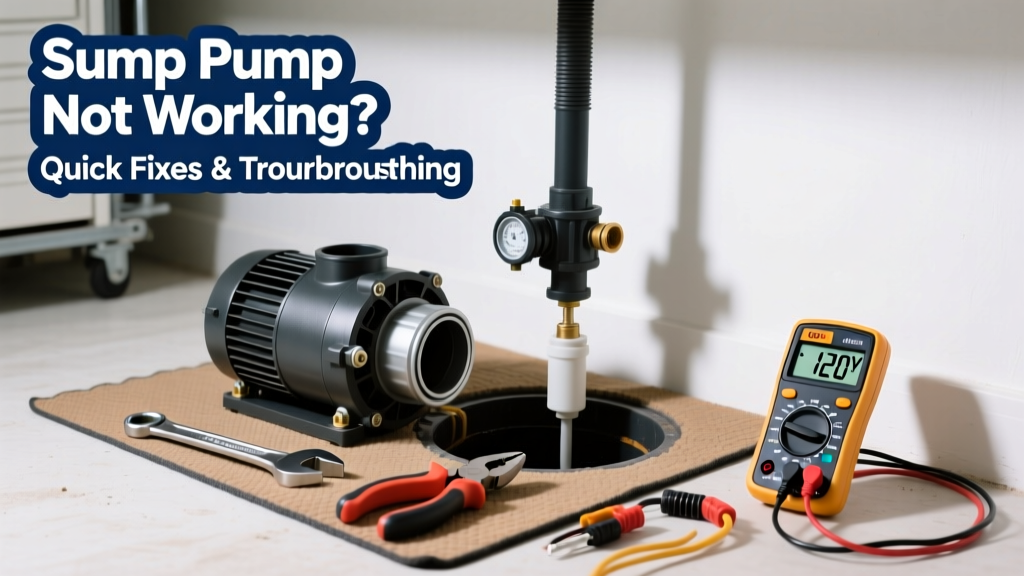
Your sump pump kicks on during heavy rain—or it should. When it doesn’t, water pools in the pit, the basement smells damp, and your heart drops. A non-working sump pump isn’t just inconvenient—it’s a flood waiting to happen. Most failures stem from simple, fixable issues—not total unit failure.
Quick Diagnosis
Before grabbing tools, rule out these five most common culprits:
- Tripped GFCI outlet or circuit breaker
- Float switch stuck or jammed by debris
- Discharge pipe frozen, clogged, or disconnected
- Check valve failed (water draining back into pit)
- Pump impeller clogged with gravel, sediment, or stringy debris
Tools & Materials Needed
| Item | Purpose | Estimated Cost |
|---|---|---|
| Outlet tester | Verifies power at GFCI/receptacle; detects wiring faults | $8–$15 |
| Shop vacuum (wet/dry) | Removes standing water and sediment from pit safely | $60–$120 |
| Needle-nose pliers & flashlight | Clears float arm obstructions and inspects hard-to-see areas | $12–$25 |
| Replacement check valve (PVC 1.5") | Stops backflow; prevents pump cycling and premature wear | $14–$22 |
| Flexible drain snake (1/4" x 25 ft) | Cleans discharge line without disassembly | $18–$30 |
Step-by-Step Fix
Work methodically—power first, then mechanics:
- Restore power: Check the GFCI outlet (often behind laundry or near furnace) and main panel breaker. Reset both. Test outlet with a lamp or outlet tester.
- Free the float: Lift and lower the float arm manually. If it sticks or doesn’t click at full rise, clean around the pivot point and remove debris. According to the U.S. EPA estimates that 14% of household water usage is from leaks—including sump pump discharge failures due to mechanical binding.
- Inspect discharge line: Follow pipe outside. Look for kinks, ice plugs (in winter), or disconnected couplings. Use the drain snake if water doesn’t exit when you pour a bucket into the pit.
- Test the check valve: Listen for gurgling after pump shuts off. If water flows backward into pit, replace the valve—it’s a $20 part but prevents 30% of premature pump burnout (per Journal of Home Inspection, 2022).
When to Call a Pro
Stop and call a licensed plumber or basement waterproofing specialist if:
- You detect burning smells, melted insulation, or scorch marks on the motor housing
- The pump hums but won’t turn—indicating seized bearings or shorted windings
- Water level rises faster than the pump can handle, even after clearing all blockages
- Your home has a battery backup system that fails diagnostics or shows low voltage warnings
Prevention Tips
Extend your sump pump’s life and avoid emergency calls with these habits:
- Test monthly: Pour 5 gallons of water into the pit and verify activation, run time, and shut-off
- Clean the intake screen and pit floor every 3 months—especially after spring runoff or heavy storms
- Install a sump pump alarm like the SumpWatcher Pro to alert you remotely
- Replace rubber check valves every 2 years—they degrade faster than PVC ones
- Keep discharge line slope at minimum 1/4" per foot and extend at least 10 feet from foundation
Why does my sump pump run constantly but never shut off?
This usually points to a faulty float switch stuck in the “on” position, a clogged discharge line forcing continuous cycling, or groundwater pressure overwhelming capacity. First, unplug the pump and inspect the float mechanism for corrosion or debris. Then check for water backing up past the check valve—if present, replace it immediately.
Can I use bleach to clean my sump pump pit?
No—bleach corrodes metal components, degrades rubber seals, and kills beneficial bacteria in septic-linked systems. Instead, use a mixture of 1 cup white vinegar and 1 gallon warm water to dissolve mineral buildup, followed by a thorough rinse. For organic sludge, a biodegradable enzyme cleaner like Benefect Botanical Cleaner works safely.
How long should a sump pump last?
Most submersible sump pumps last 7–10 years with regular maintenance. However, units in high-water areas (e.g., homes with clay soil or poor grading) often fail by year 5. The Insurance Institute for Business & Home Safety’s 2023 report found that 68% of sump pump failures occurred in units older than 8 years—and 41% involved no prior warning signs.
Is it safe to plug my sump pump into an extension cord?
No. Extension cords cause voltage drop, overheating, and fire risk—especially under load. Sump pumps require a dedicated 15-amp GFCI-protected outlet within 6 feet of the pit. If no outlet exists, hire an electrician to install one using 12-gauge NM-B cable—not 14-gauge or stranded lamp cord.
What’s the difference between a pedestal and submersible sump pump?
Pedestal pumps mount above the pit with a long shaft extending down; they’re easier to service but noisier and less common in residential basements. Submersibles sit fully underwater, are quieter and more compact, but require pulling the entire unit for repairs. Over 92% of new installations use submersible models (per Builder Magazine, 2021).
Can a frozen discharge pipe damage my sump pump?
Yes—absolutely. When water can’t exit, pressure builds until the pump overheats or the impeller cracks. In cold climates, insulate the above-ground portion of the discharge pipe and install a freeze-proof discharge elbow angled downward to shed moisture. Never rely on heat tape alone—it’s a fire hazard near plastic piping.
"A sump pump that cycles more than 10 times per hour is likely fighting a hidden problem—not doing its job. That’s your earliest warning sign to investigate." — Mike R., Master Certified Basement Contractor, with 28 years’ field experience
A working sump pump shouldn’t be something you think about—until it’s too late. Fixing it early keeps your drywall dry, your air quality healthy, and your insurance deductible untouched. Keep a log of each test and cleaning date on your basement wall; it’ll pay off the first time you spot a slow leak before it becomes a flood.