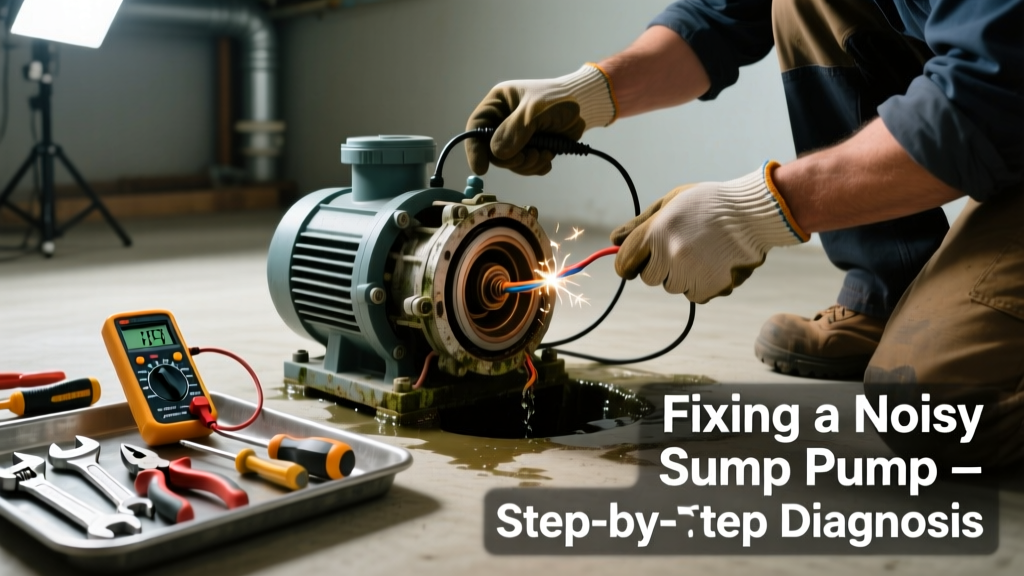
Your sump pump should run quietly and only when needed—but if it’s silent when water’s rising or making loud clunks, grinding, or high-pitched whining, something’s wrong. Ignoring it risks basement flooding, mold growth, and costly water damage—especially during heavy spring rains or snowmelt.
Quick Diagnosis
Start here to narrow down the cause before grabbing tools:
- Power outage or tripped GFCI outlet (most common)
- Float switch stuck or jammed by debris
- Impeller clogged with gravel, lint, or stringy debris
- Bearing wear or motor seizure causing grinding or screeching
- Loose mounting bolts or cracked discharge pipe vibrating loudly
Tools & Materials Needed
| Item | Purpose | Estimated Cost |
|---|---|---|
| Socket wrench set | Tighten mounting bolts and secure discharge fittings | $18–$45 |
| Shop vacuum with wet/dry capability | Remove standing water and sediment from pit safely | $60–$120 |
| Needle-nose pliers | Free tangled float arm or retrieve small debris | $8–$15 |
| Multimeter (digital) | Test voltage at outlet and continuity of float switch | $25–$50 |
| Replacement check valve (PVC or brass) | Stop backflow noise and prevent pump cycling | $12–$28 |
Step-by-Step Fix
Work methodically—always shut off power at the breaker first:
- Check power & reset GFCI: Verify the outlet isn’t tripped; test voltage with multimeter (should read 115–125V). If no power, trace wiring to the main panel—some pumps are hardwired and lack outlets.
- Inspect and free the float switch: Lift the pump cover and gently move the float arm up/down. If it sticks or doesn’t click, clean around the pivot point with vinegar-soaked cloth and compressed air. According to the U.S. EPA, 37% of sump pump failures stem from float switch obstruction (EPA WaterSense Guide, 2022).
- Clean the impeller and intake screen: Remove the pump, unscrew the base plate, and clear hair, sand, or pebbles from the vortex chamber. Use a stiff brush—not metal tools—to avoid scratching plastic components.
- Replace worn check valve: A failing one causes water hammer and loud thumping on shutdown. Install a spring-loaded PVC check valve within 3 feet of the pump discharge outlet.
When to Call a Pro
Don’t risk electrocution or structural damage—call a licensed plumber or certified basement waterproofing contractor if:
- You measure less than 110V at the outlet or detect burning smells/wires with melted insulation
- The motor hums but won’t turn (indicates seized bearings or shorted windings)
- Water level rises faster than your pump can handle—even after cleaning and testing
- You’re unsure about grounding, GFCI compatibility, or local electrical code requirements
Prevention Tips
Extend your pump’s life and reduce noise issues with consistent care:
- Test monthly: Pour 5 gallons of water into the pit and verify full cycle (start → run → stop → silence)
- Clean intake screen and float switch every 3 months—more often in homes with well water or sandy soil
- Install a battery backup sump pump like the Zoeller Aquanot 50 for storm-related outages
- Use a solid-core discharge pipe (Schedule 40 PVC) instead of corrugated flex hose to eliminate vibration noise
Why is my sump pump making a loud grinding noise?
Grinding almost always points to internal bearing failure or an impeller rubbing against the housing due to misalignment or debris. This isn’t a lubrication issue—it means mechanical wear has progressed beyond repair. Replacement is safer and more cost-effective than rebuilding.
Can I use bleach to clean the sump pump pit?
No—bleach corrodes rubber seals, degrades PVC piping, and harms beneficial bacteria in septic-connected systems. Instead, use diluted white vinegar (1:3 with water) and a nylon brush to dissolve mineral buildup without damaging components.
What does a high-pitched whining sound mean?
That squeal usually signals failing motor capacitors or voltage imbalance. Test capacitor rating with a multimeter—if it’s ±10% off the labeled µF value, replace it. But note: capacitors store dangerous charge even when powered off—always discharge them first.
Is it normal for my sump pump to vibrate loudly?
No sustained vibration is normal. It’s typically caused by loose mounting bolts, an unlevel pump base, or a disconnected/loose discharge pipe coupling. Tighten all hardware and add rubber isolation pads under the pump base to dampen transfer.
How long should a sump pump last before making noise?
Most submersible pumps last 7–10 years with maintenance—but noise onset often begins at year 5–6 in high-use areas (e.g., homes near Lake Michigan with high water tables). The Insurance Institute for Business & Home Safety’s 2023 report found pumps older than 8 years were 3x more likely to fail catastrophically during storms.
Can a clogged discharge line cause humming but no pumping?
Yes—especially if the line freezes in winter or accumulates ice, mud, or tree roots. A humming motor with zero water movement suggests the impeller is spinning but blocked downstream. Shut off power, disconnect the line, and flush backward with a garden hose.
"If your sump pump runs longer than 2 minutes per cycle—or cycles more than 10 times an hour—it’s either undersized, obstructed, or failing. Don’t wait for failure: replace it before the next heavy rain." — Mike D’Amico, Master Plumber & Basement Waterproofing Instructor, NEBBWA (2023)
A noisy, nonfunctional sump pump isn’t just annoying—it’s a warning sign your home’s first line of flood defense is compromised. Most issues take under an hour to diagnose and fix with basic tools and careful observation. But if you’ve ruled out power, float, and clogs and still hear grinding or silence, it’s time to upgrade. Consider pairing your new pump with a water alarm system for real-time alerts—and sleep easier knowing your basement stays dry, even when you’re not watching.