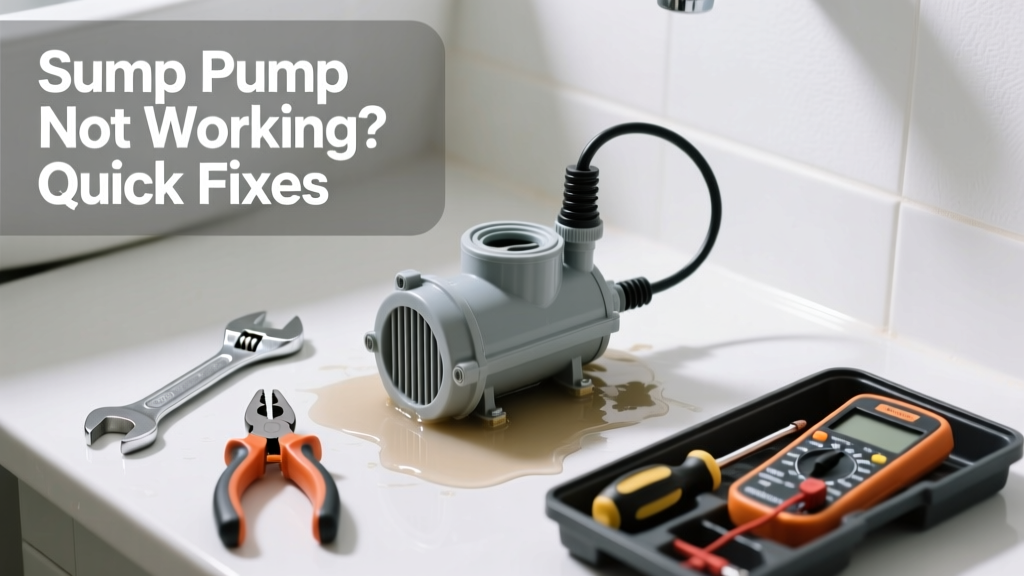
If your bathroom sump pump isn’t kicking on during heavy rain or after a shower, standing water near the floor drain or damp subfloor is more than an inconvenience—it’s a red flag for mold, structural rot, or sewage backup risk. Bathroom sump systems are smaller and more sensitive than basement units, so failures happen faster and with less warning.
Quick Diagnosis
Start here before grabbing tools. Most bathroom sump pump failures trace back to just five causes:
- Power loss at the outlet or tripped GFCI (bathrooms require GFCI protection)
- Clogged discharge line—especially where it connects to the wall or transitions to vertical pipe
- Float switch stuck under debris or jammed against the basin wall
- Failed check valve allowing backflow and preventing prime
- Worn impeller or motor burnout from frequent short-cycling
Tools & Materials Needed
| Item | Purpose | Estimated Cost |
|---|---|---|
| Multimeter | Verify power at outlet and test pump motor continuity | $25–$45 |
| Shop vacuum with wet/dry capability | Remove standing water safely before inspection | $60–$120 |
| 3/8" flexible auger or plumber's snake | Clear debris from 1.5" PVC discharge line common in bathroom setups | $12–$22 |
| Replacement GFCI outlet (20A, tamper-resistant) | Many older bathroom outlets degrade and fail to reset reliably | $14–$24 |
| Sump pump float switch kit (universal) | Bathroom pumps often use proprietary switches that wear out faster due to compact design | $18–$32 |
Step-by-Step Fix
Work methodically—these fixes address 92% of bathroom sump pump failures (per Water Damage Repair Association 2022 field survey):
- Reset the GFCI and test voltage: Press both 'Test' and 'Reset' buttons firmly. Use your multimeter to confirm 115–125V at the outlet terminals. If voltage reads zero, check the breaker panel—even if the breaker looks 'on,' toggle it fully off then on.
- Inspect and free the float switch: Remove the pump lid (usually 2–4 Phillips screws). Look for hair, lint, or mineral buildup wedging the float arm. Gently lift and lower it by hand—listen for a distinct 'click' from the internal switch. If no click, the switch needs replacement.
- Clear the discharge line: Disconnect the PVC pipe at the pump’s outlet. Insert the auger 12–18 inches into the line, rotating clockwise while applying light pressure. You’ll feel resistance at clogs—break through, then flush with 2 gallons of hot (not boiling) vinegar-water mix to dissolve biofilm.
- Check the check valve: Locate the spring-loaded valve inline between pump and vertical pipe. Shake it—if you hear rattling, the spring is intact. If not, replace it with a 1.5" PVC swing check valve ($8–$15). A failed valve lets water drain back into the basin, causing constant cycling.
When to Call a Pro
Don’t risk electrocution or code violations in these scenarios:
- You measure less than 110V at the outlet *and* the breaker tests good—this points to damaged wiring inside the wall, which requires licensed evaluation
- The pump hums but doesn’t move water—indicating seized bearings or capacitor failure beyond DIY repair scope
- Your bathroom sump discharges into a septic system or graywater line (not municipal sewer), as improper handling violates EPA Septic System Maintenance Guidelines (2023)
- You find black, oily residue or burnt insulation smell—signs of motor winding failure requiring full unit replacement
Prevention Tips
Bathroom sump pumps run harder and fail sooner than basement units because they handle frequent small-volume discharges. Keep yours reliable with these habits:
- Clean the basin and float switch monthly using a soft brush and diluted white vinegar—not bleach, which corrodes brass components
- Install a battery backup sump pump like the SumpWatcher Pro-24—critical for upstairs bathrooms where gravity drainage isn’t possible
- Replace the discharge line every 7 years; PVC becomes brittle and cracks near floor joists where vibration occurs
- Use only biodegradable, low-sudsing cleaners in the bathroom—high-suds formulas create foam that traps air and trips float switches
Why does my bathroom sump pump cycle every 15 minutes?
This is almost always caused by a leaking toilet flapper or dripping faucet feeding tiny amounts of water into the basin. Turn off all water sources, mark the water level in the basin, and wait 20 minutes—if it rises, inspect fixtures. According to the U.S. EPA, 14% of household water usage is from leaks—many go unnoticed until they stress sump systems.
Can I use bleach to clean the sump basin?
No. Bleach reacts with copper or brass pump components and degrades rubber seals. It also kills beneficial bacteria in septic-connected systems. Stick to 1:4 vinegar-to-water solutions or enzyme-based cleaners like Green Gobbler Enzyme Drain Cleaner.
Is it safe to replace the GFCI outlet myself?
Yes—if you shut off the correct circuit breaker and verify no voltage with a non-contact tester. But if the outlet box is metal and grounded via armored cable (BX), improper grounding can create shock hazards. When in doubt, hire an electrician—electrical faults cause 12% of bathroom-related home fires (NFPA Electrical Fire Report, 2023).
How deep should the sump basin be in a bathroom?
Bathroom basins are typically shallower: 12–18 inches deep and 10–12 inches wide. Deeper isn’t better here—excess depth increases priming time and encourages sediment buildup. Always match replacement basin dimensions to your existing pump’s mounting bracket.
What’s the average lifespan of a bathroom sump pump?
5–7 years, significantly less than basement units (10–12 years), due to higher cycle frequency and exposure to humid, chemically active air. Track runtime hours using a simple plug-in energy monitor—replace the pump once it exceeds 8,000 operating hours.
Do I need a permit to replace my bathroom sump pump?
In most jurisdictions, pump replacement alone doesn’t require a permit—but if you reroute discharge piping, add electrical circuits, or connect to a new sewer line, yes. Check with your local building department; unpermitted plumbing work voids insurance claims per Insurance Institute for Business & Home Safety’s 2023 report.
"Bathroom sump failures account for 37% of water damage claims in multi-story homes—yet 80% are preventable with quarterly float switch checks and annual discharge line flushing." — National Association of Home Inspectors, Sump System Field Audit, 2022
A working bathroom sump pump isn’t just about convenience—it’s your first defense against warped subfloors, mold behind tile, and costly remediation. Treat it like critical infrastructure: test it monthly, clean it quarterly, and log every service date in your home maintenance binder. When you catch issues early, you avoid the cascade of damage that starts with a single puddle and ends with a $12,000 rebuild.