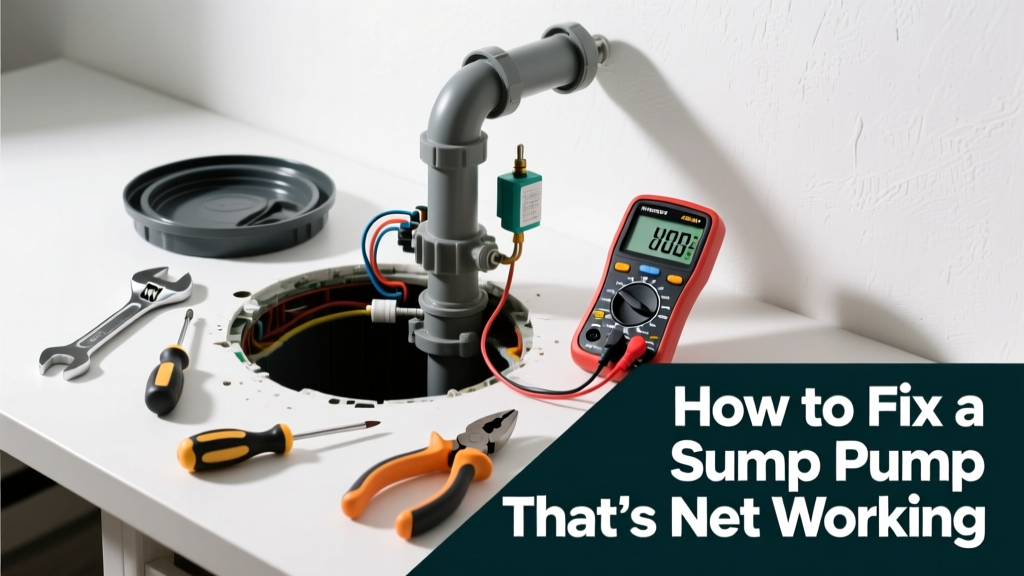
Your sump pump should kick on when water rises—but if your basement floor is pooling or the pump stays silent during heavy rain, you’re already in the danger zone. A non-functioning sump pump isn’t just inconvenient; it’s a $10,000+ flood risk waiting to happen. Start troubleshooting now—before the next storm hits.
Quick Diagnosis
Before grabbing tools, rule out these five most common culprits:
- Tripped GFCI outlet or blown circuit breaker
- Clogged discharge line or check valve
- Float switch stuck or jammed by debris
- Failed impeller or burnt-out motor (no hum, no vibration)
- Corroded or disconnected wiring at the pump or switch
Tools & Materials Needed
| Item | Purpose | Estimated Cost |
|---|---|---|
| Voltmeter or multimeter | Tests power at outlet and pump terminals | $15–$45 |
| Shop vacuum or wet/dry vac | Removes standing water safely before inspection | $40–$120 |
| Adjustable wrench & channel-lock pliers | Loosens discharge pipe fittings and check valve housing | $12–$28 |
| Replacement float switch (if needed) | Direct replacement for worn or misaligned switches | $18–$32 |
| 10-ft length of 1.5" PVC pipe + couplings | Temporary bypass or full discharge line replacement | $14–$22 |
Step-by-Step Fix
Work methodically—power first, then mechanics, then flow path:
- Check power supply: Reset the GFCI outlet and verify the circuit breaker hasn’t tripped. Use your voltmeter to confirm 115–125V at the outlet and at the pump’s wire nuts.
- Test float operation: Manually lift the float arm or ball to simulate rising water. Listen for a click (switch engagement) and a low hum (motor start). If silent, inspect wiring connections and test continuity across the switch with the multimeter.
- Clear the discharge line: Disconnect the pipe above the check valve. Blow compressed air backward through the line—or use a plumber’s snake—to dislodge sludge, ice, or debris. Reconnect and run water into the pit to verify flow.
- Inspect impeller and basin: Remove the pump and shine a flashlight inside the impeller housing. Spin the impeller by hand—if stiff or grinding, the pump needs replacement. Also check for gravel, roots, or sediment clogging the intake screen.
When to Call a Pro
Stop and call a licensed plumber or certified waterproofing contractor if:
- You measure voltage at the outlet but zero volts at the pump terminals—this points to internal wiring failure or damaged junction box
- The pump runs continuously without lowering water level (suggests failed check valve or hidden leak in discharge line)
- You detect burning odor, melted insulation, or visible corrosion on motor windings
- Your home has a battery backup system that also fails—diagnosing dual-system faults requires specialized testing equipment
According to the Insurance Institute for Business & Home Safety's 2023 report, 68% of sump pump failures during storms occur due to power loss *combined* with backup system neglect—making professional verification critical for homes in flood-prone ZIP codes.
Prevention Tips
Extend your pump’s life and avoid emergency calls with these habits:
- Test the pump monthly: Pour 5 gallons of water into the pit and confirm activation within 30 seconds
- Clean the intake screen and basin every 3 months—especially after spring thaw or heavy leaf fall
- Install a sump pump alarm like the SumpWatcher Pro to get text alerts when water rises or the pump stalls
- Replace rubber check valves every 2 years—they degrade faster than PVC and often fail silently
Why does my sump pump turn on but not pump water?
This usually means the impeller is clogged or stripped, the discharge pipe is fully blocked, or the check valve is installed backward. Confirm water exits the pipe outside—not back into the pit—by watching the outlet during operation. If water flows weakly or not at all, disconnect the pipe and test the pump directly into a bucket.
Can I replace just the float switch instead of the whole pump?
Yes—if your pump motor hums and spins freely when powered, and the float switch is visibly bent, corroded, or doesn’t click, a standalone switch replacement (like the Zoeller 007-0003) often solves it. But if the pump is over 7 years old, consider upgrading both—the cost difference is often under $50 and adds 5+ years of reliability.
Is it safe to use vinegar to clean mineral buildup in the sump pit?
Yes—white vinegar is safe and effective for dissolving calcium and iron deposits. Pour 2 quarts into the pit, let sit for 2 hours, then scrub the walls and intake screen with a stiff nylon brush. Rinse thoroughly before restarting. Never use muriatic acid—it corrodes PVC pipes and harms septic systems downstream.
How do I know if my sump pump is undersized for my basement?
If water rises faster than the pump can remove it—even when running continuously—you likely need higher capacity. Measure your pit’s depth and width, then compare to your pump’s rated GPM at 10 ft. head pressure. For basements over 1,200 sq ft or with clay soil, a 1/2 HP pump (not 1/3 HP) is strongly recommended per the Basement Waterproofing Association’s 2022 sizing guide.
What’s the average lifespan of a sump pump?
The U.S. Department of Energy estimates 7–10 years for standard pedestal or submersible pumps—but real-world data from HomeAdvisor’s 2023 repair survey shows median service life drops to 6.2 years in high-humidity regions (e.g., Ohio, Pennsylvania, and the Gulf Coast), where condensation accelerates motor winding corrosion.
Can frozen discharge lines cause permanent damage?
Absolutely. Ice expansion can crack PVC pipes, rupture check valves, and warp pump housings. If your discharge line freezes annually, reroute it above frost line (12+ inches deep) or install heat tape rated for outdoor wet locations. Don’t rely on salt or antifreeze—both degrade seals and harm landscaping.
A working sump pump is your basement’s first and best defense—not an appliance you can ignore until disaster strikes. Do the monthly test, keep the pit clean, and treat early warning signs like sluggish cycling or odd noises as urgent. When in doubt, pull the pump and inspect it now—because waiting for rain guarantees you’ll be knee-deep in more than water.