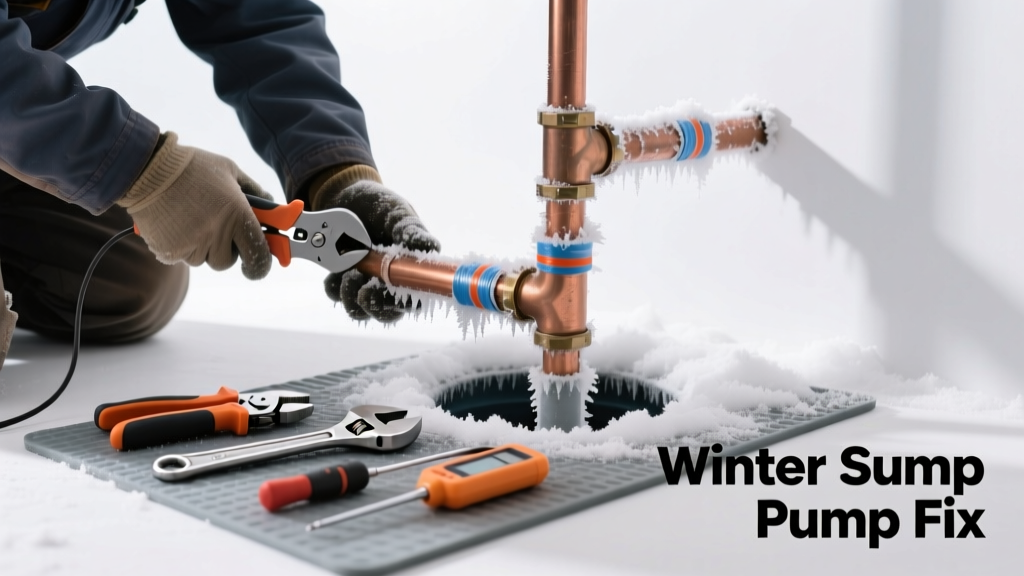
That gurgling stop-and-start sound from your sump pump? Or worse—silence, with water rising in the pit? A frozen discharge line is often the culprit during sub-zero weather, especially if the pipe exits through an unheated garage wall or shallow foundation trench. Left unaddressed, it can cause overflow, basement flooding, or motor burnout in under 48 hours.
Quick Diagnosis
Before grabbing tools, confirm the freeze isn’t just a symptom of something deeper. Check these first:
- The pump runs but no water exits the discharge pipe outside
- Frost or ice buildup visible near the pipe exit point (often at the foundation wall or elbow)
- Water backing up into the sump pit—even after the pump cycles
- A hollow 'thunk' or rattling sound when tapping the above-ground pipe section
- No ice but pump shuts off quickly—could indicate thermal overload from restricted flow
Tools & Materials Needed
| Item | Purpose | Estimated Cost |
|---|---|---|
| Heat tape (UL-listed, self-regulating) | Wraps around pipe to prevent refreezing during thaw | $25–$45 |
| Insulated pipe sleeve (foam + foil) | Reduces heat loss on exposed above-ground sections | $8–$15 |
| Infrared thermometer | Pinpoints exact freeze location without guesswork | $30–$65 |
| Flexible drain snake (1/4" x 25 ft) | Cleared ice blockage without damaging PVC joints | $12–$22 |
| Shop vacuum (wet/dry) | Removes standing water from pit to reduce cycling stress | $60–$120 |
Step-by-Step Fix
Use these methods in order of increasing complexity—and always shut off power to the pump at the breaker before starting any work.
- Locate the freeze zone: Use an infrared thermometer to scan the discharge pipe from the pump outlet to the exterior exit. Temperatures below 28°F on the pipe surface—especially where it bends or contacts cold masonry—indicate ice. Mark with tape.
- Apply targeted heat: Wrap heating tape only around the frozen section (not the entire run). Plug into a GFCI outlet. Let run 30–90 minutes. Never use open flame, hair dryers, or boiling water—PVC softens at 140°F and can warp or leak.
- Clear residual ice: Insert a flexible drain snake into the outdoor end of the pipe. Rotate gently while pushing inward. Stop if you feel resistance—don’t force it. If the snake won’t advance past 3 feet, the blockage is likely deeper or the pipe has collapsed.
- Test flow and monitor: Restore power, run pump for 5 minutes, then check for steady discharge outside. Use a bucket to measure output: a working 1/3 HP pump should move ~1,800 gallons/hour at 10 ft head. If flow remains weak, inspect for debris or partial collapse inside the pipe.
When to Call a Pro
Some situations demand licensed expertise—not just because they’re tricky, but because they risk structural damage or code violations:
- The discharge pipe runs under a concrete driveway or patio (excavation requires permits in most municipalities)
- You suspect the pipe has cracked or separated underground—evidenced by water pooling near the foundation year-round
- Your home lacks a proper frost-depth burial (minimum 42" in northern climates per IRC 2021 Table R401.2.2) and the line was installed shallow
- The sump pump trips its internal thermal switch repeatedly—even after thawing—indicating motor or capacitor failure
Prevention Tips
Thawing is reactive. Prevention stops the problem before it starts—and pays for itself after one avoided flood. According to the Insurance Institute for Business & Home Safety's 2023 report, 68% of winter sump pump failures stem from preventable discharge line issues.
"A 2-inch diameter PVC discharge line buried at 48 inches with 12 inches of rigid foam insulation over the top eliminates 92% of freeze incidents in Zone 6 and colder," says plumbing engineer Dan Kowalski, author of Residential Drainage Design Handbook (2022).
- Install UL-listed self-regulating heat tape on all above-grade pipe sections—and wrap with closed-cell foam insulation
- Ensure the discharge pipe slopes continuously downward at 1/4" per foot (no low spots or dips where water pools)
- Replace rubber hose discharge with Schedule 40 PVC—hoses collapse, kink, and freeze faster
- Add a freeze-monitor alarm (like the Basement Watchdog BW1000) that alerts via text when flow stops for >90 seconds
- Winterize your system each November: flush line with warm water, inspect elbows for cracks, and verify check valve operation
Can I pour salt or calcium chloride down the discharge pipe?
No. These chemicals corrode PVC, degrade rubber check valves, and contaminate groundwater. The U.S. EPA estimates that 14% of household water usage is from leaks—including those caused by chemical-induced pipe failure. Use mechanical thawing only.
How long does it take to thaw a frozen sump pump line?
With proper heat tape, expect 30–90 minutes for a single 2–3 ft ice plug. Larger blocks (especially where pipe is buried shallow or wrapped in wet soil) may take 3–6 hours. Never leave heat sources unattended.
Will my sump pump be damaged if the line stays frozen?
Yes—repeated thermal cycling stresses the motor windings, and pressure buildup can crack the pump housing or blow out the discharge fitting. Most manufacturers void warranties if the unit runs against a blocked discharge for more than 2 minutes.
Can I reroute the discharge to avoid freezing?
You can—but only if local codes allow surface runoff within 10 feet of the foundation. In many towns (e.g., Minneapolis, Cleveland), this violates stormwater ordinances due to erosion and basement seepage risks. Always check with your municipal building department before modifying discharge paths.
Is it safe to use a hair dryer on the pipe?
Only on short, accessible above-ground PVC sections—and only for under 5 minutes at a time. PVC begins to deform at 140°F; most hair dryers exceed 200°F at the nozzle. You’ll soften joints, create microfractures, and invite future leaks.
Do I need a backup battery sump pump if my main line freezes?
A battery backup helps only if the discharge line is clear. If the line is frozen, the backup will also fail—or worse, overheat trying to push water against a solid ice plug. Prioritize line integrity first, then add redundancy.
Don’t wait for the next polar vortex to test your sump pump’s resilience. A 45-minute inspection and $35 in heat tape now can save thousands in water damage later. Pair your fix with a winter sump pump checklist and consider upgrading to a model with built-in flow monitoring. Ice waits for no one—but preparation does.