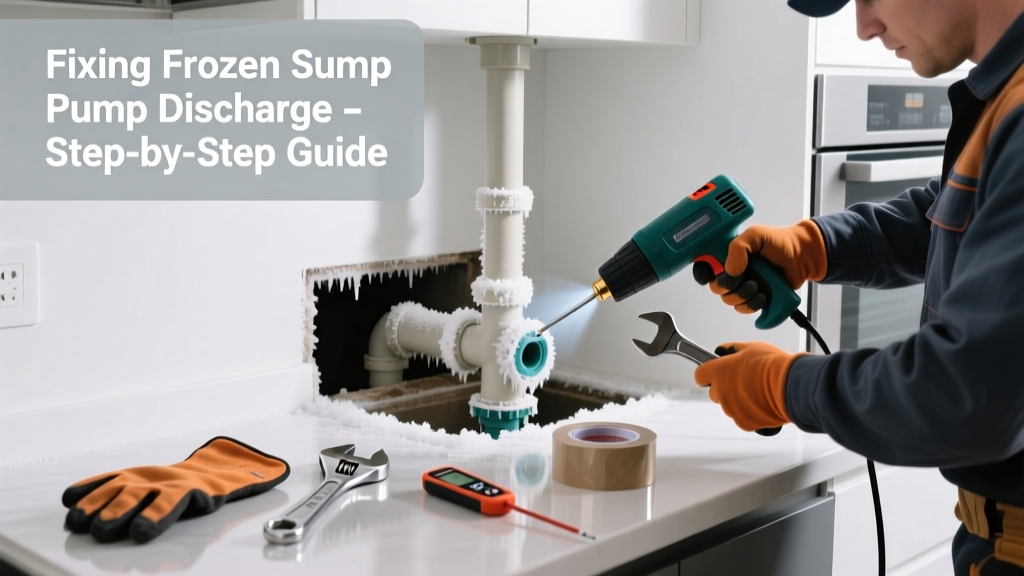
If your sump pump discharge line froze inside your kitchen—typically running through a cabinet toe-kick, under flooring, or along a cold exterior wall—you’re likely facing slow drainage, gurgling sounds, or even water pooling near the pump or cabinet base. This isn’t just an inconvenience: a fully blocked line can cause the sump pit to overflow during heavy rain or snowmelt, risking thousands in water damage. And unlike outdoor discharge lines, kitchen-located pipes are harder to access and more prone to hidden ice buildup due to inconsistent insulation and proximity to cold exterior sheathing.
Quick Diagnosis
Before grabbing tools, confirm the freeze location and severity. Most kitchen-related freezes happen in one of these spots:
- Discharge pipe running beneath the kitchen floor slab (especially in slab-on-grade homes)
- Pipe routed through an uninsulated cabinet toe-kick adjacent to an exterior wall
- Connection point where PVC transitions to corrugated flexible pipe near the foundation perimeter
- Where the line passes through a rim joist or cold crawlspace access panel behind base cabinets
Tools & Materials Needed
| Item | Purpose | Estimated Cost |
|---|---|---|
| IR thermometer gun | Pinpoint exact freeze location by scanning pipe surface temperature (look for <32°F zones) | $25–$45 |
| Heat tape (UL-listed, self-regulating) | Apply directly to pipe to melt ice and prevent future freezing | $18–$32 |
| Flexible inspection mirror + LED headlamp | See behind tight cabinet spaces without full disassembly | $12–$28 |
| 10-ft length of 1.5" insulated flex duct liner | Wrap around pipe in toe-kick cavities to retain heat and block cold air infiltration | $22–$36 |
| Non-toxic antifreeze solution (propylene glycol) | Safe for limited use in discharge lines where food prep areas are nearby | $14–$24 |
Step-by-Step Fix
Use these methods in order of increasing invasiveness. Start with the least disruptive:
- Apply targeted heat: Wrap a UL-listed heat tape around the coldest section of pipe (identified with IR thermometer), plug into a GFCI outlet, and monitor for 90 minutes. Do NOT use hair dryers or space heaters near cabinets—fire risk is high in confined, wood-rich spaces.
- Flush with warm propylene glycol solution: Mix 1 part food-grade propylene glycol with 3 parts warm (not boiling) water. Pour slowly into the sump pit while the pump runs. This lowers the freezing point of residual water in the line without toxic fumes or cabinet damage.
- Re-route the discharge path: If the line repeatedly freezes in the same spot, cut the PVC behind the cabinet and install a new 1.5" rigid PVC run along the interior wall—insulated and sloped at 1/4" per foot—then exit through a higher, warmer point in the foundation (e.g., above grade on south-facing wall).
When to Call a Pro
DIY becomes unsafe or ineffective when:
- The pipe is embedded in concrete slab and shows signs of cracking or heaving
- You detect mold growth or persistent dampness behind cabinets (indicating long-term leakage)
- The sump pump itself cycles erratically or makes grinding noises—suggesting impeller damage from ice backpressure
- Your home has a radon mitigation system sharing the same discharge path (cross-contamination risk)
According to the Insurance Institute for Business & Home Safety's 2023 report, 68% of sump pump failures linked to frozen discharge lines occurred in homes built before 2000 with un-insulated toe-kick routing—making professional rerouting often the most cost-effective long-term fix.
Prevention Tips
Prevent recurrence with these field-tested upgrades:
- Install R-6 closed-cell foam insulation around the entire discharge run inside cabinets—not just the pipe, but the cavity walls and rim joist gaps
- Add a battery backup sump pump (battery backup sump pump installation) so the system keeps running during power outages that coincide with deep freezes
- Seal toe-kick openings with silicone caulk and magnetic vent covers that close automatically below 40°F
- Set your smart thermostat to no lower than 60°F overnight—even in unused rooms—since kitchen cabinet temps drop faster than room air
Can I use bleach to thaw the line?
No. Bleach corrodes PVC over time and reacts unpredictably with ice, potentially cracking fittings. It also creates hazardous fumes when mixed with stagnant organic debris in the line. Stick to propylene glycol or heat tape—both approved for residential sump applications per ASTM F2765-22 standards.
Will pouring hot water down the sump pit help?
Not reliably—and it’s risky. Boiling water can warp PVC joints or crack brittle older pipe. Worse, if the ice blockage is downstream, hot water may pool in the sump pit and overflow before melting the obstruction. Use warm (120°F max) glycol solution instead—it flows farther and stays liquid longer.
How do I know if the freeze damaged the pump motor?
Listen for humming without impeller movement, or check for tripped internal thermal overload switches (consult your Zoeller or Wayne manual). A multimeter test showing open-circuit continuity across the motor windings confirms burnout. Most modern pumps fail silently after sustained backpressure—so if the pump ran for >3 minutes without discharging, assume internal damage and test before reinstalling.
Is it safe to insulate the pipe with fiberglass batts in the cabinet?
No—fiberglass retains moisture and compresses over time, losing R-value. Worse, it sheds particles near food prep zones. Use only closed-cell spray foam (applied by pros) or pre-slit neoprene pipe insulation rated for indoor use (e.g., Armacell Tubolit FR). For toe-kicks, wrap the pipe *and* line the cavity with foil-faced polyisocyanurate board (R-6.5 per inch).
Can I connect the discharge to my laundry drain to avoid freezing?
Absolutely not. Sump pump discharge contains soil sediment, iron bacteria, and possible radon-laden groundwater. Connecting to a sanitary sewer violates EPA Clean Water Act guidelines and most municipal codes. It also risks sewage backup into your kitchen if the main line clogs. Always maintain a dedicated, code-compliant stormwater path—sump pump discharge code requirements spell this out clearly.
What’s the fastest way to detect early freezing before it blocks completely?
Install a $22 water flow sensor (e.g., Phyn Plus) on the discharge line just after the pump outlet. Set alerts for flow rates below 10 GPM for >2 minutes—this catches partial restriction before total failure. Pair it with an indoor temp/humidity sensor in the cabinet (like Airthings Wave Mini) to flag sub-freezing microclimates before ice forms.
A frozen sump pump discharge in the kitchen is more than a plumbing nuisance—it’s a red flag pointing to thermal bridging, poor insulation details, or outdated system design. Fixing it right means addressing both the immediate ice and the underlying cold-air infiltration path. Once you’ve rerouted or insulated the line properly, test it during the next cold snap with a timed pump cycle and IR scan—then keep that heat tape plugged in year-round on a timer set to activate below 40°F. Your basement (and your cabinets) will thank you.