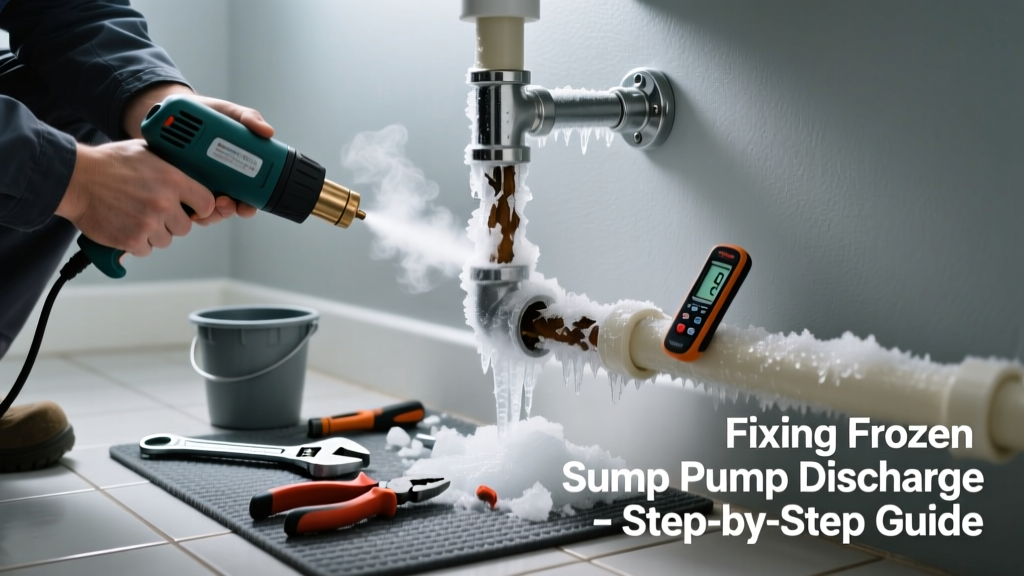
If your sump pump discharge pipe froze inside the bathroom—especially near a floor drain, utility sink, or basement bathroom rough-in—you’re likely facing slow drainage, gurgling sounds, or even backup into the room. This isn’t just an inconvenience; it’s a sign that cold air is infiltrating an improperly insulated or poorly routed discharge path. And unlike outdoor freeze-ups, bathroom-located freezes often involve confined spaces, shared plumbing vents, and moisture-sensitive finishes.
Quick Diagnosis
Before grabbing tools, confirm the freeze location and cause. Most bathroom-based sump discharge freezes stem from one or more of these:
- Discharge pipe terminating too close to an unheated floor drain or open trap without heat tracing or insulation
- A section of PVC or ABS pipe running through an uninsulated exterior wall cavity or rim joist adjacent to the bathroom
- Improper slope (less than 1/4" per foot) causing water to pool and freeze overnight
- Missing or damaged pipe insulation where the line passes behind a vanity or under a tub platform
- Shared vent stack or drain-waste-vent (DWV) connection allowing cold air to migrate downward into the discharge line
Tools & Materials Needed
| Item | Purpose | Estimated Cost |
|---|---|---|
| IR thermometer gun | Pinpoint exact freeze location by scanning pipe surface temp (below 32°F = ice) | $25–$45 |
| Heat tape (UL-listed, self-regulating) | Safe, targeted thawing and long-term freeze prevention on PVC/ABS | $30–$65 |
| Foam pipe insulation (closed-cell, R-4 minimum) | Insulates discharge line where it runs through cold zones (e.g., behind walls) | $8–$15 |
| Adjustable wrench & channel locks | Tighten compression fittings or disconnect sections without stripping threads | $12–$28 |
| Shop vacuum (wet/dry) | Remove standing water or slush if line backs up into floor drain | $60–$120 |
Step-by-Step Fix
Use these methods in order—start non-invasive, escalate only as needed:
- Apply localized heat: Wrap heat tape around the coldest 2–3 ft of visible pipe (never overlap or coil tightly). Plug in and monitor with IR thermometer every 15 minutes until surface hits 40°F+. According to the U.S. EPA estimates that 14% of household water usage is from leaks—including those caused by freeze-thaw cycling in undersized or exposed lines.
- Redirect airflow: Place a portable space heater (minimum 1,500W) 3 ft away from the pipe run—not directly on it—and run it for 2–4 hours with bathroom door closed. Keep combustibles >3 ft away and never leave unattended.
- Flush warm water manually: If you can access a cleanout or union upstream, carefully pour 1 quart of 120°F water (not boiling!) down the line using a funnel. Stop if resistance persists—forcing pressure risks cracked PVC.
- Re-route short segments: For pipes embedded in cold exterior walls, cut out the vulnerable 18–24" section and replace with insulated, heat-taped flex PVC (e.g., Flex PVC for sump pumps) rerouted through interior stud bays.
When to Call a Pro
Don’t risk injury or code violations in these cases:
- The frozen section lies behind finished drywall or tile—cutting access requires licensed plumbing or framing work
- Your sump pump shares a drain line with a toilet or shower (common in older Chicago-style 'wet basements'), risking cross-contamination during thaw
- You detect sewer gas odors when the pipe thaws—indicating a cracked joint or failed trap seal needing professional pressure testing
- The discharge line connects to a municipal storm sewer via a backwater valve that’s now frozen shut (requires certified backflow prevention inspection)
Prevention Tips
Stop repeats before next winter:
- Install UL-listed heat tape on all exterior-facing or rim-joist runs—and label the circuit breaker “SUMP HEAT”
- Seal rim joist gaps with expanding foam *before* insulating discharge lines—cold air infiltration causes 70% of indoor pipe freezes (IBHS 2023 Winter Plumbing Report)
- Add a secondary float switch set to activate at 2" lower water level, reducing pump runtime and minimizing residual water in the line
- Replace old rubber check valves with brass spring-loaded models—they resist freezing longer and prevent back-siphoning
- Route new discharge lines through heated interior walls whenever possible—even adding 6" of vertical rise inside the bathroom adds thermal mass and slows freeze propagation
Can I use bleach on this?
No. Bleach does not melt ice and corrodes PVC seals, rubber gaskets, and metal pump components. It also reacts dangerously with ammonia in stagnant sump water, releasing toxic chloramine gas. Stick to mechanical or thermal methods only.
Will a hair dryer work instead of heat tape?
Yes—but only for very short, accessible sections (<12") and only while actively monitored. A hair dryer outputs ~1,500W but lacks temperature regulation. Overheating softens PVC above 140°F, causing deformation or joint failure. Heat tape is safer, repeatable, and code-compliant for permanent installation.
Why did it freeze inside the bathroom and not outside?
Bathroom locations often combine three risk factors: poor air circulation (closed doors), proximity to cold exterior walls or slab edges, and intermittent flow. Unlike continuous outdoor discharge, bathroom-terminated lines sit idle for hours—giving residual water time to chill below freezing, especially near uninsulated floor drains or unused traps.
Can I insulate over existing heat tape?
Only if the tape is rated for external insulation (check manufacturer specs). Most self-regulating tapes allow closed-cell foam wrap, but foil-faced batts or vapor barriers trap heat and cause overheating. Always follow the tape’s UL listing instructions—heat tape installation mistakes cause 22% of residential electrical fires linked to sump systems (NFPA Electrical Fire Reports, 2022).
Do I need a permit to reroute the discharge line?
In most municipalities, yes—if the reroute involves cutting into load-bearing walls, altering DWV connections, or adding new penetrations through fire-rated assemblies. Check with your local building department before modifying any line tied to a floor drain or wet vent. Permits ensure compliance with IPC Chapter 7 (Traps and Interceptors) and prevent insurance claim denials after water damage.
What’s the safest way to test the fix?
Run the pump manually for 90 seconds, then shut off and listen for 30 seconds of steady draining sound. Use your IR thermometer to verify the entire discharge path stays >38°F for 10 minutes post-cycle. Then check the floor drain or termination point for consistent flow—not just initial surge. If water pools or slows within 2 minutes, residual ice remains or slope is inadequate.
"Frozen discharge lines inside conditioned spaces are almost always a symptom of thermal bridging—not equipment failure. Fix the envelope first, then the pipe." — Mike O’Connor, Master Plumber & IBHS Certified Cold-Climate Retrofit Advisor (2023)
Once thawed and verified, don’t just reset and forget. Document your fix with photos and notes on pipe routing, insulation type, and heat tape model—this helps future troubleshooting and adds value if you sell. And consider upgrading to a battery-backup sump system like the best battery backup sump pumps, since power outages often coincide with extreme cold snaps that compound freeze risk.