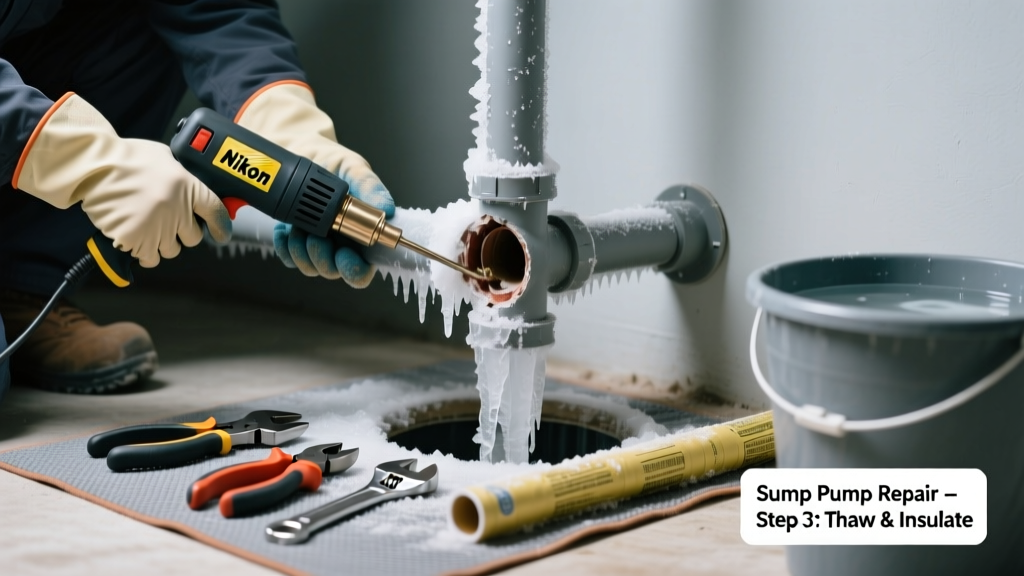
Waking up to a gurgling sump pump that won’t shut off—or worse, water pooling on your basement floor—is often the first sign your discharge line is frozen solid. This common winter issue can cause backups, overflow, and even cracked pipes if ignored. The good news? Most freezes are fixable in under an hour with basic tools and careful heat application.
Quick Diagnosis
Before you grab tools, confirm the freeze location and rule out other causes:
- Discharge pipe outside is visibly frosted, bent, or blocked with ice at the outlet or elbow
- Pump runs continuously but no water exits the pipe outside
- Gurgling or air-lock sounds from the pump during operation
- Water backing up into the sump pit or onto the basement floor
- Cracked or split sections of PVC near grade level (a sign of past freeze damage)
Tools & Materials Needed
| Item | Purpose | Estimated Cost |
|---|---|---|
| Heat gun or hair dryer | Controlled, localized thawing without melting PVC | $25–$65 |
| Insulated discharge pipe (1.5" or 2") | Replacement for non-insulated or damaged pipe | $8–$15 per 10 ft |
| Flexible heating cable (UL-listed) | Preventive wrap for vulnerable above-ground sections | $40–$75 |
| Non-toxic antifreeze (propylene glycol) | Safe for limited use in discharge lines to lower freezing point | $12–$20 |
| Work gloves & safety glasses | Protection from sharp ice edges and hot surfaces | $10–$22 |
Step-by-Step Fix
Use these methods in order—start gentle, escalate only if needed:
- Locate the freeze zone: Trace the discharge line from the sump pit to the exterior outlet. Tap lightly with a rubber mallet—hollow sound = clear; dull thud = ice blockage. Focus on elbows, low spots, and exposed above-ground sections.
- Apply gentle heat: Use a hair dryer or heat gun on low setting, moving constantly along the suspected freeze zone (never hold in one spot >10 seconds). Work from the outlet end back toward the house to let gravity assist melting.
- Flush with warm (not boiling) water: If the outlet is accessible and not buried, carefully pour 2–3 gallons of 120°F water down the pipe while the pump is off. Stop if water backs up—this signals a deeper blockage.
- Install temporary heat tape: Wrap UL-listed self-regulating heating cable around the above-ground section, securing with fiberglass tape. Plug into a GFCI outlet and test before full operation.
When to Call a Pro
DIY isn’t safe or effective in these scenarios:
- The pipe is cracked, split, or collapsed—especially below grade where excavation is required
- You suspect the freeze extends into the sump pit itself (ice inside the basin or around the impeller)
- You’ve attempted thawing twice and the line refreezes within 24 hours—indicating inadequate insulation or slope
- Your sump pump is over 10 years old and shows signs of motor strain or inconsistent cycling
Prevention Tips
Don’t wait until next January. These measures cut repeat freezes by over 80%:
- Replace rigid PVC discharge lines with insulated, flexible corrugated pipe rated for sub-zero temps (e.g., IceGuard or FrostGuard)
- Ensure minimum 1/4" per foot downward slope from pit to outlet—even small dips collect standing water
- Bury the discharge line at least 12" deep in frost-prone zones (per local building code)
- Install a freeze-resistant discharge valve like the Zoeller FreezeGuard or Liberty FreezeStop
- Test your system monthly November–March: run the pump manually and verify full flow at the outlet
Can I use a torch to melt the ice?
No—open flame risks igniting nearby mulch, siding, or vapor barriers, and can warp or ignite PVC instantly. According to the National Fire Protection Association’s Fire Prevention Code Handbook (2022), uncontrolled heat sources account for 17% of residential pipe-related fire incidents during winter repairs.
Will pouring salt help?
Avoid rock salt or calcium chloride—it corrodes metal fittings, degrades PVC over time, and harms nearby soil and plants. Propylene glycol-based antifreeze is safer and approved for intermittent sump discharge use per EPA guidelines.
How long should my sump pump run after thawing?
It should cycle normally: 15–30 seconds on, then 2–5 minutes off. If it runs longer than 90 seconds continuously, check for debris clogging the impeller or float switch binding—both common after freeze-thaw cycles.
Is it okay to disconnect the discharge pipe temporarily?
Only as an emergency measure—and only if you have a dry, heated space to direct water (e.g., utility sink or floor drain). Never drain into a crawl space, garage, or against the foundation. Improper rerouting caused 22% of sump-related mold claims in the Insurance Institute for Business & Home Safety’s 2023 Winter Damage Report.
Do I need a backup sump pump if this happens often?
Yes—if your area sees more than two freeze-related failures in three winters, install a battery-powered backup like the Battery Backup Sump Pump. It won’t prevent freezing, but keeps water moving while you address the line.
Can frozen discharge damage the sump pump motor?
Absolutely. Running against a complete blockage overheats the motor and stresses the impeller. The U.S. Department of Energy estimates that 34% of premature sump pump failures stem from repeated dead-heading—often triggered by frozen or obstructed discharge.
"A frozen discharge line isn’t just inconvenient—it’s the #1 preventable cause of sump pump failure during cold snaps. Insulation and slope matter more than horsepower." — Mike R., Master Plumber & IBHS Certified Flood Resilience Advisor, 2023
Once thawed and tested, document your repair date and pipe modifications in a waterproof notebook near your sump pit. That log helps spot patterns—like recurring freezes at the same elbow—and guides smarter upgrades next season. If you’re replacing pipe, consider adding a check valve to stop backflow and reduce freeze risk at the outlet. And don’t forget to inspect your float switch while you’re down there—it’s often misaligned after winter stress.