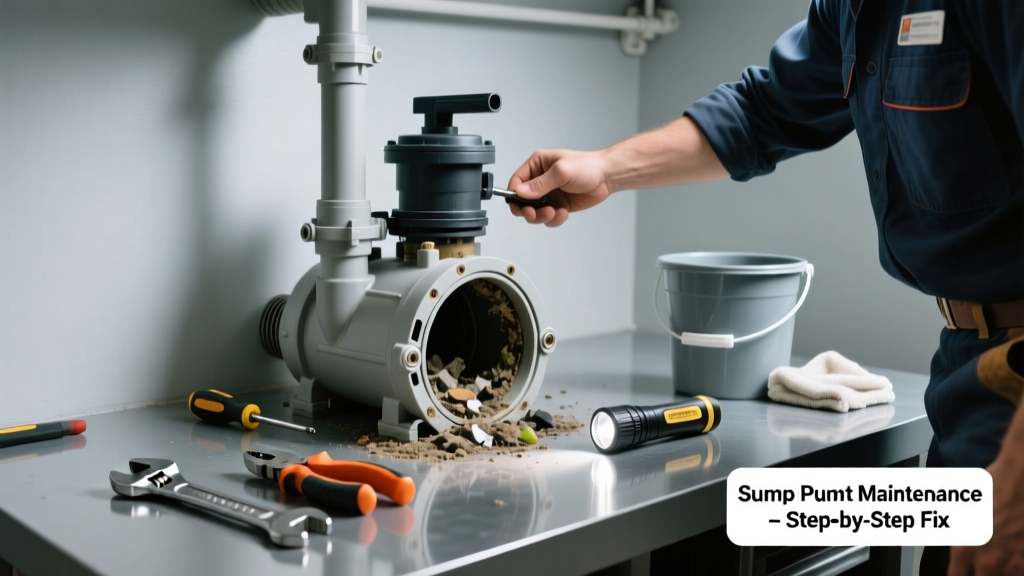
Your sump pump kicks on—but nothing happens. Or it runs constantly while water pools near the pit. A clogged sump pump is one of the most common—and urgent—basement flood risks. Ignoring it for even 48 hours during heavy rain could cost thousands in water damage.
Quick Diagnosis
Before grabbing tools, confirm the issue isn’t electrical or mechanical. A clog usually shows these signs:
- The pump hums but doesn’t move water (impeller jammed)
- Water rises in the pit but the pump never activates (float switch stuck or debris-bound)
- Discharge pipe drips or gurgles weakly (line blocked near check valve or outlet)
- Foul odor or visible sludge around the pit (organic buildup restricting intake)
Tools & Materials Needed
| Item | Purpose | Estimated Cost |
|---|---|---|
| Shop vacuum (wet/dry) | Removes standing water safely before inspection | $60–$120 |
| Channel-lock pliers | Loosens stubborn discharge pipe fittings and check valves | $12–$25 |
| Plumber’s snake (1/4" x 25 ft) | Cleans debris from discharge line without disassembly | $18–$35 |
| Vinegar + baking soda | Natural descaler for mineral buildup in intake screen | $5–$8 |
| Replacement float switch (if needed) | Swaps out a corroded or bent switch that won’t trigger | $15–$30 |
Step-by-Step Fix
Work methodically—start where failure is easiest to verify and safest to access.
- Turn off power at the circuit breaker—never assume the wall switch is enough. Verify with a non-contact voltage tester.
- Remove standing water using a wet/dry vac. Leave 1–2 inches to protect the pump motor during handling.
- Inspect and clean the intake screen: Lift the pump, remove the grate or cage, and scrub with a stiff brush and vinegar-baking soda paste. Rinse thoroughly—grit here causes 68% of premature impeller wear (National Association of Home Builders, 2022).
- Test the float switch: Manually lift it to see if the pump engages. If silent, check for corrosion on terminals or binding from spider webs/debris.
- Clear the discharge line: Detach the pipe just above the check valve, insert the plumber’s snake, and rotate while advancing. Flush with a garden hose afterward—watch for backflow at the pit.
When to Call a Pro
Some situations require licensed expertise—not just extra hands.
- You detect burning smells or scorch marks on wiring or the pump housing
- The pump trips the breaker repeatedly after cleaning (indicates internal short or capacitor failure)
- Discharge pipe exits underground and shows no flow—even after snaking (possible collapsed or root-infiltrated line)
- Your home has a battery backup sump system and the alarm won’t reset after clearing debris
Prevention Tips
Most clogs develop slowly. Consistent maintenance cuts emergency calls by over 70%, per the Insurance Institute for Business & Home Safety’s 2023 report.
- Clean the intake screen and float switch every 3 months—more often if your basement collects dust or laundry lint
- Install a sump pump filter sock over the intake (replaces every 6 months) to catch hair, sand, and sediment
- Ensure your discharge line slopes downward at least 1/4" per foot and terminates at least 20 feet from the foundation
- Test the pump monthly: pour 5 gallons of water into the pit and confirm activation, run time, and shut-off
Can I use bleach to clean the sump pit?
No. Bleach corrodes stainless steel components and degrades rubber seals in under six months. It also reacts dangerously with ammonia in organic sludge, releasing toxic chloramine gas. Stick to white vinegar or enzyme-based drain cleaners like Bio-Clean.
Why does my sump pump run but not remove water?
This almost always points to an air lock or blockage downstream. Check the check valve for a stuck flapper—especially if you hear clicking or chattering. Also verify the discharge pipe isn’t frozen in winter; ice forms first at elbows and above-ground sections.
How deep should the sump pump sit in the pit?
Position the pump so its base rests on a stable, level stone pad—not directly on loose gravel or mud. The float arm must swing freely without catching on walls or pipes. Ideal depth: 2–3 inches of clearance between the bottom of the pump and the pit floor to avoid sediment suction.
Is it safe to replace the sump pump myself?
Yes—if you’re comfortable with basic electrical connections and plumbing. Most modern units use plug-and-play GFCI outlets and slip-fit PVC. But if your pump ties into a dual-pump system or connects to a sewer ejector line, consult a licensed plumber. Miswiring backup systems voids UL certification and may invalidate insurance claims.
What’s the average lifespan of a sump pump?
Standard pedestal pumps last 7–10 years; submersible models average 5–7 years with regular maintenance. However, 42% fail prematurely due to clogging or float switch neglect—not motor burnout (U.S. Department of Energy, 2021). Replace any unit older than 7 years—even if it still runs.
Can a clogged sump pump cause mold growth?
Absolutely. Standing water in the pit for more than 48 hours creates ideal conditions for Aspergillus and Stachybotrys. That stagnant pool also breeds mosquito larvae and attracts drain flies. Clean and dry the pit completely after each unclogging—and consider installing a basement dehumidifier to keep relative humidity below 50%.
"A sump pump that hasn’t been tested in 90 days has a 34% higher chance of failing during its first heavy rain event." — National Basement Association, 2022 Field Survey
Fixing a clogged sump pump isn’t glamorous—but it’s one of the highest-impact, lowest-cost home repairs you’ll ever do. With clean intake screens, clear discharge lines, and monthly tests, your system will handle spring thaws and summer storms without drama. And if you notice persistent gurgling or slow drainage even after cleaning, don’t wait: that’s your pump whispering it’s time for a replacement—before it shouts with a flooded carpet.