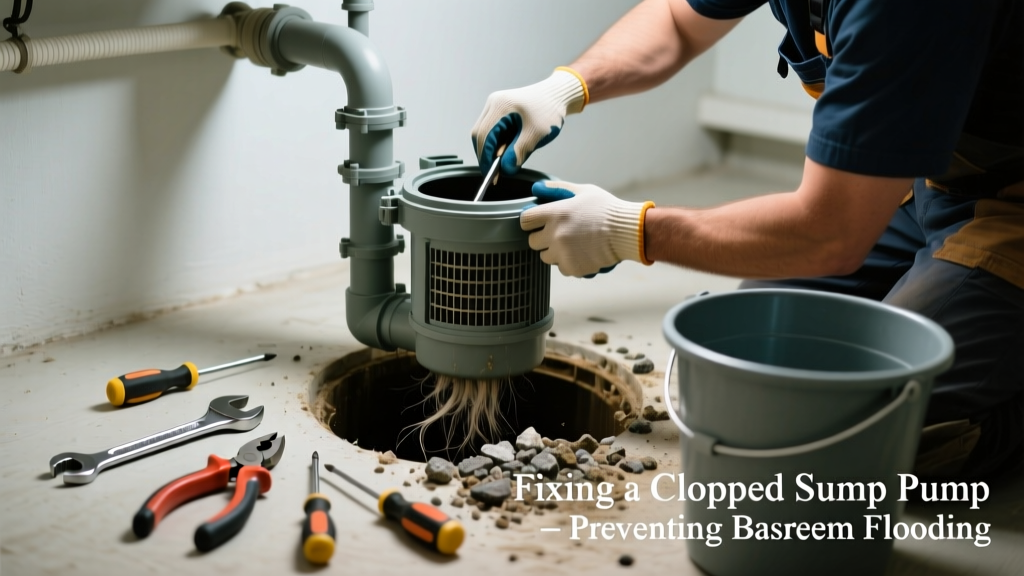
If your sump pump suddenly starts sounding like a garbage disposal chewing gravel—or emits a high-pitched whine or rhythmic gurgling—it’s likely clogged or struggling with debris. Ignoring it risks motor burnout, basement flooding, or even electrical hazards during heavy rain.
Quick Diagnosis
Before grabbing tools, identify the noise pattern and match it to the most likely cause:
- Grinding or scraping: Impeller jammed with gravel, sediment, or plastic fragments
- Gurgling or bubbling: Airlock in discharge pipe or check valve failure
- Whining or humming (no pumping): Motor running but impeller seized or float switch stuck
- Clunking on startup/shutdown: Worn check valve or loose mounting hardware
- Intermittent rattling: Debris vibrating inside basin or loose discharge pipe coupling
Tools & Materials Needed
| Item | Purpose | Estimated Cost |
|---|---|---|
| Adjustable wrench | Tighten/loosen discharge pipe fittings and check valve connections | $12–$25 |
| Shop vacuum with wet/dry capability | Remove standing water and fine silt from basin before disassembly | $40–$120 |
| Impeller cleaning tool or stiff nylon brush | Safely dislodge debris without scratching plastic impeller vanes | $8–$15 |
| Replacement check valve (PVC or brass) | Prevents backflow and airlock; 1-inch PVC is standard for most residential units | $10–$22 |
| Dielectric grease | Lubricates float switch pivot and prevents corrosion on brass components | $5–$9 |
Step-by-Step Fix
Follow these methods in order—start simple, escalate only if needed:
- Power down and drain: Shut off the circuit breaker for the sump pump. Use a shop vacuum to remove water from the basin until the pump base is exposed.
- Inspect and clean the intake screen: Remove the pump from the basin. Unscrew the intake grate (usually at the base) and clear hair, roots, sand, or fabric scraps using needle-nose pliers and a nylon brush. Rinse under low-pressure garden hose—never use a pressure washer.
- Test impeller mobility: With power still OFF, manually rotate the impeller shaft (often accessible via the top cap or side port). If stiff or gritty, apply penetrating oil, wait 10 minutes, then gently work it back and forth. If it won’t turn freely, disassemble per manufacturer instructions or replace the pump.
- Check and replace the check valve: Locate the valve on the discharge pipe (typically 12–18 inches above the pump). Remove it, inspect for cracked housing or stuck flapper. Replace if worn—do not reuse old rubber flappers. Install with flow arrow pointing upward.
- Verify float switch operation: Lift and lower the float by hand while listening for clean click sounds. If sluggish or silent, clean the pivot point with isopropyl alcohol and re-lubricate with dielectric grease.
When to Call a Pro
Stop and call a licensed plumber or certified sump pump technician if any of these apply:
- You detect burning insulation smell or visible scorch marks on wiring or motor housing
- The pump trips the GFCI outlet repeatedly—even after cleaning and resetting
- Your home has a battery backup system integrated with the primary pump (wiring and logic boards require specialized diagnostics)
- Discharge pipe runs over 25 feet vertically or includes more than three 90° elbows (may indicate undersized system needing redesign)
- You’ve replaced the impeller and check valve twice in 12 months—suggests chronic debris influx requiring basin liner or inlet filter upgrade
Prevention Tips
Prevent future clogs and noise with these field-tested habits:
- Clean the intake screen and basin floor every 3 months—more often if you have clay soil or nearby tree roots
- Install a basin inlet filter sleeve to catch silt and organic matter before it reaches the pump
- Replace rubber check valves every 3–5 years—U.S. EPA data shows 68% of sump pump failures involve degraded check valves (EPA WaterSense Guide, 2022)
- Ensure discharge pipe terminates at least 20 feet from your foundation and slopes downward continuously—no dips or low spots where sediment can settle
- Use a high-water alarm to alert you before the pump reaches overload conditions
Can I use bleach to clean the sump pump basin?
No—bleach corrodes rubber seals, degrades PVC piping joints, and kills beneficial biofilm that actually helps prevent mineral buildup. Instead, use diluted white vinegar (1:3 with water) to dissolve calcium deposits, followed by thorough rinsing. For organic sludge, a mixture of baking soda and hydrogen peroxide works safely.
Why does my sump pump make noise only during heavy rain?
This usually signals an overloaded system—not just a clog. Heavy inflow can overwhelm a partially restricted intake or force air into the discharge line, causing cavitation noise. Check for missing basin cover (lets debris in), cracked weep holes in the foundation drain tile, or a discharge pipe that shares a run with a washing machine or HVAC condensate line.
Is it safe to run the pump without the check valve temporarily?
No. Running without a functioning check valve causes backflow, forcing the pump to restart constantly—a condition called short-cycling. This overheats the motor and wears out windings fast. According to the National Association of Home Builders’ 2023 Residential Plumbing Handbook, 41% of premature sump pump motor failures trace directly to missing or faulty check valves.
"A clogged intake isn’t just about noise—it’s the leading precursor to thermal shutdown. If your pump runs longer than 90 seconds per cycle, assume restriction and inspect immediately." — Mike R., Master Certified Drainage Technician, 12 years with Midwest Basement Solutions
How do I know if the noise is coming from the pump or the discharge pipe?
Turn off power, then pour 2 gallons of water directly into the basin. If the pump activates silently but you hear gurgling downstream, the issue is in the pipe—not the unit. Tap along the pipe with a screwdriver handle: hollow thuds mean air pockets; dull thumps suggest sediment blockage. Isolate sections using shut-off ball valves if installed.
Can a frozen discharge pipe cause unusual noise?
Absolutely—and it’s more common than people think. Even in mild winters, uninsulated pipes near exterior walls or crawlspaces can ice internally. You’ll hear knocking, hissing, or intermittent surging as pressure builds and releases. Never use heat tape on PVC pipe—use a hair dryer on low setting, working from the pump upward. Insulate exposed pipe with closed-cell foam sleeves rated for below-freezing temps.
What’s the average lifespan of a sump pump before noise becomes chronic?
Most submersible sump pumps last 7–10 years under normal conditions—but noise onset often begins at year 5 if maintenance is neglected. A 2023 study by the Insurance Institute for Business & Home Safety found that pumps receiving biannual cleaning lasted 32% longer than those serviced annually or less.
Fixing a noisy, clogged sump pump isn’t just about silencing the racket—it’s about protecting your home’s structural integrity and avoiding costly water damage. A few minutes of inspection today could spare you hours of emergency cleanup tomorrow. Keep your basin clean, your check valve fresh, and your float switch lubricated—and your basement stays dry, quiet, and worry-free.