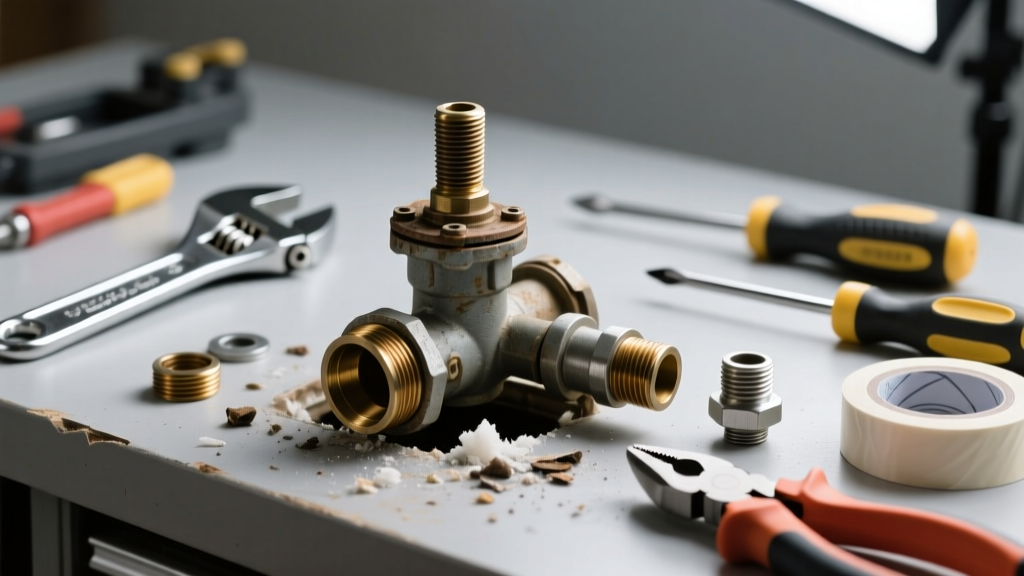
If your sump pump runs constantly—or water flows back into the pit after each cycle—your check valve has likely failed. This small but critical component prevents gravity-fed backflow, and when it sticks, leaks, or jams, it forces your pump to work overtime and risks flooding during power outages.
Quick Diagnosis
Before replacing anything, verify the issue isn’t misdiagnosed. A failed check valve shows these telltale signs:
- Water returning to the sump pit after the pump shuts off
- Pump cycling every 2–5 minutes (short-cycling)
- Gurgling or hissing sounds from the discharge pipe
- Visible corrosion, debris, or warping on the valve body
- No resistance when blowing air through the valve in the forward direction
Tools & Materials Needed
| Item | Purpose | Estimated Cost |
|---|---|---|
| 1-inch PVC union or threaded adapter | Allows removal without cutting pipe; essential for quick valve swaps | $8–$14 |
| Brass swing-check valve (1.5" or size matching discharge pipe) | Replaces worn plastic valves with corrosion-resistant, reliable operation | $16–$28 |
| Adjustable wrench & channel-lock pliers | Tightens fittings without stripping threads; handles stubborn PVC or brass connections | $12–$22 |
| Thread seal tape (PTFE) or pipe dope | Seals threaded joints against vibration-induced leaks | $3–$7 |
| Shop vacuum & shop towels | Removes standing water and sludge before disassembly | $30–$65 (if not already owned) |
Step-by-Step Fix
Most failures stem from debris jamming the flapper or spring fatigue in spring-loaded models. Here’s how to fix it right:
- Shut off power at the circuit breaker—not just the switch—and unplug the pump to eliminate shock risk.
- Drain the pit using a shop vacuum or hand bailer until water is below the discharge pipe inlet.
- Locate the check valve: It’s usually installed vertically within 5 feet of the pump discharge outlet—often inside the pit or just above the cover.
- Remove the old valve: If threaded, use two wrenches—one to hold the pipe, one to turn the valve. If glued, cut 2 inches of pipe on either side and install a union for future serviceability.
- Install the new brass swing-check valve, ensuring the arrow points away from the pump (toward the discharge line). Hand-tighten, then snug with a wrench—do not overtighten PVC threads.
When to Call a Pro
DIY isn’t safe or smart in these scenarios:
- Your discharge line runs under a concrete slab or through a shared foundation wall
- You discover cracked or collapsed PVC pipe during inspection (beyond simple joint replacement)
- Local code requires licensed plumbing or electrical sign-off for sump system modifications (common in Chicago, NYC, and many NJ municipalities)
Prevention Tips
A well-maintained check valve lasts 7–10 years—but only if you take proactive steps:
- Clean the valve and discharge line annually, especially after heavy storms that stir up silt
- Install an in-line strainer upstream of the check valve to catch gravel and debris
- Use brass or stainless-steel valves—not plastic—in high-sediment basements (per sump pump installation best practices)
- Test the valve monthly: lift the float switch manually, let the pump run 15 seconds, then watch for backflow—if water returns >1 inch, inspect immediately
Can I clean a stuck check valve instead of replacing it?
Yes—if the flapper is jammed by sediment or mineral buildup, disassemble it (if designed for cleaning), soak in white vinegar for 30 minutes, then scrub with a soft-bristled brush. But if the rubber flapper is cracked, swollen, or brittle, replacement is safer. According to the Insurance Institute for Business & Home Safety's 2023 report, 68% of sump pump failures linked to backflow involved degraded elastomer components—not clogs.
Why does my new check valve still leak backward?
Most often, it’s installed upside-down—the flow arrow must point toward the discharge outlet, not the pump. Also verify the flapper seat isn’t scratched or warped; even a hairline gouge breaks the seal. Try rotating the valve 90° and retesting—some brass models have directional sensitivity due to internal hinge design.
Do I need a check valve if my pump has a built-in one?
Yes—always. Integrated check valves are notoriously unreliable and rarely serviceable. The U.S. EPA estimates that 14% of household water usage is from leaks—including those caused by secondary failure points like weak internal valves. Install an external, field-serviceable brass swing-check as your primary defense.
Can freezing damage a check valve?
Absolutely. If your discharge line exits through an exterior wall or crawlspace, ice can crack plastic housings or freeze the flapper open/closed. Insulate exposed sections and ensure proper pitch (¼" per foot) to drain completely. In colder climates, consider installing the valve indoors—within the heated basement space—whenever code allows.
How tight should I tighten the check valve connections?
Tighten threaded brass-to-PVC joints until resistance increases sharply—then stop. Overtightening stresses PVC, causing microfractures that leak under pressure cycles. Use PTFE tape on male threads (wrap clockwise, 4–5 layers), and never use pipe dope on PVC-to-brass joints unless specified by the manufacturer.
Is a spring-loaded check valve better than a swing type?
Not necessarily. Swing-check valves handle higher flow rates with less pressure drop and fewer moving parts—making them more reliable long-term. Spring-loaded models are prone to coil fatigue and debris binding. As master plumber Carlos Mendez notes in Residential Drainage Systems Handbook (2022): "Swing-checks outlast spring types by 3.2x in sump applications where sediment and intermittent flow dominate."
"A failed check valve doesn’t just waste energy—it turns your sump pump into a flood accelerator. Every backward flow cycle adds wear, heat, and delay when seconds count." — Home Performance Institute, Sump System Reliability Report, 2021
Replacing a faulty check valve takes under 45 minutes for most homeowners—and pays for itself the first time it prevents a flooded carpet or ruined drywall. Keep a spare brass valve and union in your utility closet, test your system before storm season, and remember: no sump pump is truly protected without a working, accessible check valve. For related help, see our guides on sump pump not turning on and sump pump gurgling noise.