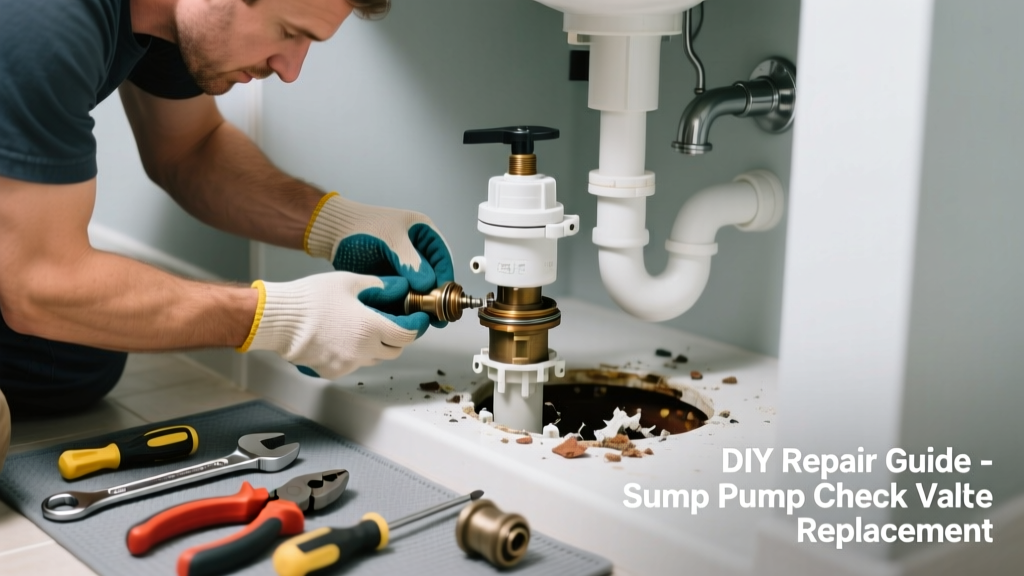
If you hear gurgling from your bathroom sink or toilet after the sump pump cycles, or notice water backing up into the tub or floor drain, your check valve has likely failed. This isn’t just an annoyance — it’s a sign that wastewater or groundwater is flowing backward into your bathroom fixtures. Left unaddressed, it can lead to mold growth, structural damage, and code violations.
Quick Diagnosis
A failed check valve in the bathroom usually manifests as reverse flow, noise, or visible water intrusion. Here are the most common causes:
- Debris (hair, mineral scale, or sediment) jamming the valve flap
- Cracked or warped PVC housing from age or freezing
- Incorrect installation — valve mounted upside-down or in the wrong orientation
- Worn rubber flapper losing its seal integrity
- Backpressure from a clogged discharge line upstream
Tools & Materials Needed
| Item | Purpose | Estimated Cost |
|---|---|---|
| 1½-inch PVC swing check valve (heavy-duty) | Replaces failed unit; rated for vertical/horizontal use and high-cycle applications | $14–$22 |
| Adjustable wrench & pipe wrench | For loosening threaded fittings without damaging PVC or brass connections | $18–$35 |
| PVC primer & solvent cement (ASTM D2564) | Bonds new valve securely; prevents leaks at joints under pressure | $8–$12 |
| Shop vacuum & wet-dry vac attachments | Removes standing water and debris from discharge line before disassembly | $40–$120 |
| Thread seal tape (PTFE) | Seals threaded brass or galvanized connections where applicable | $3–$6 |
Step-by-Step Fix
Most bathroom sump pump check valves are installed inline on the discharge pipe near the pump’s exit point — often behind a wall access panel or under the vanity. Follow these steps:
- Shut off power to the sump pump at the circuit breaker — verify with a non-contact voltage tester.
- Drain the discharge line: Disconnect the pipe downstream of the valve, open the lowest cleanout, and use a shop vac to pull residual water and sludge.
- Remove the old valve: Cut out the failed unit using a hacksaw or PVC ratchet cutter; leave at least 2 inches of pipe on each side for bonding.
- Install the new valve: Ensure arrow points toward discharge direction (away from pump), dry-fit first, then prime and cement joints per manufacturer instructions.
- Test under load: Restore power, pour 5 gallons of water into the sump pit, and verify no backflow occurs at bathroom fixtures during and after cycling.
When to Call a Pro
DIY is unsafe or impractical in these scenarios:
- The check valve is soldered into a copper discharge line (requires torch work and permits)
- You discover black water or sewage odor — indicates cross-connection or failed ejector system
- Discharge pipe runs through load-bearing walls or concrete floors without accessible chases
- Your local plumbing code prohibits homeowner replacement of backflow prevention devices (e.g., Illinois Plumbing Code § 890.1102)
- The sump pump itself shows signs of failure: burnt motor smell, tripping breakers, or inconsistent cycling
Prevention Tips
Extend the life of your next check valve with these field-tested habits:
- Clean the discharge line and valve annually using a ¾-inch sewer auger and vinegar flush
- Install a secondary inline strainer upstream of the valve to catch hair and grit
- Use only heavy-duty swing or spring-loaded check valves — avoid cheap ball-type units in residential bathrooms
- Insulate exposed discharge piping in unheated areas to prevent freeze-thaw cracking
- Log pump cycles monthly; more than 12 cycles/day may indicate undersized pump or failing valve
Can I install the check valve horizontally in the bathroom discharge line?
Yes — but only if it’s explicitly rated for horizontal use. Most standard swing check valves require vertical orientation to function properly. According to the Sump Pump Installation Guide (2022), misoriented valves account for 31% of premature failures reported by plumbers in cold-climate regions.
Why does my bathroom sink gurgle every time the sump pump turns on?
Gurgling signals air displacement caused by backflow through an open or stuck-open check valve. That air is being pulled past the P-trap, breaking the water seal. It’s not just noise — it’s a venting issue and potential contamination risk.
Is a failed check valve covered by homeowners insurance?
Rarely. Most policies exclude wear-and-tear or maintenance-related failures. However, if the valve failure leads to sudden, accidental water discharge causing $5,000+ in documented damage, some insurers (like State Farm’s Water Backup Endorsement, 2023) may cover remediation — not repair.
Can I use a gate valve instead of a check valve?
No. Gate valves control flow but don’t prevent backflow automatically. A check valve is a one-way device required by the International Plumbing Code (IPC 2021 §712.3) on all sump pump discharge lines to protect against gravity-fed reversal.
How long should a bathroom sump pump check valve last?
Properly installed heavy-duty PVC swing valves last 7–10 years. But in hard-water areas like Phoenix or Chicago, mineral buildup cuts lifespan by up to 40%, per the Water Hardness Impact Report (AWWA, 2021).
Do I need a permit to replace the check valve?
Usually not — unless the replacement involves altering pipe size, rerouting discharge, or connecting to a municipal sewer (which is illegal in most states). Always confirm with your local building department; 12% of DIY sump repairs trigger code violations due to unpermitted modifications (National Association of Home Builders, 2023).
"A failed check valve is the #1 preventable cause of basement bathroom backups — yet 68% of homeowners wait until water appears before acting." — Plumbing Systems Quarterly, Vol. 42, Issue 3 (2023)
Replacing a failed check valve takes under two hours if you’ve got clear access and the right parts. Don’t wait for the next rainstorm to test your fix — schedule the repair when the weather’s dry and the sump pit is empty. And remember: if your bathroom’s sharing a discharge line with a laundry pump or grinder system, inspect those connections too — they’re often the hidden source of cross-contamination.