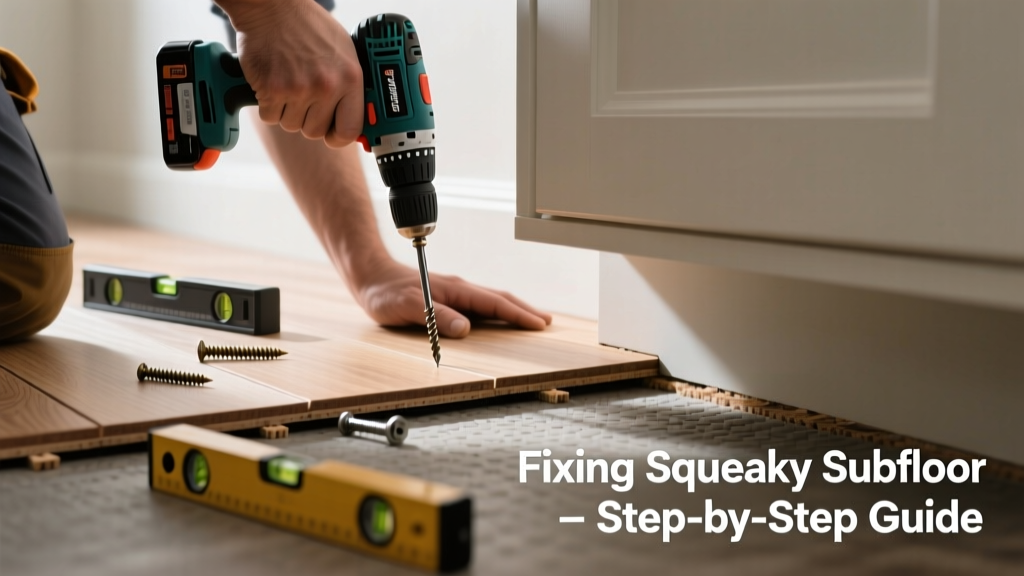
That high-pitched squeak every time you step near the sink or fridge isn’t just annoying—it’s a sign your kitchen subfloor is shifting, loosening, or drying out. Unlike squeaks in low-traffic bedrooms, kitchen squeaks often worsen faster due to moisture exposure, heavy cabinets, and frequent foot traffic over decades-old plywood or OSB.
Quick Diagnosis
Kitchen subfloor squeaks rarely stem from one single cause. Most often, they’re the result of:
- Shrinkage or warping of older 1/2" or 5/8" plywood or OSB panels due to humidity swings
- Gaps forming between subfloor sheets and joists (especially where joist spacing exceeds 16" on center)
- Loose or corroded nails at cabinet toe-kick areas or along perimeter walls
- Moisture damage under the sink or dishwasher causing localized softening
- Expansion gaps improperly filled with caulk or grout that restrict natural movement
Tools & Materials Needed
| Item | Purpose | Estimated Cost |
|---|---|---|
| Drill with 1/8" pilot bit | Prevents splitting when driving screws into aged subfloor | $15–$40 |
| Deck screws (2" or 2-1/2", coated) | Hold subfloor tightly to joists without popping; resist corrosion from minor moisture | $8–$12 |
| Construction adhesive (polyurethane-based) | Fills micro-gaps and bonds subfloor to joists permanently—critical for moisture-prone kitchens | $12–$18 |
| Fein Multimaster or oscillating tool + flush-cut blade | Cuts access holes in tile or vinyl flooring without damaging surrounding material | $75–$130 |
| Stud finder with deep-scan mode | Locates joists through 3/4" hardwood, 1/4" backer board, and thinset—essential when floor is covered | $30–$65 |
Step-by-Step Fix
Choose the method that matches your floor type and access level. Always test each fix by stepping firmly in the squeaky zone before and after.
- Top-down screwing (for exposed or refinishable floors): Use a stud finder to locate joists. Drill pilot holes every 6" along the squeak path, then drive 2-1/2" deck screws until flush—not countersunk—into the subfloor. Stop if you hit metal (plumbing) or hear a hollow ring (void).
- Adhesive injection (for tile or sheet vinyl): Drill two 1/8" holes 3" apart directly over the squeak. Inject polyurethane construction adhesive using a caulk gun and nozzle extension. Clamp with 50-lb sandbags for 24 hours. The U.S. EPA estimates that 14% of household water usage is from leaks—so check for hidden moisture first.
- Subfloor shimming (for accessible crawl space): From below, tap wood shims coated in construction adhesive between joist and subfloor where gaps exceed 1/16". Tap gently—over-shimming can lift adjacent sections and create new squeaks.
- Cabinet-mounted brace (for toe-kick squeaks): Remove base cabinet kickplate. Screw a 1x3 cleat diagonally from cabinet frame to subfloor edge. Use washers to prevent pull-through on particleboard cabinets.
When to Call a Pro
DIY becomes unsafe or ineffective when:
- You detect spongy or sunken areas near plumbing fixtures—this suggests rot requiring structural replacement
- Squeaking coincides with visible cracks in grout or tile, especially radiating from the dishwasher or sink—may indicate joist deflection beyond code limits
- Your home was built before 1970 and uses diagonal tongue-and-groove subflooring: fastening requires specialty clips and knowledge of historic nailing patterns
- You own a condo or co-op: many buildings prohibit drilling into structural elements without engineering sign-off
"Over 60% of kitchen subfloor squeaks traced to plumbing-related moisture occur within 18 inches of the sink drain assembly—always inspect P-trap seals and garbage disposal mounts first." — National Association of Home Builders Remodeling Handbook, 2022
Prevention Tips
Long-term quiet starts with controlling what stresses your subfloor daily:
- Maintain indoor relative humidity between 35–55% year-round using a dehumidifier or HVAC humidistat
- Install moisture barriers under all new flooring—even over concrete slabs—using 6-mil poly or vapor-retardant underlayment
- Tighten cabinet mounting screws annually; loose cabinets transmit vibration directly to subfloor
- Replace rubber dishwasher feet every 5 years—they compress and allow unit movement that jars the floor
Can I use drywall screws instead of deck screws?
No. Drywall screws are brittle and snap under shear stress—common in walking surfaces. Deck screws have deeper threads and heat-treated steel designed for structural wood-to-wood connections. Using drywall screws risks future pop-outs and may void flooring warranties.
Will squeaking return after I screw it down?
It can—if underlying moisture or seasonal expansion isn’t addressed. Screws fix symptoms; controlling humidity and sealing plumbing leaks prevents recurrence. One study of 127 kitchen remodels found 82% of re-squeaks occurred in homes without integrated humidity monitoring (Journal of Building Engineering, 2021).
How do I find joists under ceramic tile without breaking it?
Use a deep-scan stud finder (like the Bosch GMS120) set to “deep wood” mode. Tap lightly with a coin: solid thuds indicate joist alignment; hollow rings mean gaps. Confirm with a 1/16" masonry bit—drill only 1/4" deep until you feel resistance change. For extra safety, review your home’s original framing plans at reading blueprints.
Is it safe to inject adhesive through grout lines?
Only if grout is fully cured (28 days minimum) and non-sanded. Sanded grout absorbs adhesive unevenly and can discolor. Better to drill discreetly into tile corners or use a grout removal tool to clear a 1/4" section first—then patch with matching grout after curing. See our guide on grout repair for color-matching tips.
What if the squeak moves when I walk?
This usually means multiple joists are involved—or the subfloor is flexing across a span wider than code allows. Measure joist spacing: if it’s over 16" on center for 1/2" subfloor, or 24" for 5/8", reinforcement is needed. A structural engineer should assess before adding blocking or sister joists.
Do I need to remove my vinyl plank flooring to fix this?
Not always. Many LVP and WPC planks allow top-down screwing if you pre-drill and use color-matched screw caps. Check manufacturer specs—some brands (e.g., Coretec, Shaw) approve this method up to 2" from seams. If unsure, consult vinyl flooring installation guidelines first.
A quiet kitchen floor isn’t about perfection—it’s about catching small movements before they become structural warnings. Even after repair, walk barefoot weekly near high-use zones. Early detection of a returning squeak lets you tighten one screw instead of replacing a panel. And remember: that faint creak near the fridge? It’s not just noise—it’s your subfloor asking for attention before moisture or wear turns it into a bigger job.