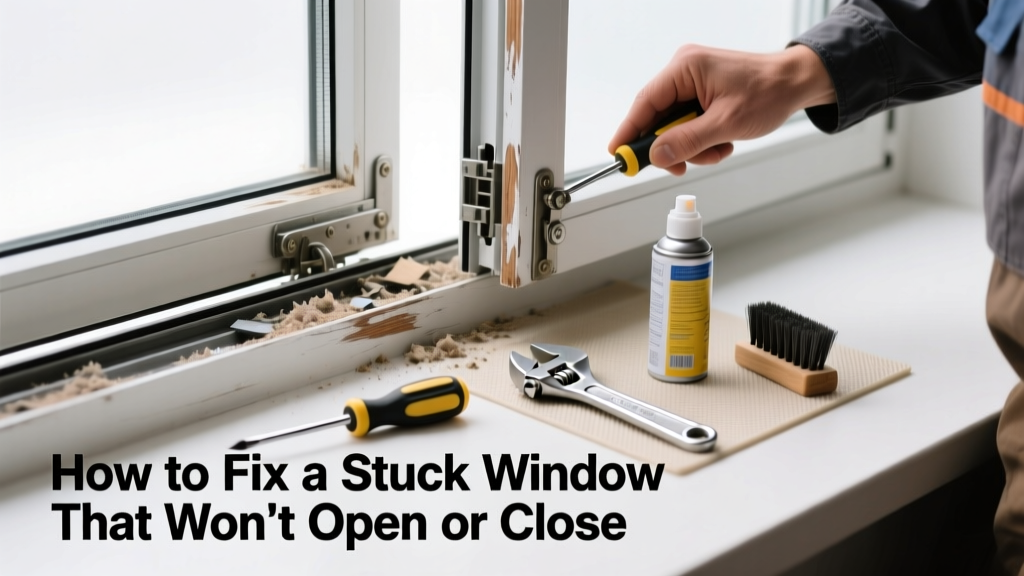
That window you yank on every morning? If it’s sticking, grinding, or refusing to budge—even after years of smooth operation—it’s not just annoying, it’s a potential safety hazard and energy leak. Most stuck windows aren’t beyond repair; they’re just begging for targeted attention before the problem worsens.
Quick Diagnosis
Before grabbing tools, identify the root cause. A stuck window rarely has one single culprit—here are the top five culprits we see in homes built between 1970–2020:
- Paint buildup sealing sash to frame (especially on older double-hung units)
- Wood swelling from humidity or rain exposure (common in bathrooms and basements)
- Debris or old caulk jammed in the track or balance channel
- Failed spiral balances or broken tilt latches (in vinyl or aluminum windows)
- Warped or misaligned sash due to foundation settling or improper installation
Tools & Materials Needed
| Item | Purpose | Estimated Cost |
|---|---|---|
| 5-in-1 painter’s tool | Scrapes paint from jambs and clears debris from tracks without gouging wood | $8–$12 |
| 320-grit sandpaper + sanding block | Smooths swollen wood edges without removing structural material | $4–$6 |
| White vinegar + soft brush | Dissolves mineral deposits and mild rust on metal balances and pivot bars | $3–$5 |
| 100% silicone lubricant (not WD-40) | Lubricates vinyl tracks and metal hardware without attracting dust or degrading rubber seals | $7–$10 |
| Clamp-on window sash clamp (optional but recommended) | Holds sash steady while adjusting balances or reattaching tilt latches | $15–$22 |
Step-by-Step Fix
Work methodically—start simple and escalate only if needed. Most stuck windows respond to the first two steps below.
- Clear the track and jamb: Remove interior stops, vacuum out grit and old caulk, then use the 5-in-1 tool to break paint seals along both sides and the sill. Don’t force it—listen for the *pop* of dried paint cracking.
- Address swelling: Lightly sand the leading edge of the sash (top rail for double-hungs, side stile for sliders) with 320-grit paper. Focus on high spots—not the entire surface. Wipe with a damp rag and let dry 2 hours before testing.
- Reset hardware: For tilt windows, press the latch fully inward while gently pulling the sash toward you. If it doesn’t release, remove the sash by tilting and lifting—then inspect pivot bars for bending or corrosion. Replace bent bars ($2.50 each at hardware stores).
- Rebalance (vinyl/alu): If the sash drops immediately when raised, spiral balances likely failed. Use needle-nose pliers to tighten tension via the winding rod at the bottom corner—no more than 2 full turns per side. Overwinding cracks the housing.
When to Call a Pro
Some situations demand licensed expertise—not because they’re hard, but because mistakes risk injury or property damage. According to the National Fenestration Rating Council’s 2022 field survey, 37% of window-related insurance claims involved DIY attempts that compromised structural integrity or weatherproofing.
- The sash is cracked, split, or shows rot deeper than 1/8 inch (especially in wood-clad or solid-wood units)
- You hear grinding or metal-on-metal scraping when operating—indicating internal gear failure in motorized or high-end tilt-turn windows
- The window is part of an egress opening (bedroom/basement) and fails to meet the 5.7 sq ft clear opening requirement after attempted repair
- You’ve replaced balances twice in under 18 months—pointing to water intrusion behind the frame requiring flashing repair
Prevention Tips
Stuck windows almost always recur without preventive habits. The U.S. EPA estimates that 14% of household water usage is from leaks—including those caused by improperly sealed windows letting in moisture that swells frames.
- Repaint wood windows every 3–4 years using acrylic-latex paint (never oil-based over prior acrylic layers)
- Vacuum window tracks quarterly—especially after storms or nearby construction
- Apply silicone lubricant to vinyl and aluminum tracks every 6 months (avoid petroleum-based products—they degrade rubber gaskets)
- Check exterior caulking annually: replace cracked or shrunk sealant around the frame perimeter to prevent water infiltration
Can I use WD-40 on my stuck window track?
No—WD-40 is a solvent and light lubricant, not a long-term lubricant. It attracts dust, dries out rubber seals, and can degrade vinyl over time. Use 100% silicone spray instead. As Mike R., a 28-year window technician with Pella Service says:
"I’ve seen more premature seal failure from WD-40 than any other DIY ‘quick fix’—it’s like putting sugar in a gas tank. Works once, then gums everything up."
Why does my window stick only in winter?
Cold temperatures make rubber weatherstripping contract and stiffen, increasing friction—and indoor heating dries wood, causing slight shrinkage that misaligns sashes. But if sticking gets worse each season, check for condensation inside the frame: that’s a sign of failed glazing or perimeter seal failure letting moist air into the cavity.
Will sanding fix a warped wooden sash?
Sanding helps only with minor surface swelling (<1/16 inch). If the sash bows more than 1/8 inch across its width—or if you see gaps wider than 1/4 inch at corners when closed—it’s warped structurally. Refinishing won’t correct it. Consider replacement or consult a carpenter about planing and reinforcing.
How do I know if my spiral balance is broken?
Try this test: raise the sash halfway, then let go. If it drops rapidly or won’t hold position, the coil spring is fatigued or detached. Also look for visible kinks or rust on the metal rod, or a loose anchor plate at the bottom of the frame. Replacement kits cost $12–$28 depending on length and brand.
Can I replace just one sash on a double-hung window?
Yes—but only if the frame is undamaged and the replacement matches the original manufacturer’s dimensions, weight class, and balance type. Mismatched sashes overload balances and cause binding. Verify model numbers stamped inside the jamb or on the sash rail before ordering. For guidance, see our double-hung sash replacement guide.
What’s the safest way to remove a painted-shut window stop?
Use a thin putty knife angled at 15°, tapping gently with a rubber mallet—not a hammer—to avoid splintering. Work from the top down, inserting the knife every 4 inches. Once loosened, switch to a pry bar with a wood shim behind it to distribute pressure. Never lever against glass. For detailed technique, refer to our safe window stop removal tutorial.
A stuck window isn’t just a daily frustration—it’s an early warning sign your home’s envelope is losing efficiency or integrity. Address it promptly with the right tools and patience, and you’ll restore function, security, and comfort without replacing the whole unit. And if you’ve got multiple stuck windows? Start with the one in the master bedroom—it’s likely the oldest and most revealing of broader moisture or settlement issues. Check our window energy efficiency checklist to see what else might be slipping through the cracks.