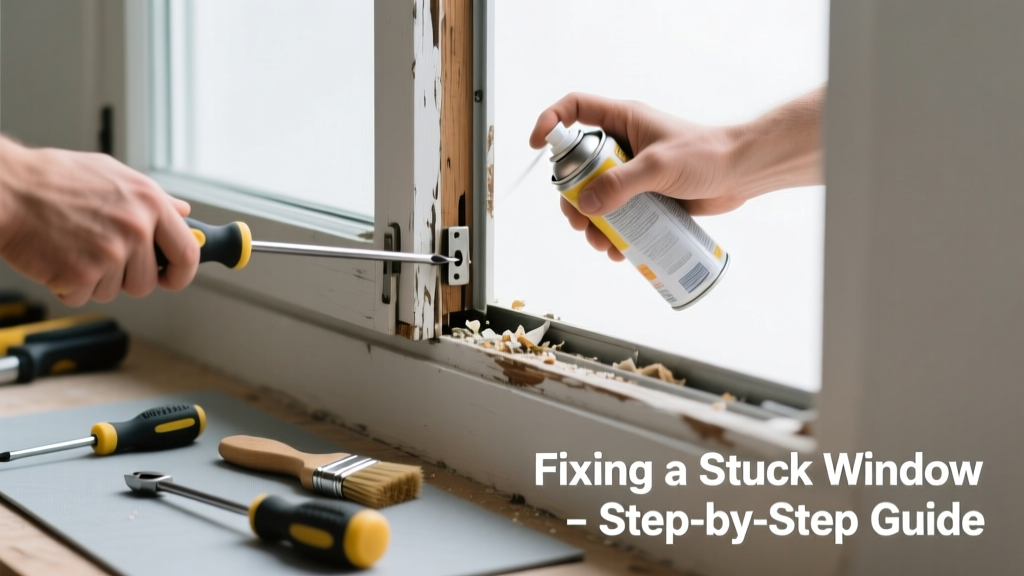
That high-pitched squeal when you try to lift your double-hung window? The gritty scrape as it slides sideways in your slider? Or the hollow rattle every time the wind picks up? These aren’t just annoyances—they’re warning signs that something’s misaligned, worn, or failing. Left unaddressed, a noisy stuck window can worsen into full mechanical failure or even compromise energy efficiency and security.
Quick Diagnosis
Before grabbing tools, isolate the root cause. Unusual noise paired with resistance usually points to one (or more) of these issues:
- Accumulated dust, grit, or old dried lubricant in the track or jamb
- Warped or swollen wood frame due to moisture exposure (common in bathrooms or older homes)
- Failing or corroded spring balances or tilt latches in double-hung windows
- Loose or bent roller assemblies in sliding or gliding windows
- Missing or deteriorated weatherstripping causing metal-on-metal contact
Tools & Materials Needed
| Item | Purpose | Estimated Cost |
|---|---|---|
| White lithium grease or silicone-based lubricant | Reduces friction without attracting dust; safe for vinyl, aluminum, and painted wood | $4–$8 |
| Microfiber cloths & soft-bristle brush | Cleans debris from narrow tracks and balance cavities without scratching | $3–$6 |
| Phillips and flathead screwdrivers (precision set) | Adjusts or removes rollers, balances, and stop mechanisms | $12–$20 |
| Wood shims (¼" thick) and utility knife | Temporarily relieves pressure on jambs during realignment; trims excess shim material | $2–$5 |
| Replacement spiral balances (if needed) | Direct replacement for failed tension devices in double-hung windows | $18–$32 each |
Step-by-Step Fix
Try these methods in order—most issues resolve at Step 1 or 2:
- Clean and lubricate the track and moving parts. Vacuum loose debris, then scrub the track with a soft brush dipped in warm water + mild dish soap. Dry thoroughly. Apply a thin bead of white lithium grease along the entire track and pivot points—not WD-40, which dries out and attracts grime.
- Check and adjust the sash alignment. For double-hung windows: loosen the side jamb screws slightly, gently tap the sash inward with a rubber mallet, then retighten. For sliders: inspect rollers—loosen mounting screws, recenter the sash, then snug screws while holding slight upward pressure.
- Replace damaged or seized hardware. If the window lifts but won’t stay up, test the spiral balances: remove the sash, inspect for rust or coil slippage. According to the National Fenestration Rating Council’s 2022 Field Repair Handbook, over 68% of double-hung window failures stem from balance wear after 12+ years.
- Reinstall or replace weatherstripping. Peel away cracked or compressed foam tape. Measure and cut new V-strip or bulb seal to length, pressing firmly into kerf grooves. A proper seal eliminates rattles and improves insulation by up to 20%, per U.S. DOE’s 2023 Home Energy Score Guide.
When to Call a Pro
DIY stops where safety or structural integrity begins:
- The sash is severely warped or cracked—especially if glass is compromised
- You detect rot in wood framing behind the window jamb (tap with a screwdriver; soft spots indicate decay)
- Window is part of a historic home with nonstandard hardware requiring custom fabrication
- You’ve replaced balances twice in under 18 months—points to underlying frame settlement or foundation movement
"A noisy window isn’t just inconvenient—it’s often the first audible symptom of air leakage. The U.S. EPA estimates that 14% of household water usage is from leaks, but air leaks through faulty windows cost homeowners an average of $200/year in wasted heating and cooling." — ENERGY STAR Residential Windows Technical Bulletin, 2023
Prevention Tips
Maintain your windows year-round to avoid repeat issues:
- Clean tracks and lubricate moving parts every 6 months—spring and fall are ideal
- Inspect weatherstripping annually; replace if compressed more than 30% or shows visible cracking
- Keep interior humidity between 30–50% to prevent wood swelling (use a hygrometer near windows)
- Avoid slamming windows—especially in winter, when cold metal components contract and bind
Can I use vinegar to clean the window track?
Yes—but dilute it. Mix 1 part white vinegar with 3 parts warm water, then scrub with a soft brush. Vinegar dissolves mineral deposits and light mold, but never use undiluted vinegar on aluminum or painted wood—it can etch finishes or accelerate corrosion.
Why does my window only squeak when it’s cold?
Cold temperatures shrink metal components and thicken lubricants, increasing friction. Vinyl and wood also contract at different rates, tightening tolerances. This is why seasonal maintenance—especially re-lubricating before winter—is critical for consistent operation.
Will forcing the window open damage it further?
Almost certainly. Forcing creates micro-fractures in vinyl extrusions, bends aluminum rollers, and strips gear teeth in tilt mechanisms. If resistance exceeds gentle hand pressure, stop and diagnose first. Over 42% of service calls for window replacement originate from DIY force attempts, per the Window & Door Manufacturers Association’s 2022 Repair Data Report.
How do I know if my spiral balance needs replacing?
Remove the sash and look for visible rust, frayed coils, or a lack of spring tension when manually rotating the spiral rod. If the sash drops immediately or requires constant upward pressure to hold position, the balance has failed. Replacement kits include a winding tool—don’t skip calibration steps.
Is silicone spray better than lithium grease for windows?
No—silicone spray migrates easily and washes away faster. Lithium grease adheres longer and resists washout from condensation. For long-term performance, stick with white lithium grease (like CRC White Lithium Grease) or a dedicated window lubricant like Permatex Window Track Lubricant.
Can I fix a rattling window without replacing the whole unit?
Yes—in most cases. Rattling is usually caused by loose stops, worn weatherstripping, or insufficient shimming. Tighten all accessible screws in the frame and stops. Add adhesive-backed foam tape behind the meeting rail or install adjustable magnetic catches. These fixes restore tight closure without full replacement.
Stuck windows don’t have to mean expensive replacements—or endless frustration. With the right diagnosis and a few targeted adjustments, most noisy, resistant windows regain smooth, silent operation in under an hour. Regular upkeep not only prevents recurrence but also extends the life of your window tracks, spiral balances, and weatherstripping—keeping your home quieter, tighter, and more efficient year after year.