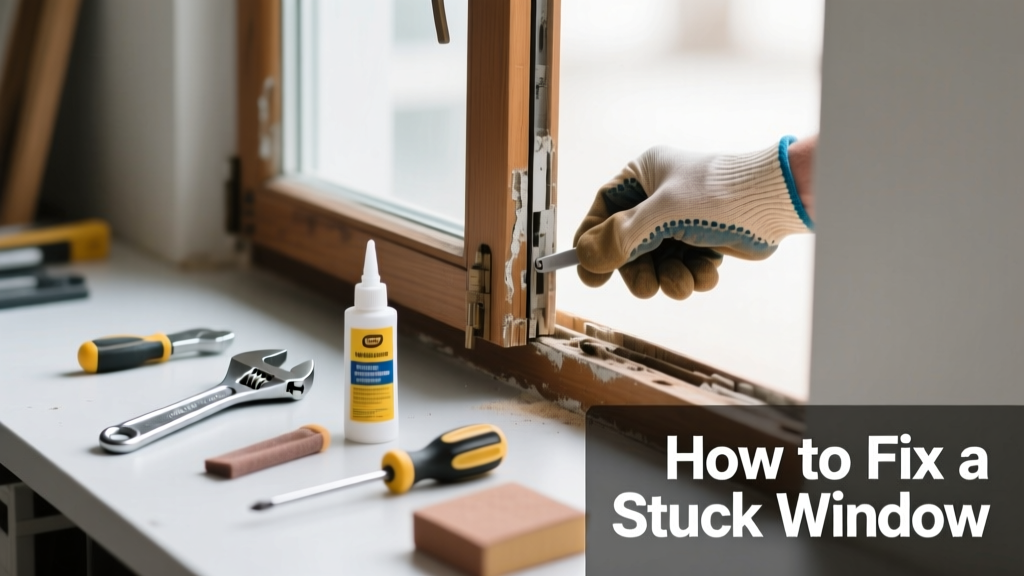
That stubborn window that won’t budge—whether it’s jammed shut or frozen open—is more than just annoying; it’s a safety and energy-efficiency issue. In winter, a stuck closed window can trap moisture and promote mold; in summer, a stuck open one invites pests and drafts. Most stuck windows are fixable in under an hour with basic tools and the right approach.
Quick Diagnosis
Before grabbing tools, identify the root cause. A stuck window rarely has just one culprit—often it’s a combination of factors:
- Paint buildup sealing sash to frame (especially on older double-hung windows)
- Swollen wood from humidity or water exposure
- Dirt, grime, or old caulk blocking the track
- Warped or misaligned sash due to foundation settling or improper installation
- Faulty or broken tilt-latch mechanism (on vinyl or fiberglass units)
Tools & Materials Needed
| Item | Purpose | Estimated Cost |
|---|---|---|
| Utility knife with fresh blade | Cuts through paint seals and dried caulk along sash edges | $3–$8 |
| Wooden shim or plastic pry bar | Provides gentle leverage without marring wood or vinyl | $5–$12 |
| Mineral spirits or denatured alcohol | Dissolves old paint and adhesive residue safely | $6–$10 |
| Lightweight silicone lubricant (not WD-40) | Reduces friction on vinyl or metal tracks without attracting dust | $4–$9 |
| 100-grit sandpaper + sanding block | Removes minor swelling and smooths rough spots on wood sashes | $2–$5 |
Step-by-Step Fix
Start with the least invasive method and progress only if needed. Always test movement after each step.
- Cut the paint seal: Run a utility knife vertically along both sides and the top of the sash where it meets the frame. Focus on the meeting rail—the horizontal seam between upper and lower sash in double-hungs. This is the #1 cause of stuck windows in homes built before 1990.
- Clean the track and jamb: Vacuum debris from the track, then wipe with a rag dampened with mineral spirits. For vinyl windows, check for warped or cracked rollers—replace if cracked or missing.
- Address wood swelling: Lightly sand swollen areas with 100-grit paper, then apply a thin coat of boiled linseed oil to stabilize moisture content. Let dry 24 hours before retesting.
- Lubricate and realign: Apply silicone lubricant to tracks and pivot points. Gently rock the sash side-to-side while applying upward pressure—this often frees a slightly misaligned sash.
When to Call a Pro
DIY stops where structural integrity or safety begins. Don’t attempt these fixes yourself:
- The window sash is visibly warped more than 1/8 inch across its width (measured with a straightedge)
- You hear cracking or splintering sounds when applying gentle pressure
- The window is part of a fire egress route and fails to open fully within 5 seconds (per IRC R310.1)
- It’s a sealed, insulated glass unit (IGU) showing condensation between panes—indicating seal failure and possible gas loss
"Over 62% of window-related home insurance claims involving water intrusion trace back to improperly maintained or forced-open windows," according to the Insurance Institute for Business & Home Safety's 2023 Residential Window Report.
Prevention Tips
Maintaining your windows twice yearly prevents most sticking issues before they start:
- Scrape and repaint window frames every 3–5 years—never let paint bridge the sash-to-frame gap
- Vacuum window tracks every spring and fall; flush with vinegar-water mix to dissolve mineral deposits
- Apply a light coat of paste wax to wood sash rails annually to repel moisture
- Check exterior caulking around the window perimeter—recaulk any gaps wider than 1/8 inch to prevent water infiltration
Can I use WD-40 on my vinyl window track?
No—WD-40 attracts dust and grime, leading to faster buildup and eventual track binding. Use only silicone-based or white lithium grease lubricants labeled safe for vinyl. The U.S. EPA estimates that 14% of household water usage is from leaks—including those caused by failed window seals worsened by improper lubrication.
Why does my window stick only in winter?
Winter humidity drops indoors, causing wood to shrink—but if the frame was painted over without proper expansion gaps, the sash binds as it contracts. Also, cold temperatures make old paint brittle and more likely to fracture and seize the joint. Check for frost accumulation inside the jamb cavity—this indicates air leakage you’ll want to address via air leak sealing.
Will forcing the window open break it?
Yes—especially with double-pane vinyl or aluminum windows. Excessive force can crack the IGU seal, snap tilt latches, or bend the balance shoe mechanism. If you feel resistance beyond gentle rocking, stop and diagnose first. Replacing a broken balance system costs $120–$250; replacing a shattered IGU runs $280–$550.
Do I need to remove the sash to fix this?
Only for double-hung windows with severely corroded or broken spiral balances—or if you’re refinishing the entire sash. Most sticking issues resolve without removal. If you do pull the sash, watch our step-by-step sash removal guide to avoid damaging the jamb liner or balance tubes.
Can I fix a stuck casement window myself?
Yes—if the crank handle turns but the sash doesn’t move, inspect the hinge arm linkage for bent or disconnected parts. Tighten loose mounting screws at the hinge and operator base. If the crank spins freely with no resistance, the gearbox is stripped and requires replacement—a $25–$40 part you can swap in under 20 minutes with a Phillips screwdriver.
Is a stuck window a sign of foundation problems?
Sometimes—but not always. If multiple windows on the same wall stick in the same direction (e.g., all lower sashes bind at the bottom), foundation settlement may be compressing the header. A level check across the window head reveals more than 1/4-inch deviation? That’s a red flag. Consult a structural engineer before attempting repairs—see our guide on early signs of foundation movement.
A stuck window isn’t just inconvenient—it’s a quiet warning about moisture control, energy loss, and even safety compliance. With the right diagnosis and a few targeted adjustments, most windows regain smooth operation fast. Keep your tools handy, inspect seasonally, and remember: patience and precision beat brute force every time.