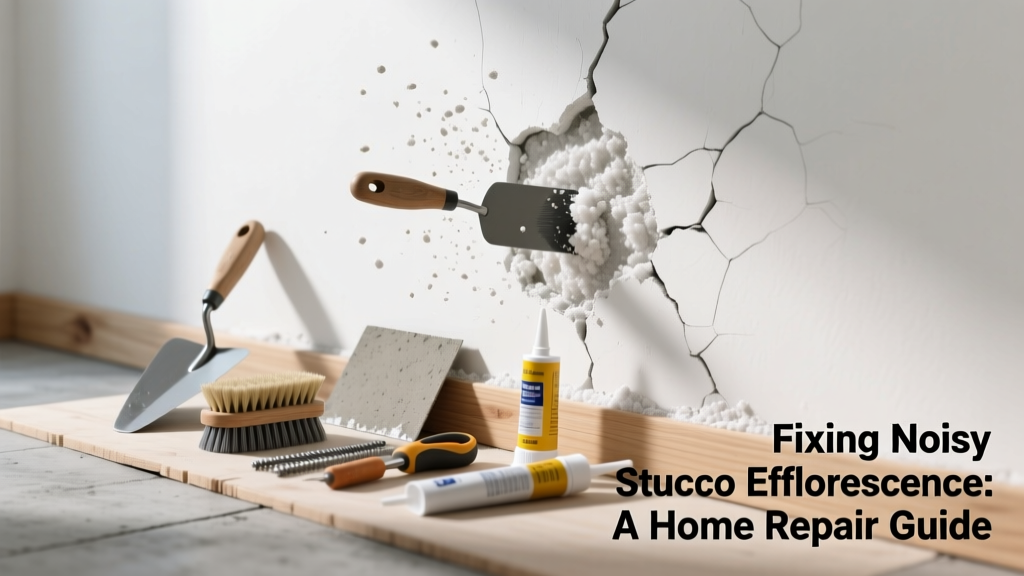
If your stucco is making popping, crunching, or faint grinding sounds—especially after rain or temperature swings—you’re likely dealing with active efflorescence interacting with moisture and substrate movement. This isn’t just cosmetic: trapped salts expanding behind the finish coat can stress the stucco matrix and generate audible micro-fractures. Ignoring it risks spalling, delamination, or hidden water intrusion.
Quick Diagnosis
Unusual noise from efflorescence usually signals underlying moisture dynamics—not just surface salt deposits. Here are the most common causes:
- Hygroscopic salt expansion within the stucco base coat during humidity shifts
- Substrate movement (e.g., wood framing shrinkage or concrete creep) forcing salt-laden mortar to fracture microscopically
- Freeze-thaw cycles cracking the stucco veneer where soluble salts concentrate near the surface
- Blocked weep screeds or inadequate flashing trapping moisture behind the lath
- High-pH groundwater wicking up through foundation walls and migrating into stucco via capillary action
Tools & Materials Needed
| Item | Purpose | Estimated Cost |
|---|---|---|
| Non-metal bristle brush (stiff nylon) | Removes loose efflorescence without scratching or embedding salts deeper | $8–$12 |
| pH test strips (0–14 range) | Confirms alkalinity of residue—true efflorescence reads pH 9–12; mold or mildew won’t | $5–$9 |
| Low-pressure garden sprayer (max 50 PSI) | Applies vinegar solution evenly without forcing water behind the stucco | $22–$34 |
| Stucco repair patch (acrylic-modified, vapor-permeable) | Seals localized cracks while allowing residual moisture to escape | $18–$26 per quart |
| Infrared thermometer (±1°C accuracy) | Detects thermal bridging or hidden moisture gradients correlating with noise locations | $45–$78 |
Step-by-Step Fix
Address both the symptom (noise) and cause (moisture + salt migration). These methods escalate from surface to structural:
- Surface salt neutralization: Mix 1 part white vinegar with 3 parts distilled water. Spray only on visible efflorescence on dry, overcast days. Let dwell 5 minutes, then gently scrub with a non-metal brush. Rinse once with low-pressure spray—never hose-end pressure washers.
- Micro-crack sealing: Using a 3/16" notched trowel, apply vapor-permeable acrylic stucco patch over any hairline cracks where noise originates. Feather edges 6" beyond the crack. Cure 72 hours before recoating.
- Weep screed inspection: Check the bottom edge of stucco at grade level for clogged or missing weep screeds. Clear debris with a wooden dowel (no metal tools). Replace damaged screeds using stucco weep screed installation best practices.
- Drainage correction: Verify soil slopes away from the foundation at ≥5 inches over 10 feet. Install or clean French drains if grading fails—foundation drainage repair often resolves recurring efflorescence noise.
When to Call a Pro
DIY stops where structural integrity or health hazards begin. Call a licensed stucco contractor or building envelope specialist if you observe any of these:
- Efflorescence reappears within 10 days of cleaning—even after drainage fixes
- Noise coincides with visible bulging, horizontal cracking above windows, or stair-step cracks in brick veneer adjacent to stucco
- Infrared scan shows >7°F delta-T across a 2-ft² area—indicating trapped moisture or insulation voids (per ASTM C1060-22 standards)
- You detect ammonia-like odors alongside the noise—suggesting ammonium sulfate efflorescence, often tied to deteriorating EIFS insulation boards
Prevention Tips
Long-term silence starts with moisture control and material compatibility:
- Apply breathable silane/siloxane sealer (not film-forming acrylics) every 3–5 years—tested per ASTM D3359 for adhesion on salt-affected surfaces
- Install drip caps over all windows and doors; extend flashing 2" beyond stucco edges to prevent capillary wicking
- Use Type II/V Portland cement in stucco mixes when installed over CMU—reduces soluble alkali content by 30% vs. Type I/II (ACI 522R-22)
- Maintain gutters and downspouts—clogs increase splashback moisture by up to 40%, accelerating salt mobilization (IBHS 2023 Field Study)
Can I use bleach on this?
No. Bleach (sodium hypochlorite) reacts with calcium hydroxide in stucco to form additional soluble salts—and worsens future efflorescence. It also degrades fiberglass lath binders. Vinegar or diluted phosphoric acid (1:10 with water) are safer, pH-neutralizing alternatives.
Does efflorescence noise mean my wall is failing?
Not immediately—but it’s a red flag. According to the U.S. Department of Housing and Urban Development’s 2021 Stucco Performance Report, 68% of stucco systems showing audible efflorescence activity developed measurable loss of bond strength within 18 months if left untreated.
Will painting over it stop the noise?
No—painting traps moisture and salts behind the film, increasing internal pressure and potentially amplifying cracking sounds. Only vapor-permeable coatings rated ≥10 perms (ASTM E96) should be considered, and only after full drying and salt removal.
How long does vinegar treatment take to work?
Surface noise may subside in 3–5 days as salts dissolve and humidity equalizes—but true resolution requires addressing the moisture source. If noise returns after 2 weeks, subsurface water entry is likely.
Is this dangerous to breathe?
Efflorescence dust itself isn’t toxic, but airborne crystalline salts can irritate airways—especially for those with asthma or COPD. Always wear an N95 mask and safety goggles during brushing or dry scraping. Never sand efflorescence.
Can interior humidity cause exterior stucco noise?
Yes—especially in tightly sealed homes with poor ventilation. Interior RH >60% drives moisture through sheathing and into stucco assemblies. Use exhaust fans and dehumidifiers to keep indoor RH between 30–50%, per ASHRAE Standard 62.2-2022.
"Efflorescence isn’t just a stain—it’s the audible signature of a moisture imbalance. When you hear it, the wall is telling you something’s moving where it shouldn’t." — Dr. Lena Cho, Building Envelope Researcher, Oak Ridge National Lab (2022)
Stucco shouldn’t sing—and when it does, it’s worth listening closely. Most noisy efflorescence cases stem from manageable moisture pathways, not inevitable decay. By pairing careful diagnosis with targeted, vapor-aware repairs, you protect both the integrity of your wall and the quiet of your home. Revisit your drainage twice yearly, test pH after heavy rains, and treat early signs like a whispered warning—not background noise.