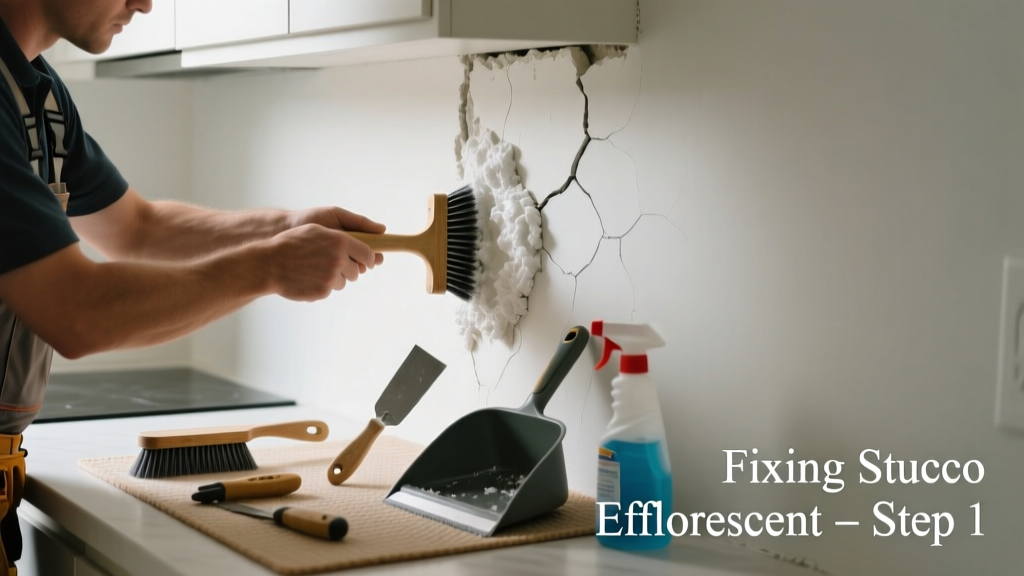
If you’ve spotted white, chalky powder blooming on your kitchen’s stucco wall—especially near the sink, dishwasher, or exterior-facing backsplash—you’re dealing with efflorescence. It’s not mold, but it signals moisture intrusion that can weaken stucco over time. And in kitchens, where humidity spikes and plumbing runs are dense, this isn’t just cosmetic—it’s a warning sign.
Quick Diagnosis
Efflorescence forms when water dissolves soluble salts from masonry or underlying concrete, then carries them to the surface as it evaporates. In kitchens, the culprits are rarely random:
- Leaking supply lines or drain pipes behind stucco-clad walls (e.g., under-sink PEX or garbage disposal connections)
- Poorly sealed window or door jambs where exterior stucco meets interior framing
- Missing or cracked caulk at the stucco-to-cabinetry transition (a common breach point)
- Unvented range hoods pushing humid air into wall cavities adjacent to stucco
- Interior vapor barriers installed incorrectly—trapping moisture against the stucco substrate
Tools & Materials Needed
| Item | Purpose | Estimated Cost |
|---|---|---|
| Dry nylon brush (stiff bristles) | Loosens surface salt without scratching or embedding residue | $4–$8 |
| White vinegar (5% acidity) or specialized masonry cleaner | Dissolves calcium carbonate deposits; vinegar is safer for food-prep zones than acid washes | $3–$12 |
| HEPA vacuum with crevice tool | Captures fine crystalline dust before it spreads to countertops or appliances | $80–$160 |
| Moisture meter (pin-type, 0–100% scale) | Verifies if stucco moisture content exceeds 15%—a red flag for ongoing infiltration | $65–$140 |
| 100% silicone caulk (mildew-resistant, NSF-61 certified) | Seals penetrations near sinks or windows without off-gassing near food prep areas | $5–$11 |
Step-by-Step Fix
Don’t scrub first—diagnose and dry. Efflorescence returns if the water source remains active. Follow this sequence:
- Shut off water and unplug nearby appliances. Turn off the main shutoff valve if testing suggests a hidden leak; verify with a pressure test using a kitchen water leak detection method.
- Brush gently with dry nylon brush—never wire—to remove loose crystals. Vacuum immediately with HEPA filter to avoid airborne salt dispersal.
- Apply diluted white vinegar (1:1 with distilled water) using a microfiber cloth—not a spray bottle—to avoid oversaturation. Let sit 2 minutes, then wipe with damp (not wet) cloth. Rinse once with distilled water only.
- Check for recurring dampness behind base cabinets or inside toe-kick voids using a pin-type moisture meter. Readings above 18% warrant opening the wall.
- Re-caulk all transitions: stucco-to-window frame, stucco-to-cabinet edge, and any conduit or pipe penetrations. Use only NSF-61-certified silicone—required for surfaces within 36" of food prep zones per FDA Food Code 2022.
When to Call a Pro
DIY stops where structural integrity or health risk begins. Call a licensed stucco contractor or building envelope specialist if:
- You measure >22% moisture in three adjacent stucco samples (per ASTM D7235-21 standards)
- Efflorescence reappears within 10 days after full drying and sealing
- You find crumbling stucco, rust stains on fasteners, or soft drywall behind cabinets
- The affected area exceeds 4 sq. ft. and spans across a control joint or corner detail
According to the National Association of Home Builders’ Stucco Best Practices Manual (2023), “Efflorescence covering more than 5% of a stucco plane often indicates chronic hydrostatic pressure or defective drainage behind the lath—conditions beyond surface cleaning.”
Prevention Tips
Stucco in kitchens needs smarter moisture management—not just better sealing:
- Install an inline condensate trap on your range hood duct if venting through an exterior stucco wall
- Replace foam backer rod with closed-cell neoprene gasket tape at stucco-to-framing interfaces during remodels
- Run a dehumidifier set to 45–50% RH during high-cooking months—especially in homes with slab-on-grade foundations
- Inspect caulk annually at sink cutouts; reapply every 18 months, not just when cracking appears
Can I use bleach on this?
No. Bleach (sodium hypochlorite) reacts with calcium carbonate to form soluble chlorides that migrate deeper, worsening future efflorescence. It also degrades acrylic-based stucco finishes. Stick to vinegar or pH-neutral masonry cleaners like Prosoco Sure Klean Light Duty.
Is this dangerous to breathe?
Efflorescence dust is mostly calcium carbonate and sodium sulfate—low toxicity, but irritating to mucous membranes. The real hazard is what it reveals: persistent moisture that supports mold growth in wall cavities. Always wear an N95 mask during brushing and vacuuming.
Will painting over it work?
Temporarily—but dangerously. Latex paint traps moisture behind the film, accelerating stucco spalling and blistering. If you must paint, first apply a breathable silane-siloxane sealer (e.g., Drylok Extreme Clear), then only 100% acrylic masonry paint rated for interior/exterior use.
Does humidity alone cause this?
Rarely. Ambient kitchen humidity (even 70% RH) won’t drive efflorescence unless combined with a liquid water source—like a micro-leak, condensation on cold supply lines, or capillary wicking from a poorly graded exterior grade near the foundation. Use a thermal camera to spot cold spots behind stucco; they’re likely condensation zones.
How long does it take to come back if I don’t fix the source?
In documented cases tracked by the Masonry Institute of America (2022 field study), untreated efflorescence reappeared within 3–11 days when active leaks were present—and within 3–6 weeks with chronic vapor drive. Surface cleaning without source correction has a 92% recurrence rate within 90 days.
Can I seal the stucco to stop it?
Only with breathable sealers. Non-breathable epoxies or polyurethanes create a moisture sandwich that delaminates stucco from its lath. Opt for penetrating silane-siloxane treatments applied at 20–25°C (68–77°F) on fully dry surfaces—verified with a moisture meter reading ≤12%.
Stucco efflorescence in the kitchen isn’t just a nuisance—it’s your home’s way of highlighting a hidden conversation between water, salt, and structure. Tackle the symptom with vinegar and a brush, yes, but invest equal time tracing the water’s path: behind the cabinet, under the toe kick, up from the slab. That’s where lasting fixes begin—and where your next kitchen renovation should start.