White, chalky deposits blooming across your stucco wall? That’s efflorescence — not mold, not paint failure, but a telltale sign of moisture moving through the wall system. It’s unsightly and often misunderstood, but fixing it starts with understanding why it’s there in the first place.
Quick Diagnosis
Efflorescence forms when water dissolves soluble salts (like calcium hydroxide) inside stucco or masonry, carries them to the surface, and leaves behind crystalline residue as the water evaporates. Common root causes include:
- Poor drainage directing water toward the foundation or wall base
- Missing, damaged, or improperly installed weep screeds or flashing
- Cracked or unsealed control joints allowing bulk water intrusion
- Interior plumbing leaks behind stucco (rare but serious)
- High soil salinity combined with capillary rise through footings
Tools & Materials Needed
| Item | Purpose | Estimated Cost |
|---|---|---|
| Stiff nylon brush (non-metal) | Removes surface crystals without scratching stucco | $8–$15 |
| White vinegar (5% acetic acid) | Dissolves calcium carbonate deposits safely and effectively | $3–$6 |
| Low-pressure garden sprayer | Applies vinegar solution evenly without forcing water behind stucco | $12–$25 |
| Waterproof tarp & drop cloths | Protects landscaping, windows, and adjacent surfaces from runoff | $15–$40 |
| Moisture meter (pin-type) | Verifies wall dryness before and after cleaning; critical for diagnosis | $65–$120 |
Step-by-Step Fix
Never pressure-wash efflorescence — it drives water deeper into the stucco assembly. Instead, follow this sequence:
- Dry the wall completely: Wait at least 72 hours after rain or irrigation. Confirm surface moisture is below 12% using a pin-type moisture meter.
- Brush gently: Use a dry, stiff nylon brush to remove loose powder. Work top-to-bottom to avoid re-depositing salts lower down.
- Apply vinegar solution: Mix 1 part white vinegar to 3 parts water in a sprayer. Spray evenly, let dwell 5–8 minutes (no scrubbing), then rinse thoroughly with low-pressure water.
- Repeat if needed: Stubborn deposits may require a second application at full strength (undiluted vinegar), but test on an inconspicuous area first.
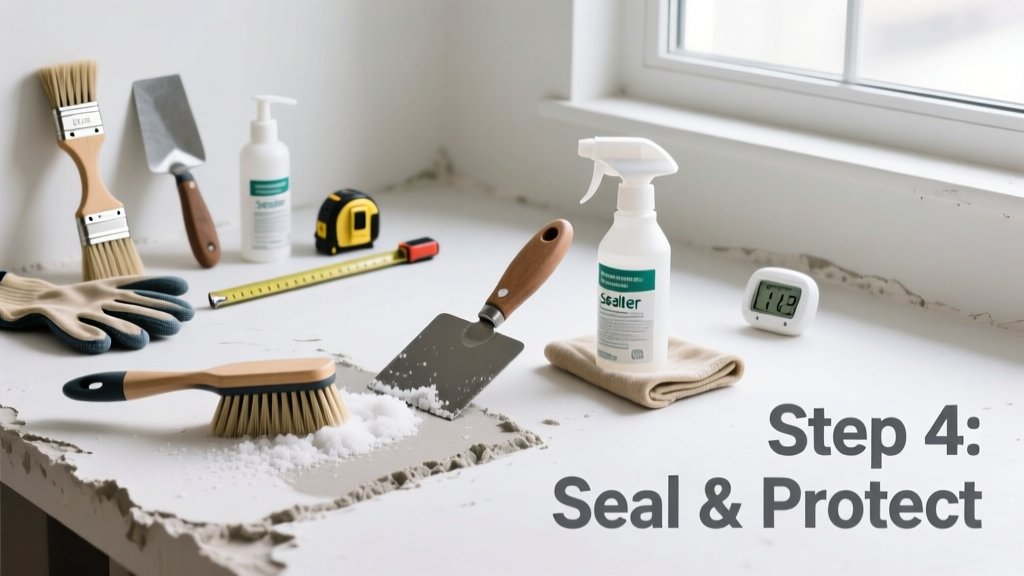
- Seal only after confirming no active moisture: If the wall stays dry for 10 days post-cleaning and moisture readings remain stable, consider a breathable silane/siloxane sealer — never acrylic or film-forming sealers.
When to Call a Pro
DIY cleaning works only when efflorescence is surface-level and moisture intrusion is minimal. Call a licensed stucco contractor or building envelope specialist if you notice any of these:
- Efflorescence returning within 2–3 weeks after cleaning
- Discoloration or softening of stucco texture near deposits
- Visible cracks wider than 1/16″, especially near windows, corners, or grade level
- Moisture meter readings above 15% in multiple locations behind the deposit zone
- Efflorescence appearing only on one side of the house — suggests directional water entry (e.g., failed roof flashing or gutter overflow)
According to the Stucco Manufacturers Association’s 2022 Field Guide, persistent efflorescence accounts for over 68% of stucco-related warranty claims — nearly all tied to underlying water management failures, not surface chemistry.
Prevention Tips
Cleaning is temporary unless you interrupt the moisture path. Prioritize these long-term fixes:
- Install or repair grading so soil slopes away from the foundation at 6 inches over 10 feet
- Ensure weep screed is present, unobstructed, and extends 1/4″ beyond the stucco face
- Inspect and replace deteriorated window/door flashing — especially head flashings with end dams
- Keep gutters clean and extend downspouts at least 5 feet from the foundation
- Avoid planting shrubs or mulch directly against stucco — maintain a 12-inch minimum clearance
Can I use bleach on stucco efflorescence?
No. Bleach does not dissolve calcium carbonate or sulfates — the primary minerals in efflorescence. It also degrades stucco binders over time and can discolor pigments. Vinegar or specialized masonry descalers are chemically appropriate; bleach is not.
Will sealing the stucco stop efflorescence?
Only if the wall is already dry and the sealer is vapor-permeable (e.g., silane-based). Sealing a wet wall traps moisture and worsens salt migration. A 2021 study in Journal of Building Engineering found non-breathable sealers increased efflorescence recurrence by 300% within 18 months in humid climates.
Is efflorescence dangerous to health?
No — it’s mineral salt, not biological growth. However, its presence signals chronic moisture that can support mold behind walls or rot framing. Always investigate the source, not just the symptom.
Why does efflorescence appear more in spring and fall?
Those seasons bring frequent temperature swings and high humidity — ideal conditions for slow evaporation that allows salts to migrate and crystallize at the surface. Winter freeze-thaw cycles also accelerate salt dissolution and transport.
Can interior humidity cause exterior stucco efflorescence?
Rarely — but possible in tightly sealed homes with poor ventilation and unvented exhaust fans. Interior moisture condensing inside wall cavities can wick outward through stucco, carrying dissolved salts. Check bathroom/kitchen fan ducting and attic ventilation first.
Do I need to repaint after cleaning?
Not unless the stucco was previously painted or you’ve used a strong acid wash that altered surface pH. Most efflorescence removal preserves the original finish. If repainting, use only 100% acrylic breathable masonry paint — never elastomeric coatings over unprimed stucco.
Efflorescence isn’t just cosmetic — it’s your stucco’s distress signal. Addressing it properly means looking past the white dust and asking where the water came from, how it got in, and how to keep it out for good. A clean wall is satisfying, but a dry wall is what keeps your home structurally sound for decades. For related issues, see our guides on stucco crack repair and how to inspect stucco.