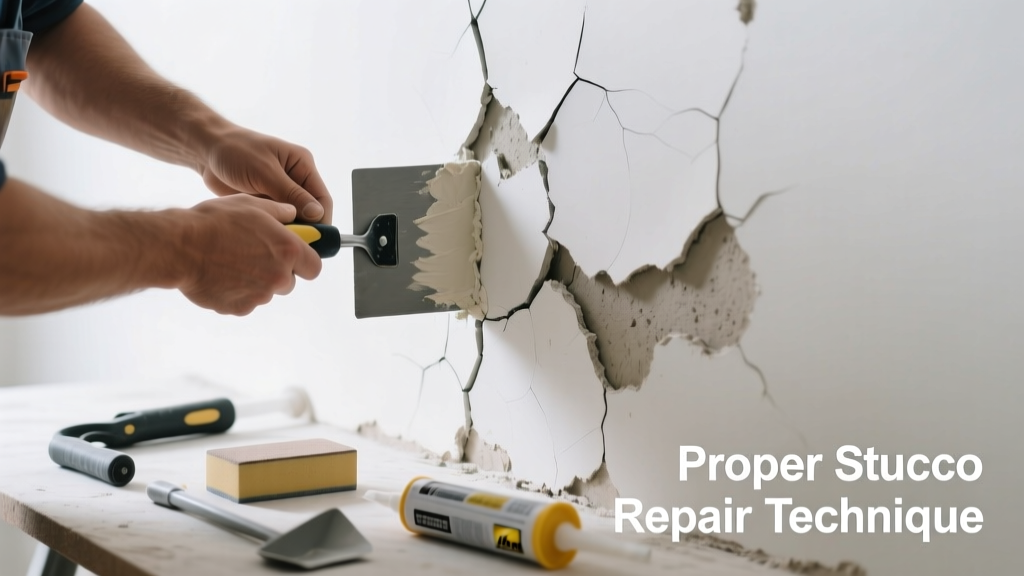
Stucco cracking that won’t stay fixed—or keeps returning in the same spot—isn’t just cosmetic; it’s a red flag that something deeper is wrong. You’ve patched it, sealed it, even replaced a section, but within months, hairline fissures creep back like clockwork. This isn’t normal wear—it’s a symptom of movement, moisture, or structural misalignment you can’t ignore.
Quick Diagnosis
Before grabbing tools, rule out root causes. Most recurring stucco cracks stem from one (or more) of these:
- Foundation settlement or soil shifting beneath the slab—especially near corners or where additions meet original walls
- Improper control joint placement or spacing (should be no more than 12–16 ft apart in traditional stucco)
- Trapped moisture behind the stucco due to missing or clogged weep screeds or failed flashing
- Insufficient scratch coat adhesion caused by dusty substrate or rapid drying during application
- Thermal expansion mismatch between stucco and framing (common with foam-sheathed walls without proper attachment)
Tools & Materials Needed
| Item | Purpose | Estimated Cost |
|---|---|---|
| Angle grinder with diamond blade | Cuts clean, deep relief joints to interrupt crack propagation | $85–$120 |
| Acrylic-modified stucco base coat | Flexible, breathable, and bond-enhancing—critical for movement-prone areas | $24–$36 per 50-lb bag |
| Alkali-resistant fiberglass mesh | Bridges cracks and distributes stress across wider zones | $12–$18 per 50-ft roll |
| Backer rod (¼" or ⅜") | Provides controlled depth for sealant and prevents three-sided adhesion failure | $4–$7 per 25-ft spool |
| Non-sag polyurethane sealant (ASTM C920, Class 25) | Stretches up to 25% without losing adhesion—essential for active cracks | $14–$22 per tube |
Step-by-Step Fix
Don’t patch over symptoms. Use these methods in sequence—starting with the least invasive and escalating only if needed:
- Relieve the stress: Use an angle grinder to cut a ½"-deep, ⅛"-wide relief joint perpendicular to the crack, extending 6" beyond each end. Fill with backer rod and non-sag sealant.
- Reinforce the substrate: Apply alkali-resistant fiberglass mesh over a 12"-wide zone centered on the crack, embedded in acrylic-modified base coat—not standard cementitious stucco.
- Rebuild the finish layer: After base coat cures 48 hours, apply a thin, flexible acrylic finish coat (not traditional lime-cement). Tint to match using manufacturer-matched pigments—not paint.
- Add a secondary control joint: If the crack runs parallel to a wall edge or window, install a new expansion joint every 8 ft using pre-formed PVC expansion strip anchored into the lath.
When to Call a Pro
DIY stops where safety and structural integrity begin. Call a certified stucco contractor (look for members of the Stucco Manufacturers Association) if you observe any of these:
- Cracks wider than ¼" that open/closed seasonally (indicates active foundation movement)
- Horizontal cracks above windows or doors—often tied to lintel deflection or undersized headers
- Multiple diagonal cracks radiating from corners (a classic sign of footing rotation per the Structural Engineers Association of California’s 2022 Field Guide)
- Efflorescence, blistering, or softening stucco behind the crack—suggests long-term water intrusion behind the cladding
Prevention Tips
Recurring cracks mean your system isn’t breathing or moving correctly. Prevent recurrence with these field-tested practices:
- Install continuous weep screed at all stucco-to-foundation transitions—and verify it’s not buried by soil or mulch (the U.S. EPA estimates 30% of stucco failures trace back to blocked drainage)
- Use galvanized or stainless steel lath—not aluminum—over wood framing to reduce thermal differential movement
- Apply stucco when ambient temps are 50–85°F and humidity is below 85%; skip application if rain is forecast within 48 hours
- Inspect roof flashings and gutter downspouts annually—diverting water away from walls cuts hydrostatic pressure behind stucco by up to 60%, per the Insurance Institute for Business & Home Safety’s 2023 report
Can I use regular caulk instead of non-sag polyurethane?
No. Standard acrylic or silicone caulk lacks the elongation capacity and adhesion durability required for active stucco cracks. ASTM C920 Class 25 sealants stretch 25% without bond failure—most household caulks fail at under 10%. Using the wrong product guarantees re-cracking within 6–12 months.
Why does my patched crack keep coming back in the exact same spot?
Because you’re treating the symptom, not the cause. Recurrence in the identical location almost always points to localized stress concentration—like a rigid beam end, a fastener pull-through, or differential settling beneath that specific panel. As stucco restoration specialist Maria Chen notes in Stucco Performance Review (2021): “A crack that returns in the same 2-inch zone after three repairs isn’t faulty material—it’s a map pointing to hidden movement.”
Do I need to remove all the old stucco around the crack?
Not necessarily—but you must remove at least 6 inches of compromised material on either side, down to sound substrate. Feather edges at a 10:1 slope (10" wide per 1" depth) to ensure smooth transition. Leaving crumbling or chalky stucco underneath invites delamination.
Can I paint over the repaired area to hide it?
Avoid paint unless you’re using a 100% acrylic elastomeric coating rated for stucco. Standard latex paint traps moisture and restricts breathability, accelerating failure behind the patch. Elastomerics stretch with the substrate and let vapor escape—critical for longevity.
How long should a proper stucco repair last?
A repair done with proper materials, substrate prep, and movement accommodation should last 15–20 years. According to the Portland Cement Association’s 2020 Stucco Durability Study, 92% of failures occurred in patches made with unmodified cement plaster or without reinforcement mesh. The right method doubles service life.
Is this covered by my home warranty?
Rarely. Most home warranties exclude stucco as a 'cosmetic finish' or cite 'improper maintenance' if weep screeds are clogged or gutters overflow. However, if the crack stems from documented foundation movement within the first 10 years, some builder warranties (like those backed by the National Association of Home Builders) may cover structural correction—but not surface repair.
Stucco isn’t supposed to crack and stay cracked. When it does—especially when your fixes don’t hold—it’s speaking a language of stress, moisture, or misalignment. Listen closely, dig past the surface, and match your fix to the real cause—not just the visible line. A well-repaired stucco wall doesn’t just look solid; it moves, breathes, and sheds water like it was designed to.