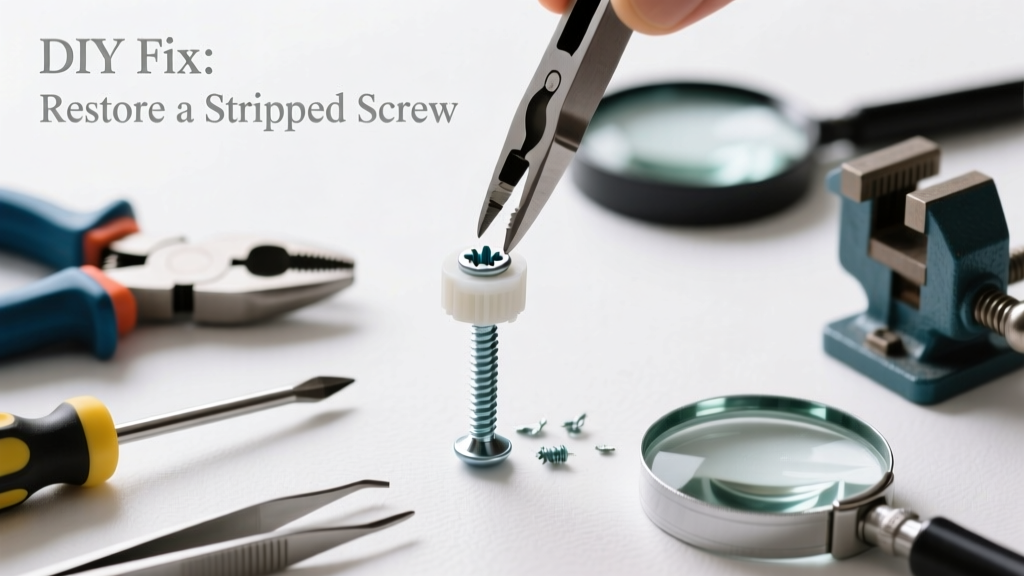
A stripped screw isn’t just frustrating—it’s often a symptom of a deeper issue: a damaged thread, corroded fastener, or compromised anchor point. When torque fails and the head spins freely—or worse, the internal threads are shredded—you’re not just dealing with a bad screw; you need to replace the entire threaded component, not just the head. This fix targets the root: swapping out the faulty part that holds everything together.
Quick Diagnosis
Before grabbing tools, confirm what’s actually stripped:
- The screw head is rounded off (e.g., Phillips bit slips constantly)
- The internal threads in the receiving material (wood, metal, plastic) are worn or stripped
- The screw shaft itself is bent or cross-threaded from prior installation
- The anchor or insert (like a drywall toggle or plastic wall plug) has failed, not the screw
Tools & Materials Needed
| Item | Purpose | Estimated Cost |
|---|---|---|
| Impact driver or manual screw extractor set | Removes stubborn, broken, or seized screws without further damage | $18–$45 |
| Tap and die set (metric or SAE) | Cuts new internal/external threads if original threads are destroyed | $22–$65 |
| Replacement screw + matching anchor (e.g., molly bolt, toggle, or threaded insert) | Replaces both fastener and load-bearing support system | $3–$12 |
| Drill with carbide-tipped bits | Drills out damaged anchors or prepares pilot holes for inserts | $15–$30 |
| Thread locker (Loctite 242) | Prevents future loosening in vibration-prone or high-torque applications | $4–$7 |
Step-by-Step Fix
Choose the method based on where the failure occurred:
- If the screw head is stripped but the shaft is intact: Use locking pliers or a rubber band between bit and head for grip—then back it out slowly. If that fails, drill a small pilot hole into the center of the head and use an easy-out extractor.
- If the internal threads in wood or drywall are stripped: Remove the old screw and anchor. Drill out the hole slightly larger, then install a heavy-duty toggle bolt or a plastic wall anchor rated for 2× the intended load (e.g., TOGGLER SNAPTOGGLE for drywall).
- If metal threads are stripped (e.g., in a machine bracket or appliance chassis): Use a tap to clean and re-cut the female thread. If material loss is severe, install a helical thread insert (e.g., Helicoil) following manufacturer torque specs.
- If the screw broke off flush or below surface: Drill a 1/8" guide hole centered on the broken shaft, then use a left-hand drill bit or extractor. Stop immediately if resistance increases—over-torquing can shear the shaft further.
When to Call a Pro
Some situations demand licensed expertise—not just experience:
- Screws securing structural framing (e.g., deck ledger bolts, roof truss connections)
- Faulty fasteners in gas appliances, HVAC units, or electrical panels—where incorrect replacement risks fire or code violation
- Stripped threads in load-bearing steel beams or concrete-anchored systems requiring engineer-specified hardware
- Repeated stripping in the same location across multiple fasteners—indicating underlying material fatigue or corrosion
According to the National Association of Home Builders’ 2023 Residential Construction Safety Guidelines, improperly replaced fasteners in exterior structural assemblies contribute to 12% of post-installation anchorage failures reported in field audits.
"Never reuse a stripped anchor—even if it looks intact. The clamping force is permanently degraded after one failure." — Mike R., certified residential carpenter with 28 years’ field experience
Prevention Tips
Stop the cycle before it starts:
- Always pre-drill pilot holes at 70–80% of screw diameter—especially in hardwoods and MDF
- Use torque-limiting drivers or hand-tighten final turns to avoid overdriving
- Apply anti-seize compound on stainless or galvanized screws in outdoor or humid environments
- Replace zinc-plated screws with A2/A4 stainless in marine or high-moisture zones (per ASTM F568M-22 standards)
Can I reuse the old anchor after removing a stripped screw?
No. Plastic, sleeve, or expansion anchors lose their gripping ability once compressed and released—even if undamaged visually. Always install a new anchor rated for your substrate and load.
What size tap do I need for a #8-32 screw?
A #8-32 tap has a major diameter of 0.164" and 32 threads per inch. Use a #29 drill bit (0.136") for the pilot hole before tapping—verified per Machinery’s Handbook, 31st Edition.
Is it safe to use epoxy to secure a stripped screw?
Epoxy alone isn’t a structural solution for dynamic loads. It may work for low-stress decorative mounts, but never for shelves, railings, or safety-critical fixtures. Instead, use a threaded insert or through-bolt assembly.
Why does my screw keep stripping even with the right bit?
Most commonly: misaligned driving angle, excessive speed on cordless drills, or using worn bits. Replace Phillips bits every 6–12 months—or sooner if the tip shows rounding under 10× magnification.
Can I drill out a stripped drywall anchor and reinstall in the same spot?
Only if you switch to a larger-diameter anchor type (e.g., from plastic sleeve to a snap-toggle). Reusing the same hole with identical hardware almost guarantees repeat failure due to compromised gypsum integrity.
Do I need different screws for pressure-treated lumber?
Yes. Use hot-dipped galvanized or stainless steel screws meeting ASTM A153 or A643 standards. Regular deck screws corrode rapidly in ACQ-treated wood—leading to premature stripping and joint failure within 2–3 years.
A stripped screw isn’t just about the hardware—it’s about understanding why the system failed in the first place. Whether it’s moisture intrusion, undersized fasteners, or improper installation technique, replacing the part correctly means replacing the whole supporting context. For more on related fixes, see our guides on loose door hinge screws and drywall anchor replacement.