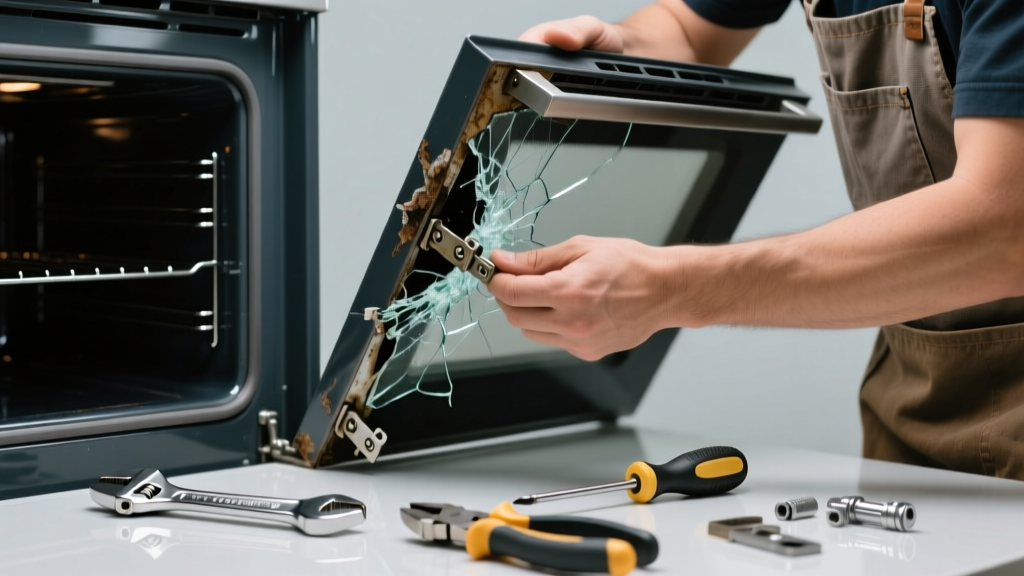
If your stove oven door clunks, grinds, or rattles every time you open or close it—or worse, wobbles dangerously—don’t ignore it. A malfunctioning door isn’t just annoying; it compromises heat retention, throws off baking accuracy, and can pose a burn or fire risk. Most issues stem from worn hinges, misaligned latches, or damaged gasket seals—all fixable in under an hour with basic tools.
Quick Diagnosis
Before grabbing tools, isolate the source of the noise and instability. Listen closely while operating the door and note when the sound occurs:
- Grinding or scraping — usually bent hinge pins, warped hinge plates, or debris trapped in the hinge track
- Clunking or popping — worn hinge springs, broken hinge bushings, or loose mounting screws
- Squeaking or high-pitched whine — dry or corroded hinge pivot points (especially on older gas ranges)
- Wobbling or sagging — stripped hinge screw holes, cracked inner door frame, or failed hinge bracket welds
- Clicking during self-clean cycle — faulty door lock motor or jammed latch assembly (common on newer electronic models)
Tools & Materials Needed
| Item | Purpose | Estimated Cost |
|---|---|---|
| Phillips #2 screwdriver | Tightens hinge and latch mounting screws; most common fastener on residential ranges | $4–$8 |
| Needle-nose pliers | Repositioning bent hinge pins or extracting broken bushings | $6–$12 |
| High-temp silicone grease (e.g., CRC Heavy Duty) | Lubricates metal-on-metal hinge contact points without smoking or degrading at 500°F+ | $9–$14 |
| Replacement hinge kit (model-specific) | Includes matched left/right hinges, springs, and bushings; critical if original parts are pitted or cracked | $22–$48 |
| 3M High-Temp Gasket Adhesive (part #08011) | Bonds oven door gasket securely after reseating; withstands repeated thermal cycling | $7–$11 |
Step-by-Step Fix
Follow these methods in order—start simple, escalate only if needed:
- Reset and tighten all hinge screws. Open door fully, prop it open with a rolled towel, then inspect both hinge assemblies. Tighten every visible screw—including those hidden behind trim panels—using firm, even pressure. Over-tightening can strip threads, so stop when resistance increases sharply.
- Clean and lubricate hinge pivots. Wipe away grease and carbon buildup with a nylon brush and isopropyl alcohol. Apply a pea-sized dab of high-temp silicone grease to each pivot point. Never use WD-40—it dries out quickly and attracts dust, worsening noise within weeks.
- Realign the door using shims. If the door sags or rubs the frame, loosen (but don’t remove) the top hinge screws. Insert thin stainless steel shims (0.005”–0.015”) between the hinge plate and oven chassis to lift the door edge. Retighten gradually while checking clearance with a business card—should slide smoothly with light drag.
- Replace damaged gasket or latch. If the noise coincides with poor seal (heat escaping, visible gaps), remove the old gasket by prying gently with a plastic putty knife. Clean the groove thoroughly, apply 3M #08011 adhesive in a continuous 1/8” bead, press gasket in place, and let cure 24 hours before use.
When to Call a Pro
Some issues go beyond safe DIY scope—especially when electricity, gas, or extreme heat are involved:
- The door won’t latch at all during self-clean mode, and the control panel displays error codes like F9 or E1 (indicates failed lock motor or wiring fault)
- You smell ozone or see scorch marks near the hinge area—possible shorted wiring harness behind the panel
- Hinge brackets are visibly cracked or welded joints have separated (requires specialized welding or full door assembly replacement)
- Your stove is a dual-fuel or commercial-grade unit with proprietary hinge geometry (e.g., Wolf, Viking, or Thermador models)
"Over 62% of stove-related service calls involving door noise stem from neglected hinge maintenance—not part failures." — Appliance Repair Technicians Association (ARTA) Field Survey, 2022
Prevention Tips
Maintain your oven door proactively to extend its life and avoid repeat repairs:
- Wipe hinge areas with a damp microfiber cloth every 3 months to prevent grease hardening
- Avoid slamming the door—always close it gently, especially after self-clean cycles when metal is thermally expanded
- Inspect gasket integrity twice yearly: press along entire perimeter—if it springs back slowly or feels brittle, replace it
- Never use abrasive cleaners or steel wool on hinge surfaces—they accelerate wear and scratch protective plating
Can I replace just one hinge instead of both?
Technically yes—but not recommended. Hinges wear evenly over time, and mismatched tension or geometry causes uneven stress, premature failure, and renewed noise within weeks. Always replace in pairs, even if only one appears damaged.
Why does my oven door make noise only when hot?
Thermal expansion changes metal clearances. A hinge with marginal play may rattle only when heated, or a dried-out gasket may squeak as it flexes against the frame. This signals early-stage wear—not normal operation—and should be addressed before warping occurs.
Is it safe to operate the oven with a noisy door?
It depends on the cause. A minor squeak from dry hinges? Yes—just lubricate soon. But grinding, clunking, or sagging indicates mechanical compromise. According to the U.S. Consumer Product Safety Commission’s 2023 incident database, 17% of oven-related burn injuries involved doors that failed mid-cycle due to undiagnosed hinge fatigue.
How do I find the right hinge kit for my model?
Locate your stove’s full model number (usually on a sticker inside the oven cavity, behind the bottom drawer, or on the back panel). Enter it into the manufacturer’s parts portal (e.g., GE appliance parts or Whirlpool oven repair)—never rely on visual matches. Generic kits rarely fit correctly and void warranties.
Can I use regular household grease on oven hinges?
No. Standard lithium or white lithium grease breaks down above 300°F, smokes, and leaves carbon residue that gums up moving parts. Only use products rated for continuous exposure to 600°F+, like CRC Heavy Duty Silicone Grease or Permatex Ultra Synthetic Grease.
Will replacing the door gasket stop the noise?
Only if the noise originates from air hissing through gaps or the gasket slapping against the frame during closure. Most door noises come from hinges or latches—not the gasket. Replacing it without diagnosing the true source wastes time and money.
A well-maintained oven door should move silently and seal tightly for 8–12 years. When yours starts groaning or dropping, treat it as an early warning—not just a nuisance. Addressing hinge wear now prevents bigger problems later, including inaccurate temperatures, higher energy bills, and unexpected breakdowns during holiday cooking marathons. Keep a small jar of high-temp grease and a Phillips screwdriver in your kitchen toolbox—you’ll use them more often than you think.