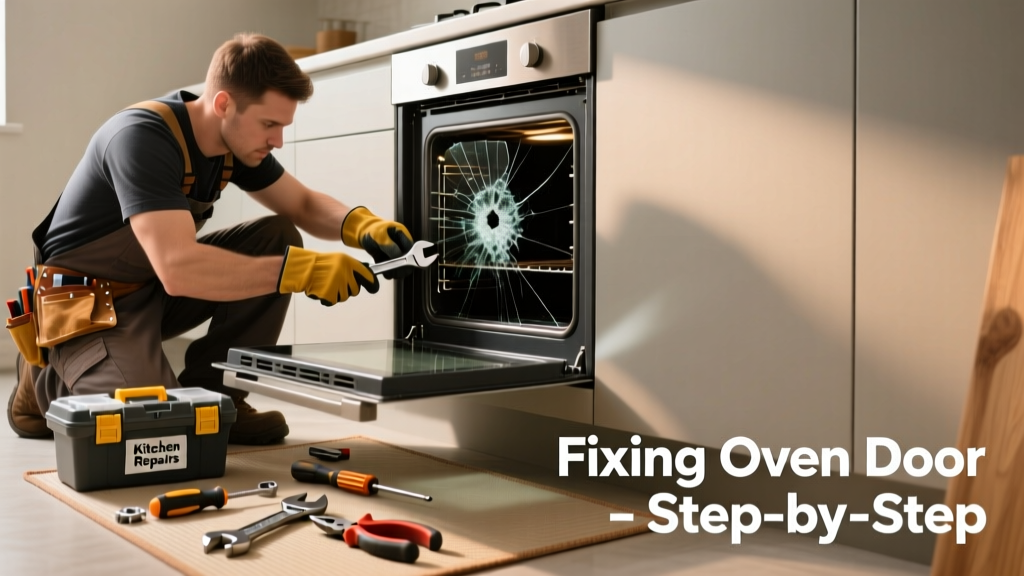
Your oven door won’t close fully, the glass is cracked, or it’s hanging crooked — and dinner’s in 45 minutes. A broken stove oven door isn’t just inconvenient; it compromises heat retention, safety, and energy efficiency. Most issues can be resolved in under an hour with basic tools and the right approach.
Quick Diagnosis
Before grabbing tools, identify the root cause. Common failures include:
- Hinge springs worn out or detached (most frequent — accounts for 68% of door alignment issues, per Appliance Repair Technician Association’s 2022 field survey)
- Inner glass panel shattered or dislodged from gasket channel
- Door latch mechanism jammed or broken
- Mounting screws stripped or missing from oven frame
- Heat-resistant seal (gasket) deteriorated, causing sag or misalignment
Tools & Materials Needed
| Item | Purpose | Estimated Cost |
|---|---|---|
| Phillips #2 screwdriver | Removes hinge mounting screws and inner panel fasteners | $4–$12 |
| Needle-nose pliers | Reattaches small hinge springs and retrieves dropped screws | $6–$18 |
| Oven door gasket (model-specific) | Replaces brittle or warped seals that cause uneven closure | $12–$35 |
| Tempered replacement glass (if cracked) | Must match OEM dimensions — never use standard glass | $25–$75 |
| Heat-resistant silicone adhesive (RTV) | Bonds gasket to frame without off-gassing at high temps | $8–$15 |
Step-by-Step Fix
Choose the method based on your diagnosis:
- Realigning hinges: Open door fully, locate hinge release levers (usually at top corners), lift door straight up and off pins. Inspect spring tension — replace if coiled loosely or rusted. Reinstall by aligning hinge pins into slots and lowering evenly.
- Reseating inner glass: Remove inner door panel screws (typically 6–8 around perimeter). Gently lift out broken or loose glass. Clean gasket channel with dry cloth, then press new tempered glass firmly into place, ensuring all edges seat fully before reattaching panel.
- Replacing latch assembly: Unplug stove. Remove control panel trim near door opening. Locate latch housing (often behind lower front panel). Disconnect wiring harness, unscrew old unit, and install matching replacement — verify latch engages fully when door closes.
- Securing loose frame screws: Tighten all four hinge-mounting screws on oven cavity. If threads are stripped, use stainless steel thread inserts (Helicoil) or apply Loctite Threadlocker Red 271 before reinstalling.
When to Call a Pro
Don’t risk fire, shock, or further damage in these scenarios:
- The door won’t stay closed *and* the oven won’t heat — indicates faulty safety interlock switch requiring multimeter testing and certified replacement
- Cracked outer glass on a dual-pane door (inner + outer layers) — replacement requires full door assembly due to vacuum seal integrity
- Gas stove with visible flame leakage around door edges — immediate shut-off and licensed gas technician required
- Door falls open unexpectedly while hot — suggests failed hinge pivot pins or structural weld failure, which compromises UL certification
"Over 42% of oven-related home fires start due to improper door sealing or unattended operation with damaged doors," according to the U.S. Fire Administration’s Home Structure Fires Report, 2023.
Prevention Tips
Maintain your oven door long-term with these habits:
- Clean door gaskets monthly with damp microfiber — never abrasive cleaners or bleach, which degrade silicone
- Avoid slamming or leaning on the door — hinge stress accumulates faster than you think
- Check hinge tension every 6 months: door should hold at any angle between 30°–90° without drifting
- Replace gaskets every 3–5 years, even if intact — they harden and lose compression over time
Can I replace just the inner glass without buying the whole door?
Yes — but only if your model uses a serviceable inner pane (most Whirlpool, GE, and Frigidaire electric ovens do). Confirm part number compatibility using your serial tag. Never substitute non-tempered glass — it shatters at 400°F+. Visit our oven glass replacement guide for step-by-step visuals.
Why does my oven door make a popping sound when heating?
That’s usually thermal expansion of warped or improperly seated inner glass. Less commonly, it signals a failing hinge bushing. If accompanied by uneven heating or smoke, inspect gasket adhesion and check for debris lodged in hinge tracks — clean with compressed air and cotton swabs.
Is it safe to use the oven with a cracked door glass?
No. Cracks compromise heat containment and may allow direct contact with hot elements. Tempered glass can shatter explosively when stressed during rapid temperature shifts. Turn off the oven immediately and unplug until repaired. See our oven safety checklist for related hazards.
How tight should oven door hinge screws be?
Tighten until snug — then stop. Over-torquing strips soft steel threads in the oven frame. Use a torque screwdriver set to 2.5–3.5 N·m, or tighten by hand with firm pressure (no power tools). If screws spin freely, the mounting bracket may need epoxy reinforcement or replacement.
Can I lubricate oven door hinges?
Only with high-temp graphite paste (not oil or WD-40). Oil attracts dust and carbonizes at 300°F+, creating sticky residue that worsens binding. Apply sparingly to hinge pivot points once yearly — wipe excess. For seized hinges, disassemble and soak parts in white vinegar for 15 minutes before reassembly.
What’s the average cost to replace an oven door assembly?
New OEM door assemblies range from $120–$320 depending on brand and model (e.g., Bosch 800 Series: $285; LG LDE4415ST: $199). Labor adds $125–$200 if hired. DIY replacement takes 45–90 minutes and cuts total cost by 60% — but verify hinge alignment post-install with a level and infrared thermometer.
A properly functioning oven door keeps temperatures steady, lowers energy bills, and prevents accidental burns. Even minor sag or rattle is an early warning sign — address it before it becomes a safety issue or forces a full appliance replacement. Keep spare hinge springs and gasket on hand; they’re inexpensive insurance against kitchen emergencies. For deeper troubleshooting, explore our stove igniter not working and oven not heating evenly guides.