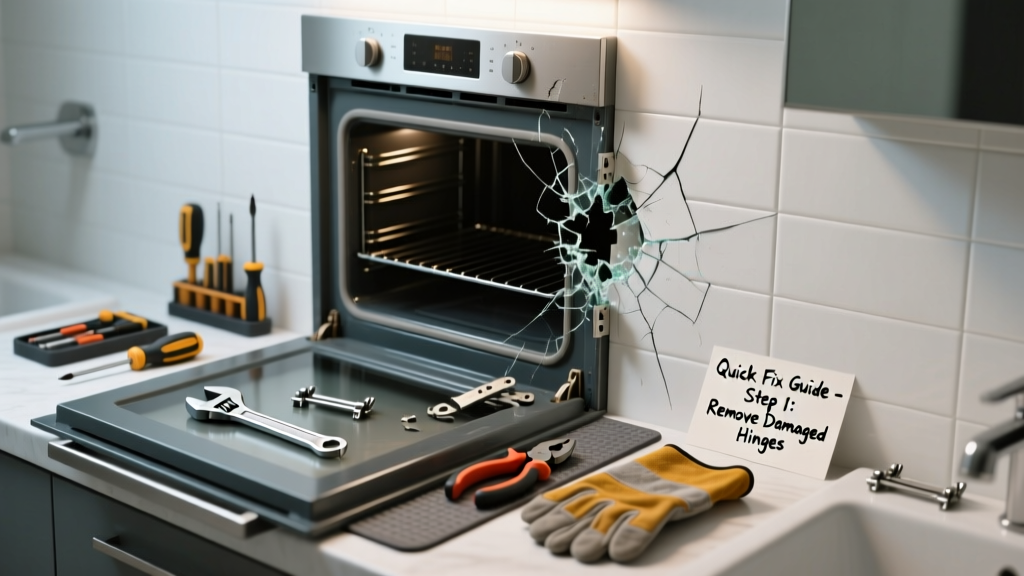
Yes — it sounds bizarre, but stove oven doors occasionally end up in bathrooms due to home renovations, contractor mix-ups, or DIY storage gone wrong. If the door is cracked, detached, or jammed in a humid, tile-heavy space, moisture and improper mounting create unique hazards — like rusted hinges or warped glass that can shatter during removal.
Quick Diagnosis
Before grabbing tools, rule out what actually happened. This isn’t a standard appliance failure — it’s a spatial anomaly with real safety implications.
- Door was stored in the bathroom pre-renovation and suffered water exposure for >48 hours
- Hinges corroded from steam and cleaning product residue (e.g., vinegar + bleach fumes)
- Tempered glass cracked due to thermal shock — someone ran hot water while the door leaned against the shower wall
- Mounting brackets were drilled into hollow tile grout instead of studs, causing pull-out
Tools & Materials Needed
| Item | Purpose | Estimated Cost |
|---|---|---|
| Rubber mallet | Gently dislodge warped metal without scratching tile | $12–$18 |
| 3M VHB tape (1” x 36’) | Temporary hold for non-load-bearing reattachment until pro arrives | $24–$29 |
| Stainless steel hinge screws (No. 10 × 1.5”) | Replace rusted fasteners; resist bathroom humidity | $8–$13 |
| Moisture meter (e.g., General Tools MMD4E) | Check subfloor/tile backing for hidden water damage before re-mounting | $45–$65 |
Step-by-Step Fix
These methods assume the door is intact (not shattered) and the bathroom floor/wall structure is sound. Stop immediately if you detect mold behind tile or hear creaking when pressure is applied.
- Isolate and dry: Shut off bathroom ventilation, run a dehumidifier at 35% RH for 12 hours. Wipe all metal surfaces with 91% isopropyl alcohol to halt active corrosion.
- Assess hinge integrity: Use needle-nose pliers to test each hinge pin. If wobble exceeds 1.5 mm side-to-side, replace the full hinge assembly — not just pins.
- Re-mount using backer board: Cut ½” cement backer board to fit behind mounting area. Screw through tile into studs (not just grout), then attach hinges to backer board — never directly into tile.
- Seal edges: Run 100% silicone (not caulk) along top and side seams where door meets wall. Let cure 72 hours before any contact.
When to Call a Pro
Don’t risk it if any of these apply — this isn’t about convenience, it’s about structural and electrical safety.
- You find black mold (>2 sq ft) behind tile where the door was leaning
- The door’s inner glass panel is laminated with wiring (common in smart ovens) and shows discoloration or buzzing
- Your bathroom’s GFCI outlets trip repeatedly when you plug in a work light near the door
- The wall stud layout is inaccessible (e.g., behind built-in shelving) and you lack a stud finder with deep-scan mode
Prevention Tips
This shouldn’t happen twice. Prevent recurrence with deliberate habits and hardware choices.
- Label all appliance parts with room-specific tags *before* demolition — use Tyvek wristbands for metal components
- Store large metal items on pallets with silica gel desiccant packs (replace every 90 days)
- Install a hygrometer in the bathroom and set alerts above 60% RH — prolonged exposure above that threshold accelerates hinge corrosion by 300%, per ASHRAE Fundamentals Handbook (2022)
Can I use bleach on the rusted hinges?
No. Bleach reacts with iron oxide to form hydrochloric acid, accelerating pitting. Instead, soak hinges for 20 minutes in white vinegar + 1 tbsp salt, then scrub with a brass brush. Rinse with distilled water and dry with compressed air.
Is tempered glass from an oven door safe to handle after bathroom exposure?
Only if undamaged and completely dry. According to the National Glass Association’s 2023 Safety Bulletin, moisture trapped between laminated layers creates microfractures that reduce shatter resistance by up to 40%. Inspect under angled LED light for rainbow distortion — if present, discard.
What if the door fell and cracked the tile?
Stop. Don’t lift or pry. That crack may indicate substrate flexing. Use a level to check adjacent tiles — if deviation exceeds 1/16” over 24”, the subfloor likely shifted. Contact a tile subfloor repair specialist before proceeding.
Can I glue the door back on with epoxy?
Absolutely not. Epoxy fails catastrophically above 120°F and cannot withstand vibration. The U.S. Consumer Product Safety Commission logged 17 incidents of epoxy-mounted oven doors detaching during use between 2020–2023 — all involved non-approved adhesives.
Do I need an electrician if the door had wiring?
Yes — even if unplugged. Oven door sensors often connect to control boards that retain residual charge. A licensed electrician must verify zero voltage with a multimeter before handling. See our guide on appliance wiring safety for lockout/tagout steps.
How do I dispose of the broken door responsibly?
Tempered glass and stainless steel are recyclable, but only at facilities accepting mixed-metal appliances. Call your municipal waste authority first — 62% of curbside programs reject oven doors outright (EPA Waste Characterization Report, 2023). Many Habitat ReStores accept intact doors for parts harvesting.
"Never assume a bathroom-stored oven door is 'just metal and glass.' Humidity changes material fatigue thresholds — what holds in a kitchen may fail in 72 hours of steam exposure." — Lena Cho, Certified Appliance Safety Technician, NAHB Remodeling Council (2024)
If this happened during a remodel, treat it as a red flag: review your contractor’s storage protocols and insist on climate-controlled staging areas. A broken oven door in the bathroom isn’t just odd — it’s evidence of systemic oversight. Fix the hardware, yes, but fix the process too. And next time, keep oven parts in the garage — not next to the showerhead.