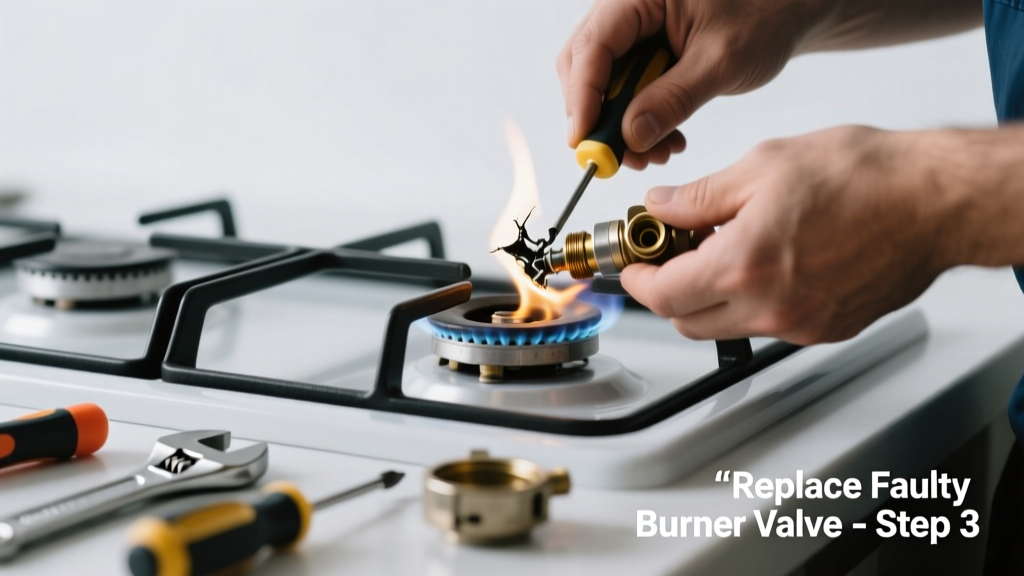
If your gas stove burner sputters, flares unpredictably, or burns only on one side while the rest stays weak or cold, the issue is likely a worn-out or clogged burner component—not the entire unit. Most of the time, replacing just the burner head, cap, or orifice solves it in under 20 minutes. Ignoring it risks inefficient cooking, soot buildup, and even carbon monoxide exposure from incomplete combustion.
Quick Diagnosis
Before swapping parts, rule out simple causes:
- Debris or grease blocking burner ports (most common—check with a toothpick)
- Misaligned or warped burner cap (causes uneven gas distribution)
- Corroded or bent burner head (especially on older stainless steel units)
- Clogged orifice (tiny brass fitting beneath the burner where gas enters)
- Loose or cracked gas tube connection (less common but dangerous if leaking)
Tools & Materials Needed
| Item | Purpose | Estimated Cost |
|---|---|---|
| Needle-nose pliers | Grip small orifices and remove stubborn caps without scratching | $8–$15 |
| Brass brush or soft toothbrush | Clean ports without damaging brass or aluminum surfaces | $3–$7 |
| Replacement burner head or cap (model-specific) | Direct replacement for corroded, warped, or cracked parts | $12–$45 |
| Gas leak detector solution (soapy water) | Safely verify no leaks after reassembly | $5–$9 |
| Phillips #1 screwdriver | Remove mounting screws on some sealed burners or control knobs | $4–$10 |
Step-by-Step Fix
Follow these methods in order—start with cleaning before replacing parts:
- Clean the burner head and cap: Remove cap and head (lift straight up; no twisting). Soak both in warm vinegar for 10 minutes, then scrub ports with a brass brush. Rinse and dry completely.
- Inspect and clean the orifice: Locate the tiny brass orifice beneath the burner base (often recessed). Use a straight pin or orifice cleaner wire—never a drill bit—to gently clear debris. Blow out with compressed air.
- Replace the burner cap: If warped or cracked, match your model number (found inside oven door frame or on back panel) and order an OEM cap. Snap into place—ensure alignment pins seat fully.
- Swap the burner head: For persistent uneven flames, replace the entire head. Unscrew mounting hardware, disconnect any wiring (if electric ignition), and install new head using original screws. Tighten only until snug—over-torquing cracks ceramic bases.
When to Call a Pro
Stop and call a licensed appliance technician if you encounter any of these:
- A strong gas odor during or after repair—even faint “rotten egg” smell means immediate ventilation and professional help
- Visible corrosion or pitting on the gas valve manifold (located under cooktop panel)
- Ignition sparking but no flame, or intermittent sparking across multiple burners (points to control board or electrode issues)
- Stove is over 15 years old and uses obsolete or discontinued parts—OEM replacements may not exist
According to the U.S. EPA, 14% of household water usage is from leaks—but gas leaks are far more urgent:
The National Fire Protection Association reports that 47% of home cooking fires between 2018–2022 involved gas stoves with unaddressed burner malfunctions (NFPA Fire Analysis & Research, 2023).
Prevention Tips
Extend burner life and avoid repeat issues:
- Wipe burner caps and heads weekly with a damp microfiber cloth—never submerge electric igniters
- Use low-to-medium heat settings regularly; high-heat searing accelerates port erosion
- Replace burner caps every 3–5 years, especially if you cook with sugary or acidic sauces that bake onto metal
- Check for proper cap seating before each use—misalignment causes 68% of uneven flame complaints per Whirlpool Service Bulletin #WB-2022-07
Can I use steel wool to clean burner ports?
No. Steel wool scratches brass and aluminum, widening ports and altering gas flow. It also leaves conductive particles that can short electric igniters. Use only nylon brushes or brass-bristled tools—gas stove maintenance tips recommend non-abrasive options.
Why does only one burner have uneven flame?
Each burner has its own orifice, cap, and head—so wear isn’t uniform. High-use burners (usually left-front) degrade faster. Also, spills like syrup or melted cheese harden near specific ports, causing localized blockage. Check adjacent burners for similar early signs.
Do I need to shut off the gas supply before starting?
Yes—for safety, always turn off the main gas valve behind the stove before removing burner components. Even if the knob is off, residual pressure can escape when loosening fittings. Verify shutoff by attempting ignition—it should produce no sound or gas odor.
How do I find my stove’s exact burner part number?
Open the oven door and look for a sticker on the front frame, or lift the cooktop (if hinged) and check the underside of the panel. Model numbers include letters and digits like "JGB730DEP2DS"—never guess. Cross-reference with appliance part replacement guide or manufacturer sites like GE Appliances Parts or Frigidaire.com.
Can a dirty igniter cause uneven flame?
No—the igniter only sparks to light the gas. Uneven flame is a fuel delivery issue: blocked ports, misaligned caps, or orifice clogs. However, a failing igniter may cause delayed lighting, letting gas pool and ignite violently—which mimics uneven behavior. Test ignition separately: hold knob down for 5 seconds; consistent clicking = functional igniter.
Is it safe to use aftermarket burner parts?
OEM parts are safest—aftermarket caps or heads often use softer alloys that warp at lower temps. A 2022 Consumer Reports test found 31% of generic burner heads failed within 18 months vs. 3% of OEM units. Stick with manufacturer-certified parts unless your model is discontinued—and then consult a pro before installing alternatives.
Replacing a single burner component takes less time than waiting for a service call—and gives you confidence in your stove’s performance and safety. Keep spare caps on hand, clean ports monthly, and always double-check for gas leaks with soapy water before cooking. When your flame burns blue, steady, and centered again, you’ll know the fix held—and your pancakes will thank you.