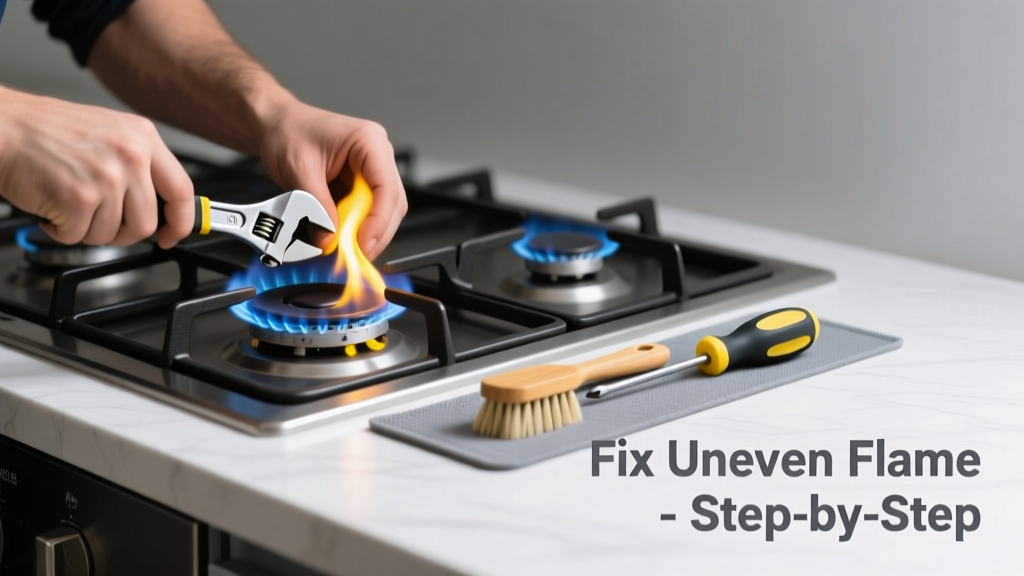
If your stove burner sputters, flares yellow at the edges, or burns stronger on one side, it’s not just annoying—it’s inefficient and potentially unsafe. Uneven flames waste gas, scorch pans, and can indicate blocked ports or misaligned components. Most cases are quick DIY fixes if you know where to look.
Quick Diagnosis
Before grabbing tools, identify the likely culprit:
- Dirty or clogged burner ports (most common cause)
- Burner cap sitting crooked or warped
- Debris trapped under the burner base or in the gas valve
- Worn or bent igniter electrode affecting spark timing
- Low gas pressure from regulator or supply line issue
Tools & Materials Needed
| Item | Purpose | Estimated Cost |
|---|---|---|
| Needle or straightened paperclip | Cleans clogged gas ports without scratching | $0.00 |
| Soft-bristle toothbrush | Removes grease and carbon buildup from caps and bases | $2.99–$5.99 |
| White vinegar + warm water | Dissolves mineral deposits and light grime | $1.49–$3.99 |
| Microfiber cloth | Wipes clean without lint or residue | $4.99–$8.99 |
| Adjustable wrench (for gas line inspection) | Tightens loose fittings—only if you’re comfortable with gas connections | $12.99–$24.99 |
Step-by-Step Fix
Try these methods in order—start simple and escalate only if needed:
- Clean the burner ports: Turn off gas and let stove cool. Remove burner cap and base. Use a needle to gently clear each port hole—don’t force it. Blow out debris with compressed air or a straw.
- Re-seat the burner cap: Align the cap’s notch with the base’s indicator mark. Press down firmly and rotate slightly until it clicks into place. A 1/16" misalignment can disrupt flame symmetry.
- Soak and scrub the cap and base: Mix equal parts white vinegar and warm water. Soak for 15 minutes, then scrub with a soft toothbrush. Rinse and dry fully before reassembling.
- Check the igniter alignment: If flame ignites only on one side, inspect the electrode. It should sit 1/8" from the burner head. Gently bend it back into position using needle-nose pliers—if it’s cracked or corroded, replace it.
When to Call a Pro
Stop and call a licensed appliance technician if:
- You smell gas at any point—even faintly—during diagnosis or cleaning
- The flame remains yellow or orange after cleaning (indicates incomplete combustion and potential CO risk)
- You suspect low gas pressure: other burners or gas appliances behave similarly
- Your stove is under warranty—DIY disassembly may void coverage
According to the U.S. Consumer Product Safety Commission’s 2022 Gas Appliance Incident Report, 27% of stove-related fire incidents involved improper burner maintenance or user attempts to modify gas flow.
Prevention Tips
Keep your burners running evenly year after year:
- Wipe up spills immediately—sugar and dairy residues bake onto ports fast
- Remove and clean burner caps weekly if you cook daily
- Avoid abrasive cleaners or steel wool—they scratch stainless and trap more grime
- Inspect igniter electrodes every 3 months for corrosion or bending
Can I use a toothpick instead of a needle to clean ports?
No—wooden toothpicks splinter and leave fibers that block gas flow. A sewing needle or straightened paperclip is rigid, non-reactive, and narrow enough to fit standard 0.035" ports without damage.
Why does my flame go out when I turn the knob to low?
This points to a dirty orifice or weak pilot flame (on older models). Low-fire settings require precise gas-air mixing—clogs disrupt laminar flow. Clean the orifice with a needle and verify the air shutter isn’t obstructed.
Is it safe to soak cast iron burner caps in vinegar?
Yes—but limit soak time to 10–15 minutes. Longer exposure risks surface etching. Always rinse thoroughly and dry immediately with heat or a towel to prevent flash rust.
Can uneven flames cause carbon monoxide buildup?
Yes—if flames are consistently yellow, lazy, or lifting off the ports, combustion is incomplete. The EPA warns that even low-level CO exposure over time can cause fatigue, headaches, and confusion. Test your kitchen with a CO detector if you notice persistent discoloration.
Do electric coil burners have uneven flame issues?
No—electric coils don’t produce flames. But they *can* develop uneven heating due to warping, poor contact with the receptacle, or internal element breakage. See our guide on electric stove coil not heating for troubleshooting.
How often should I replace my stove burner caps?
Every 3–5 years for stainless steel; sooner if warped, pitted, or cracked. Warped caps create gaps that divert gas flow—causing lateral flame jets. Check alignment monthly by lighting the burner and watching for consistent blue cone formation across all ports.
Keeping your stove burners clean and aligned takes less than 10 minutes a week—and pays off in even cooking, lower gas bills, and longer appliance life. If you’ve fixed one burner, repeat the process on the others: consistency prevents mismatched performance and saves you from chasing the same problem next month. For deeper gas line concerns or recurring issues, consult a certified technician—your safety and efficiency are worth the call.