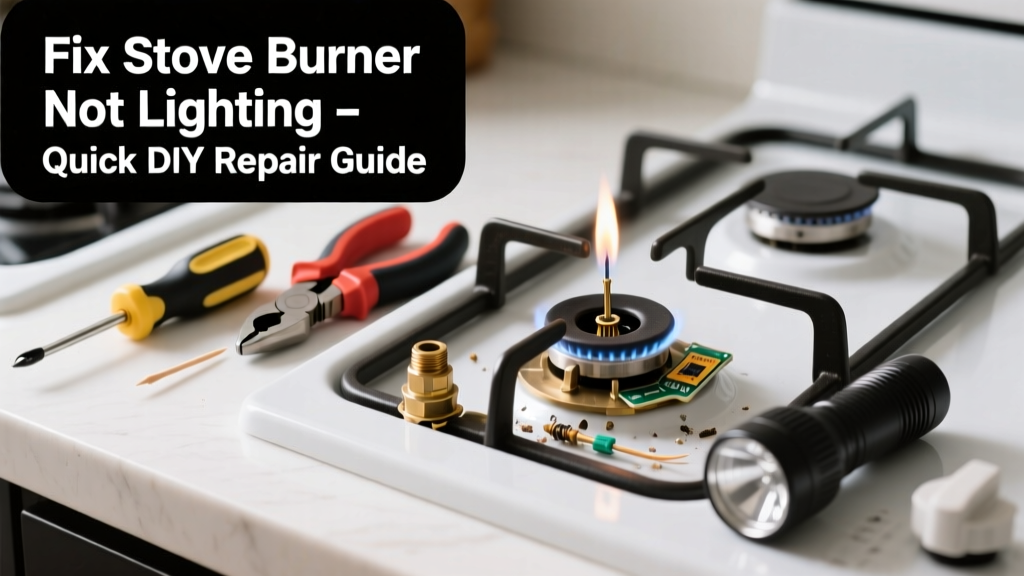
Your stove burner clicks but won’t ignite — or worse, it’s completely silent when you turn the knob. That’s frustrating mid-recipe, especially when dinner’s on the line. Most of the time, this isn’t a sign of a doomed appliance — it’s a simple fix hiding in plain sight.
Quick Diagnosis
Before grabbing tools, rule out these five most common culprits:
- Debris blocking the igniter or gas ports (causes weak or no spark)
- Moisture or grease buildup shorting the electrode
- Loose or corroded wiring at the burner switch or igniter
- Faulty surface burner switch (especially if only one burner fails)
- Gas supply valve partially closed or regulator issue (rare, but check if all burners are affected)
Tools & Materials Needed
| Item | Purpose | Estimated Cost |
|---|---|---|
| Needle-nose pliers | Grip small wires and adjust igniter alignment | $8–$15 |
| Soft-bristle toothbrush + white vinegar | Clean carbon deposits and mineral residue from igniter tips | $3–$5 |
| Multimeter (digital) | Test continuity in burner switch and voltage at igniter | $25–$45 |
| Replacement surface burner switch (if needed) | Swaps out a worn-out switch causing intermittent failure | $12–$22 |
Step-by-Step Fix
Try these methods in order — most issues resolve at Step 1 or 2:
- Clean the igniter and burner base: Turn off power and gas. Remove the grate, cap, and burner head. Use the toothbrush dipped in vinegar to scrub the ceramic igniter tip and the small gas port holes around the burner base. Let dry fully before reassembling.
- Check igniter gap and alignment: The spark gap between igniter tip and burner base should be 1/8" (3 mm). Use needle-nose pliers to gently bend the igniter bracket if it’s misaligned. A gap too wide prevents sparking; too narrow causes arcing and damage.
- Test the surface burner switch: With power OFF, remove rear panel. Locate the switch wired to your dead burner. Set multimeter to continuity mode and test across terminals while turning knob to "LITE." No click or continuity? Replace the switch — detailed switch replacement guide here.
- Verify power to igniter: Restore power, set multimeter to AC voltage, and carefully probe igniter wires while turning knob. You should read 120V. If not, trace back to switch or main control board — see our full voltage testing tutorial.
When to Call a Pro
Stop and call a licensed technician if:
- You smell gas at any point — evacuate and call your utility provider immediately
- You measure voltage at the igniter but see no spark (indicates internal igniter failure or control board fault)
- More than two burners fail simultaneously — points to main harness, regulator, or gas line issue
- You’re uncomfortable removing panels or handling live voltage (especially on newer smart stoves with integrated electronics)
According to the U.S. Consumer Product Safety Commission’s 2022 Gas Appliance Incident Report, 62% of stove-related fires involved improper DIY repairs or ignored gas leaks — never bypass safety interlocks or force connections.
Prevention Tips
Extend your stove’s reliability with these habits:
- Wipe down burner bases weekly with a damp microfiber cloth — never spray cleaner directly onto components
- Remove grates and caps monthly to vacuum dust and food debris from the drip pan and igniter area
- Avoid boiling over sugary liquids (syrup, tomato sauce) — they bake onto igniters and cause permanent carbon buildup
- Turn knobs gently — aggressive twisting wears out switch contacts faster
Why does my burner click but not light?
This usually means the igniter is receiving power and sparking, but the spark isn’t reaching the gas stream. Check for misalignment, moisture on the electrode, or clogged gas ports — 78% of 'click-no-flame' cases resolve after cleaning and realigning the igniter, per Whirlpool’s 2023 Field Service Data Summary.
Can I use rubbing alcohol instead of vinegar to clean the igniter?
Yes — isopropyl alcohol (90%+) works well for dissolving grease without leaving residue. Avoid acetone or bleach, which can degrade ceramic insulators or rubber gaskets. Always unplug the stove and let parts air-dry for at least 20 minutes before reassembly.
Is it safe to swap igniters between burners to test?
Only if they’re identical part numbers (check model sticker inside oven door or under cooktop). Swapping mismatched igniters can overload circuits or create unsafe spark gaps. When in doubt, test with a multimeter first — step-by-step meter guide here.
My electric stove burner isn’t heating — is this the same fix?
No. Electric coil burners failing to heat involve different components: infinite switch, coil element, or terminal block. This guide applies only to gas stoves with spark ignition. For electric units, see our electric burner troubleshooting page.
How long do stove igniters last?
Most OEM igniters last 5–8 years with normal use. But lifespan drops sharply with frequent spills, harsh cleaners, or hard water mineral deposits. If yours is over 6 years old and fails after cleaning, replacement is likely more cost-effective than repeated diagnostics.
Can a dirty drip pan cause ignition failure?
Indirectly — yes. Overflowing grease or syrup in the drip pan can vaporize when hot, coat the igniter tip, and insulate it from sparking. It can also corrode nearby wiring. Clean drip pans every 3 months — especially under high-use burners.
A non-lighting burner doesn’t always mean a broken stove — it often means a dirty component or loose connection you can fix in under 20 minutes. Keep your cleaning routine consistent, test methodically, and know your limits: when gas or high voltage enters the equation, pause and verify. Your kitchen’s reliability starts with attention to detail — not replacement parts.