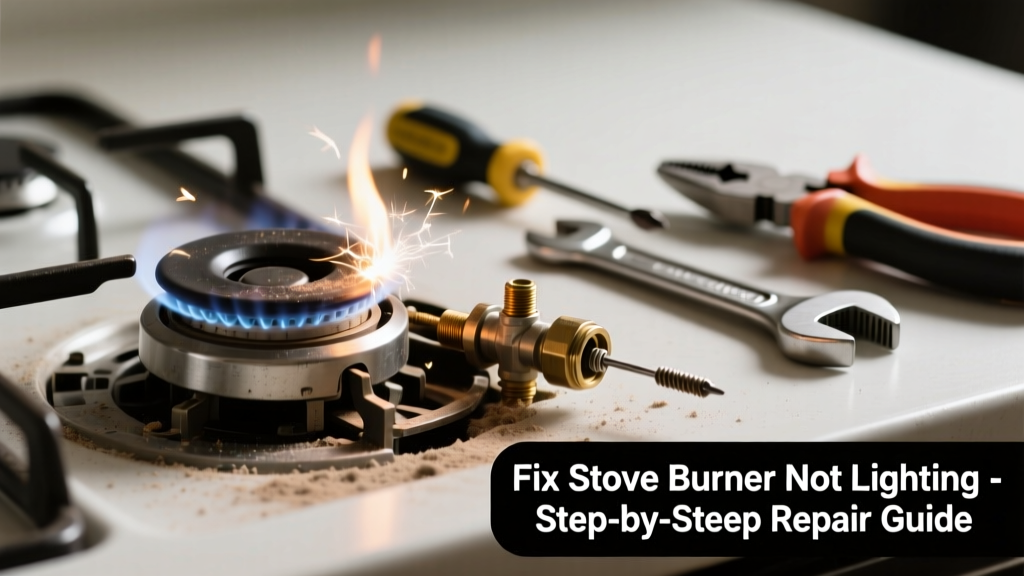
If your gas stove burner clicks endlessly, buzzes like a trapped insect, or hisses without lighting — don’t just turn it off and walk away. That noise isn’t just annoying; it’s a warning sign that unburned gas may be escaping, posing a real safety risk. Most causes are simple and repairable in under 30 minutes with basic tools.
Quick Diagnosis
Before grabbing tools, rule out the obvious:
- Debris blocking the igniter tip or burner ports (most common cause)
- Moisture or food residue shorting the spark electrode
- Loose or corroded wiring at the igniter or control module
- Failed spark module (if all burners click but none light)
- Gas valve obstruction or low pressure (if only one burner is affected and others work fine)
Tools & Materials Needed
| Item | Purpose | Estimated Cost |
|---|---|---|
| Needle-nose pliers | Grip and reposition small wires or electrodes | $8–$15 |
| Wire brush (stainless steel) | Clean carbon buildup from igniter tip and burner base | $4–$9 |
| Isopropyl alcohol (91%+) | Remove grease and moisture from spark components | $3–$7 |
| Multimeter (digital) | Test continuity of igniter circuit and voltage at electrode | $12–$35 |
| Replacement spark electrode (model-specific) | Swap if cracked, pitted, or misaligned | $10–$25 |
Step-by-Step Fix
Try these methods in order — most issues resolve at Step 1 or 2:
- Clean the igniter and burner ports: Turn off gas and power. Remove the grate, cap, and burner head. Use the wire brush to scrub the small metal igniter tip (usually ceramic-coated) and clear all ports on the burner base with a straight pin. Wipe everything with isopropyl alcohol and let dry completely.
- Realign the spark electrode: The gap between the igniter tip and burner base should be 1/8" (3 mm). If bent or too far, gently bend the electrode bracket using needle-nose pliers — never force the ceramic tip.
- Check wiring connections: Trace the wire from the igniter to the spark module. Look for frayed insulation, corrosion, or loose spade connectors. Disconnect and reconnect each terminal, cleaning contacts with alcohol-dampened cotton swab.
- Test spark module output: With multimeter set to AC voltage, measure across the two igniter wires while turning knob to "light." You should read 10,000–15,000 V. If below 8,000 V or zero, replace the module (part number varies by brand).
When to Call a Pro
Stop and call a licensed appliance technician if:
- You smell raw gas before or during ignition attempts (evacuate and call utility first)
- The spark module tests good but no spark occurs at the electrode (indicates internal gas valve failure)
- Your stove is over 15 years old and multiple components show wear or corrosion
- You’re uncomfortable working near gas lines or high-voltage ignition circuits
According to the U.S. Consumer Product Safety Commission’s 2022 Gas Appliance Incident Report, 62% of stove-related fires involved delayed ignition due to clogged burners or faulty igniters — many preventable with routine cleaning.
Prevention Tips
- Clean burner caps and bases weekly with warm soapy water — never soak igniter assemblies
- Wipe up spills immediately, especially sugary or starchy liquids that carbonize quickly
- Run each burner for 2 minutes monthly to burn off minor residue
- Replace worn burner caps every 3–5 years — warped caps disrupt proper flame alignment and ignition timing
Why does my stove make a rapid clicking sound even when the knob is off?
This usually means the spark module is stuck in “on” mode due to moisture, grease, or a failed capacitor. Unplug the stove for 10 minutes, then check for dampness around the control panel. If clicking persists after drying, the module needs replacement.
Can I use compressed air to clean the igniter?
Yes — but only on low pressure (<20 PSI) and from at least 6 inches away. High-pressure air can crack ceramic insulators or dislodge internal wiring. Always power off and cool the unit first.
What does a buzzing sound mean versus a clicking sound?
Clicking = normal spark attempt; buzzing = electrical arcing or coil vibration — often caused by a failing transformer in the spark module or poor grounding. A buzzing igniter rarely lights and should be tested or replaced.
Is it safe to bypass the igniter and light with a match?
Only as a temporary workaround — and only if you’re certain there’s no gas leak. Turn knob to “light,” wait 3 seconds, then hold match or long lighter near port. Never do this repeatedly: delayed ignition increases explosion risk. Review our gas stove safety checklist before attempting.
How do I know if the gas valve is faulty?
If the burner clicks and sparks normally but produces no gas flow (no hiss, no odor), and other burners work fine, suspect a clogged or seized valve. Do not disassemble — gas valves require certified technicians per NFPA 54 (2023 edition). See typical valve replacement costs and timelines.
Will cleaning the igniter void my warranty?
No — routine cleaning is explicitly covered under all major manufacturer warranties (including GE, Whirlpool, and Frigidaire) as long as you avoid abrasive pads or solvents. Keep receipts for parts purchased, and document cleaning dates in your appliance maintenance log.
A noisy, non-lighting burner isn’t just inconvenient — it’s an early alert system your stove uses to say something’s off. Most fixes take less time than waiting for a service appointment, and catching issues early prevents carbon buildup, gas waste, and potential fire hazards. Keep your wire brush handy, test your spark gap regularly, and treat every odd sound as a prompt — not a nuisance.