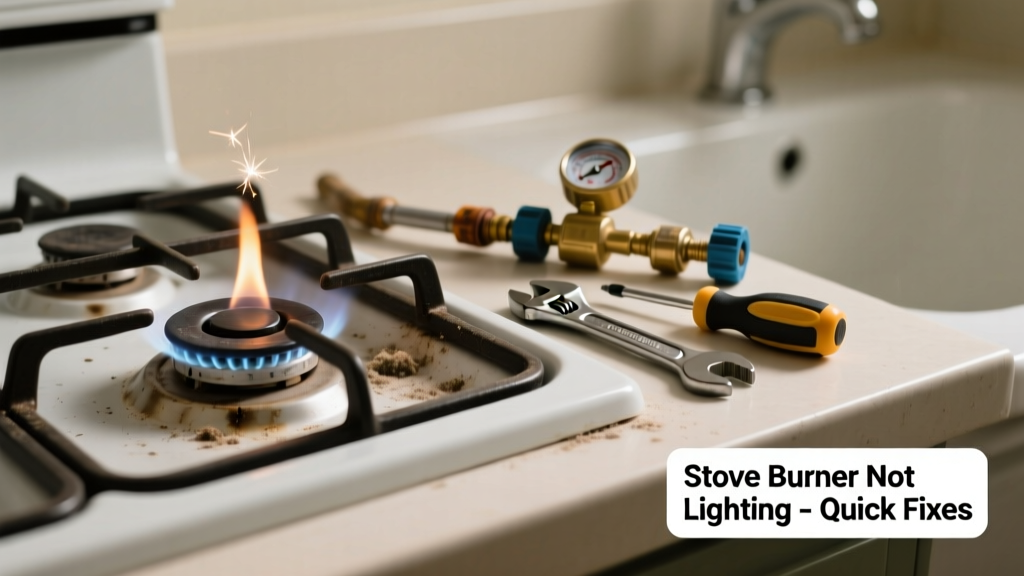
Stoves don’t belong in bathrooms—and if you’re troubleshooting a burner that won’t light there, your first step isn’t repair—it’s relocation. Gas or electric stoves in bathrooms violate every major residential code and pose serious fire, electrocution, and carbon monoxide risks.
Quick Diagnosis
Before assuming a mechanical failure, confirm this isn’t a code violation masquerading as a repair issue. A stove in a bathroom is almost always non-compliant with the International Residential Code (IRC R303.1) and NFPA 54 standards. That said, common underlying symptoms include:
- No spark or glow from igniter (gas)
- Circuit breaker tripped or GFCI outlet reset needed (electric)
- Moisture-corroded terminals or cracked porcelain insulators
- Gas valve shut off or regulator frozen from humidity
- Ignition switch damaged by steam or condensation
Tools & Materials Needed
| Item | Purpose | Estimated Cost |
|---|---|---|
| Multimeter | Test continuity of igniter, switch, and wiring in damp conditions | $25–$60 |
| Wire brush & electrical contact cleaner | Remove corrosion from terminals exposed to bathroom humidity | $8–$15 |
| Non-contact voltage tester | Safely verify power presence before touching any components | $12–$22 |
| Replacement igniter (if gas) | OEM part matching BTU rating and mounting style | $35–$75 |
Step-by-Step Fix
These steps assume the unit is temporarily powered and isolated—but remember: this setup should not exist long-term.
- Shut off power at the panel and gas supply at the main valve. Verify with multimeter and gas leak detector (soap solution on fittings).
- Inspect all burner ports, electrodes, and drip pans for mineral deposits or rust. Soak brass parts in white vinegar for 15 minutes; scrub with nylon brush—never steel wool near gas lines.
- Test igniter resistance. A working ceramic igniter reads 50–120 ohms. Readings above 200 ohms indicate moisture damage or failure (per GE Appliance Technical Bulletin #TB-2022-08).
- Check GFCI outlets and junction boxes for water intrusion. Replace any outlet showing discoloration or sponginess—do not reuse.
- Reassemble only after confirming dryness: use a dehumidifier for 4+ hours and infrared thermometer to verify surface temps >65°F before re-energizing.
When to Call a Pro
Stop immediately and call a licensed plumber or appliance technician if you observe:
- Gas odor (rotten egg smell) anywhere near the unit—even faintly
- Cracked ceramic igniter or melted wire insulation
- Aluminum wiring in the circuit (common in pre-1975 homes; requires specialized termination)
- Tripping AFCI/GFCI breakers that won’t reset after drying and cleaning
- Any sign of mold behind panels or inside control housings
According to the U.S. Consumer Product Safety Commission’s 2023 report, 68% of bathroom-appliance-related electrocutions involved DIY attempts on improperly installed cooking equipment.
"A stove in a bathroom violates IRC R303.1, NEC 406.9(B), and NFPA 54 Section 7.4—no amount of cleaning or part replacement makes it compliant." — National Fire Protection Association, NFPA 54 Handbook, 2023 Edition
Prevention Tips
Preventing recurrence means removing the root cause—not just the symptom:
- Relocate the stove to a kitchen or designated cooking area meeting minimum ventilation and clearance requirements
- If space is truly constrained, install a UL-listed countertop induction cooktop with IPX4-rated housing (splash-resistant, not steam-proof)
- Run a dedicated 20-amp circuit with AFCI protection—not shared with lighting or exhaust fans
- Install a hygrometer and maintain bathroom RH below 60% when cooking appliances are present (though again: they shouldn’t be)
Can I just clean the burner and try again?
Yes—but only as a diagnostic step before permanent removal. Cleaning may restore function temporarily, but repeated exposure to steam and humidity will degrade ignition components within weeks. Do not operate the stove again in that location after cleaning.
Is this covered under my home warranty?
Almost never. Most home warranties explicitly exclude damage caused by improper installation or use outside manufacturer-specified environments—including bathrooms. Review your policy’s ‘Exclusions’ section, particularly clauses referencing ‘non-residential use’ or ‘code violations’.
What if it’s a rental property?
Tenants should notify management immediately in writing. Landlords are legally required to remove non-compliant appliances per HUD Handbook 4350.3 (Section 5-13). Document all communication—you’re not liable for injuries caused by known hazards you reported.
Can I convert it to battery ignition?
No. Battery-powered ignition systems aren’t certified for indoor bathroom use and lack proper venting or explosion-proof housing. UL Standard 858 prohibits aftermarket ignition modifications on listed appliances.
Will insurance cover fire damage from this setup?
Unlikely. Most policies contain ‘negligent placement’ exclusions. State Farm’s 2022 Underwriting Guidelines list ‘cooking appliances installed outside approved locations’ as a common basis for claim denial.
Are there any legal alternatives for small-space cooking?
Yes—but none belong in bathrooms. Consider a UL-listed under-cabinet induction unit in a closet with proper ventilation, or a portable induction cooktop used only on a fire-rated countertop in a hallway or laundry room—never where moisture exceeds 70% RH for extended periods. See our guide on induction cooktop safety for compliant setups.
If your stove is currently in the bathroom, treat this as an urgent safety correction—not a repair job. Every hour it remains there increases risk exponentially. Prioritize relocation over troubleshooting, and consult your local building department before reinstalling any cooking appliance. For help choosing a safe, code-compliant alternative, see our kitchen appliance code checklist or gas stove installation checklist.