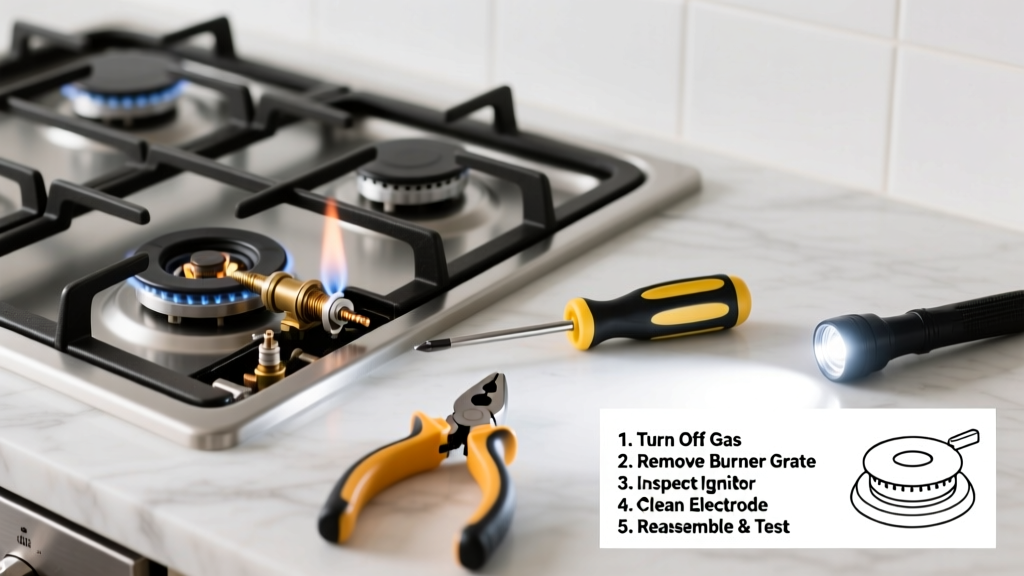
Your gas stove burner clicks but won’t ignite—or worse, it’s silent when you turn the knob. Before you call for service or assume the whole range is failing, most no-light issues stem from simple, fixable causes like clogged ports, misaligned caps, or dirty electrodes.
Quick Diagnosis
Before grabbing tools, rule out these five common culprits in under 60 seconds:
- Debris blocking the igniter tip or burner port
- Warped or improperly seated burner cap
- Loose or corroded electrode wire connection
- Gas shutoff valve turned off (often overlooked behind the stove)
- Faulty ignition switch or control module (less common but possible)
Tools & Materials Needed
| Item | Purpose | Estimated Cost |
|---|---|---|
| Small wire brush or toothbrush | Cleans carbon buildup from igniter tip and burner ports | $2–$5 |
| Needle or straightened paperclip | Unclogs tiny gas ports without damaging them | $0.10 |
| Phillips screwdriver (size #1) | Removes burner base or access panels on some models | $8–$12 |
| Multimeter (optional) | Tests continuity of igniter circuit if clicking stops entirely | $25–$45 |
| Isopropyl alcohol (90%+) | Removes grease residue from electrode without corrosion risk | $5–$8 |
Step-by-Step Fix
Work one burner at a time. Always shut off gas and unplug electric ignition stoves before servicing.
- Clean the igniter and burner ports: Turn off gas and remove the burner cap and grate. Use a dry toothbrush to scrub the ceramic igniter tip and surrounding area. Then use a needle to gently clear each small port around the burner base—don’t force it.
- Re-seat the burner cap: Place the cap back so its alignment notch matches the base. A 1/16" misalignment can prevent proper spark gap. Test by turning the knob slowly—you should hear consistent clicking near the igniter.
- Check electrode wiring: Locate the wire running from the igniter to the control panel. Look for cracks, burns, or loose connections at both ends. Gently tug each connector—if it wiggles, reseat firmly. Corrosion? Clean contacts with isopropyl alcohol and a cotton swab.
- Verify gas flow: Pull the stove away from the wall and confirm the manual shutoff valve behind it is fully open (handle parallel to pipe). If other burners light fine, this is likely not the issue—but always eliminate it first.
When to Call a Pro
Stop and call a licensed appliance technician if you encounter any of these:
- No clicking sound from any burner—even after cleaning and checking power/gas
- Burner lights manually with a match but won’t ignite electronically
- You smell gas at any point during troubleshooting
- Sparks jump from the igniter to the burner base (indicates shorted insulation)
- Your multimeter shows no voltage (120V AC) at the igniter terminal when the knob is pressed
According to the U.S. Consumer Product Safety Commission’s 2022 Gas Appliance Incident Report, 37% of stove-related fires involved DIY repairs where gas lines or electrical components were mishandled.
"Never attempt to bypass or hot-wire an igniter circuit. Modern ranges use high-voltage pulses (10,000–15,000V) that can deliver painful shocks—even with the stove unplugged." — National Appliance Service Alliance Technician Handbook, 2023 edition
Prevention Tips
Keep your stove lighting reliably for years with these habits:
- Wipe down burner bases weekly with a damp cloth—never let sugary spills bake on
- Remove and wash burner caps monthly in warm, soapy water; air-dry completely before reinstalling
- Use only manufacturer-recommended replacement parts—aftermarket igniters often have mismatched spark gaps
- Have your gas line pressure tested every 3 years, especially if you notice inconsistent flame height across burners
Why does my burner click but not light?
This usually means the igniter is sparking but gas isn’t reaching the port. Check for clogged ports first—especially if you recently boiled over syrup or pasta water. Also verify the burner cap is centered: even a 2mm offset increases spark gap beyond reliable ignition distance.
Can I clean the igniter with vinegar?
No. Vinegar’s acidity accelerates corrosion on the ceramic insulator and metal electrode. Stick to isopropyl alcohol or a dry brush. For stubborn grease, a microfiber cloth dampened with alcohol works best—never soak the igniter.
What if only one burner won’t light?
That strongly points to a localized issue: clogged ports, bent electrode, or faulty individual igniter. Cross-check by swapping the suspect burner cap with a working one—if the problem moves, it’s the cap. If not, inspect the electrode and wiring for that specific burner.
How long should a stove igniter last?
Most OEM igniters last 5–8 years with normal use. Frequent clicking without ignition shortens lifespan—clean ports and ensure proper cap alignment to extend it. After 7 years, consider keeping a replacement igniter on hand.
Is it safe to light with a match?
Yes—as a temporary workaround—if gas flow is confirmed and you can see the burner head clearly. Hold the match near the port while turning the knob to ‘Lite’. Never leave the match unattended, and never use a lighter with an extended neck near the control panel. For long-term reliability, fix the root cause instead of relying on matches.
Do electric coil burners have igniters?
No—they heat via resistance, not gas ignition. If your coil burner isn’t heating, it’s likely a faulty coil, infinite switch, or wiring issue. See our guide on electric stove burner not heating for diagnosis steps.
A non-lighting burner is rarely a sign of major failure—it’s usually a small obstruction, misalignment, or loose connection hiding in plain sight. With careful cleaning and methodical testing, most people restore full function in under 20 minutes. Just remember: if gas smells, sparks fly unexpectedly, or voltage tests show anomalies, step back and call a pro. Your stove’s built to last, but only if treated with respect—and a little regular maintenance.