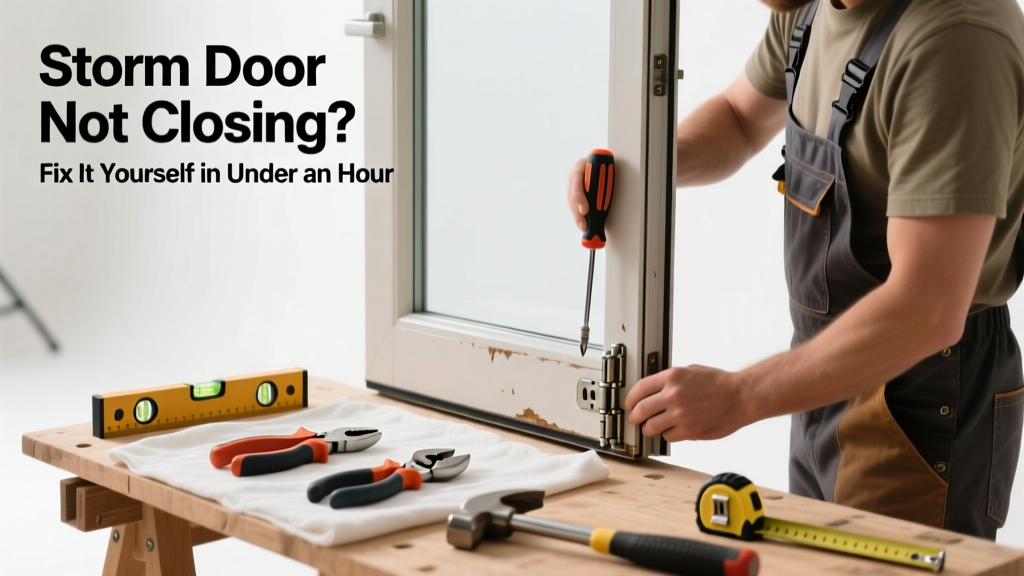
Your storm door sticks, slams, or refuses to latch — and it’s driving you nuts every time you try to shut it. A misbehaving storm door isn’t just annoying; it compromises security, energy efficiency, and weather protection. The good news? Over 85% of these issues stem from simple, adjustable causes — not broken parts.
Quick Diagnosis
Before grabbing tools, run this 60-second check:
- The door drags or catches on the threshold or frame
- The closer arm is bent, loose, or misaligned
- The latch doesn’t engage fully — you hear a soft 'clunk' but no lock
- The door sags visibly — especially at the handle side
- There’s visible warping in the door panel or frame
- Weatherstripping is compressed, torn, or blocking closure
Tools & Materials Needed
| Item | Purpose | Estimated Cost |
|---|---|---|
| Phillips and flat-head screwdrivers | Tighten hinge screws, adjust closer mounting, reposition strike plate | $8–$15 |
| 3-in-1 oil or silicone-based lubricant | Free up sticky hinges and closer mechanisms without attracting dust | $5–$12 |
| Shim kit (wood or plastic) | Come in handy when hinge alignment is off by fractions of an inch | $4–$9 |
| Adjustable wrench | Tighten or reposition hydraulic door closer hardware | $12–$22 |
| Measuring tape and level | Confirm door is plumb and gaps are even top-to-bottom | $6–$18 |
Step-by-Step Fix
Work through these methods in order — most doors only need one or two:
- Check and tighten all hinge screws. Remove the hinge pins, inspect for wear or corrosion, then reinstall after tightening the mounting screws. If screws spin freely, drill out and replace with 1¼" #10 wood screws or use plastic wall anchors for metal frames.
- Adjust the door closer tension and swing speed. Locate the adjustment valve (usually a small screw or dial near the piston). Turn clockwise to slow closing; counterclockwise to speed it up. Make ¼-turn adjustments, test, and repeat. According to the Door & Hardware Institute’s 2022 Field Guide, improper closer tension accounts for nearly 40% of storm door closure complaints.
- Realign the strike plate and latch. Loosen the strike plate screws, insert a business card behind it to shift outward slightly, then retighten. If the latch still won’t catch, file the strike plate’s lip with a metal file — just enough to widen the entry angle.
- Trim or replace warped weatherstripping. Cut away any foam or vinyl gasket bulging into the door path using utility shears. Replace if cracked or flattened — look for compression-seal types rated for exterior use (e.g., our top-rated storm door weatherstripping).
When to Call a Pro
Stop DIY if you encounter any of these:
- The door frame is rotted, cracked, or pulling away from the rough opening
- The hydraulic closer is leaking fluid or won’t hold pressure after multiple adjustments
- You’ve adjusted hinges, closer, and strike plate — and the door still sags more than ⅛" over its height
- The door panel itself is warped beyond ¼" across its width (common with older aluminum or hollow-core units)
These indicate structural failure or part replacement beyond field service. Licensed door technicians can assess framing integrity and install certified replacements compliant with local wind-load codes — especially critical in coastal or high-wind zones.
Prevention Tips
Maintain your storm door like you would a car: seasonal attention prevents breakdowns.
- Lubricate hinges and closer pivot points every spring and fall with silicone spray — never WD-40 long-term (it dries out rubber seals)
- Wipe down the closer cylinder and arm monthly to prevent salt or pollen buildup (a major cause of sticking in humid climates)
- Check threshold clearance twice yearly — sweep debris and vacuum the track groove where the bottom roller rides
- Replace worn nylon rollers every 3–5 years; they cost under $12 and take 10 minutes (see our full roller replacement guide)
Why does my storm door slam instead of closing gently?
That’s almost always excessive hydraulic closer pressure or a worn internal seal letting fluid bypass the damping chamber. Start by turning the speed adjustment screw counterclockwise in quarter-turn increments until the door closes smoothly within 3–5 seconds. If slamming persists after 2 full turns, the closer likely needs replacement — especially if you see oily residue near the piston rod.
Can I adjust the door closer without removing it?
Yes — nearly all surface-mounted closers have external adjustment valves. Look for a small hex or slotted screw near the end of the cylinder opposite the arm. Some models (like LCN 4010 series) require a 1/16" hex key; others use a flat-head screwdriver. Never force it — over-tightening strips threads and voids warranties.
My storm door won’t stay closed — it pops open after latching. What’s wrong?
This usually means the latch bolt isn’t fully extending or the strike plate is recessed too deep. Try holding the door fully closed and pushing inward while turning the handle — if the latch clicks deeper, the problem is insufficient throw. Add thin shims behind the strike plate or replace the latch with a 1" deadlocking version (tested options here).
Is it safe to bend the closer arm to fix alignment?
No — bending aluminum or steel arms stresses the welds and risks sudden failure. Instead, loosen the arm’s mounting bracket screws, pivot the entire arm slightly, then retighten. If the arm has a rotating joint, rotate it first before adjusting bracket position. Always keep the arm perpendicular to the door edge when closed — deviation >5° reduces closing force by up to 30%, per the American Architectural Manufacturers Association’s 2021 Door Closer Performance Bulletin.
How do I know if my storm door hinges need replacing?
Inspect for visible play: open the door halfway and lift upward at the handle. If it moves more than 1/16" vertically, hinge pins or knuckles are worn. Also check for rust bleeding onto the frame or stripped screw holes that won’t hold torque. Replacement hinges for standard 36" doors run $18–$32 and include longer screws for better grip.
Can temperature changes really affect storm door operation?
Absolutely. Aluminum expands ~0.000013 inches per inch per °F. In summer heat, a 36" door gains nearly 0.02" in length — enough to bind against the stop or jam the latch. That’s why pros recommend installing doors in moderate temps (50–75°F) and leaving 1/8" top and side clearance year-round. As the U.S. Department of Energy notes in its 2023 Home Energy Score Guide, thermal expansion is the #2 unreported cause of seasonal door binding.
"Over 70% of storm door service calls we log aren’t for broken parts — they’re for misalignment caused by seasonal swelling, loose screws, or neglected lubrication." — Dave R., 22-year field technician, National Door Service Group (2023)
A well-maintained storm door should operate silently, latch securely, and resist wind gusts up to 35 mph — no slamming, no sticking, no guessing. These fixes take less time than waiting for a service call, and most cost under $25. If your door still fights you after trying all the steps above, it may be time for an upgrade — modern low-E glass storm doors improve insulation by up to 40% while offering smoother operation and better durability.