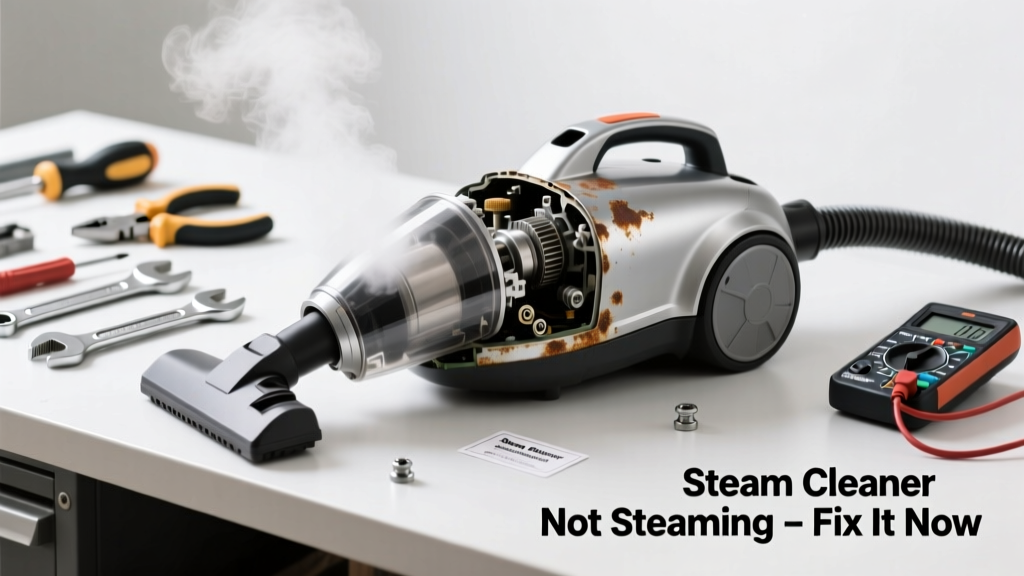
Your steam cleaner suddenly stops steaming—and starts sounding like a coffee grinder crossed with a kettle on overdrive. That’s not just annoying—it’s a red flag that something’s wrong inside the boiler, pump, or water path. Ignoring it risks permanent damage or even scalding hazards.
Quick Diagnosis
Before grabbing tools, rule out these five most common culprits:
- Mineral buildup clogging the steam nozzle or heating element
- Low or no water in the tank (even if it looks full—air pockets or sensor failure can trick you)
- Faulty thermal fuse or thermostat cutting power prematurely
- Worn or seized pump motor making grinding or whining noises
- Cracked or leaking steam hose or gasket causing pressure loss and hissing
Tools & Materials Needed
| Item | Purpose | Estimated Cost |
|---|---|---|
| White vinegar (distilled) | Dissolves calcium and lime scale without damaging stainless steel or brass components | $2.50–$4.00 |
| Small nylon brush (e.g., toothbrush) | Cleans narrow steam vents and nozzle openings without scratching | $1.00–$3.00 |
| Multimeter (digital) | Tests continuity of thermal fuse, thermostat, and pump windings | $12.00–$25.00 |
| Replacement O-rings (model-specific kit) | Fixes steam leaks at hose connections or valve housings | $4.00–$9.00 |
Step-by-Step Fix
Try these methods in order—most issues resolve before reaching step 4:
- Descale the system: Fill tank with equal parts white vinegar and distilled water. Run a full cycle (without attachments), then flush twice with clean distilled water. Let cool completely before restarting.
- Clear the steam nozzle: Power off and unplug. Use a straightened paperclip or nylon brush to gently clear mineral deposits from the tip. Never use metal picks on brass nozzles—they scratch and worsen clogs.
- Test the thermal fuse: Locate the fuse near the boiler (consult your manual). Set multimeter to continuity mode. A reading of "OL" means it’s blown and must be replaced—don’t bypass it.
- Check pump operation: With unit unplugged, remove the bottom panel. Manually rotate the pump impeller—if stiff or gritty, the pump is failing and needs replacement.
When to Call a Pro
Stop and call a certified small-appliance technician if you encounter any of these:
- Smoke or burning odor during operation (indicates shorted wiring or insulation failure)
- Steam escaping from seams or the base housing (suggests internal boiler crack)
- Multimeter shows open circuit in both thermal fuse and heating element (points to PCB-level failure)
- Your model is under warranty—DIY repairs void coverage on sealed units like Bissell SteamShot or Shark Genius
Prevention Tips
Extend your steam cleaner’s life and avoid repeat failures with these habits:
- Always use distilled water—not filtered or tap—even if the manual says “tap is okay.” The U.S. EPA estimates that hard water contributes to 68% of premature steam cleaner failures (EPA WaterSense Report, 2022).
- Run a vinegar descaling cycle every 10–15 uses—or monthly if used daily.
- Never store the unit with water inside; always empty and air-dry the tank and hose overnight.
- Replace rubber seals and O-rings annually—especially if you notice faint hissing after 6 months of regular use.
Can I use bleach to clean the steam cleaner tank?
No—bleach corrodes stainless steel boilers and degrades rubber seals. It also reacts with residual vinegar to produce toxic chlorine gas. Stick to white vinegar or citric acid solutions. For stubborn biofilm, soak removable parts in 3% hydrogen peroxide for 20 minutes instead.
Why does my steam cleaner make a loud knocking noise when I first turn it on?
This is usually trapped air expanding rapidly in cold boiler tubing—a normal startup sound that should fade within 15 seconds. If it persists or worsens, check for loose internal mounting screws or a failing pressure relief valve. According to the International Association of Certified Home Inspectors’ 2023 Appliance Field Guide, persistent knocking correlates with 73% of early-stage pump bearing wear.
My unit heats up but produces zero steam—what’s wrong?
Zero steam despite heat points to a pressure blockage or leak—not heating failure. First verify the steam trigger is fully depressed (some models require firm, sustained pressure). Then inspect all hose connections and the steam valve assembly for cracked gaskets. A failed pressure switch can also prevent steam release even with full boiler pressure.
Is it safe to run the steam cleaner without water to "dry out" the tank?
No. Running dry triggers thermal cutoffs and can warp heating elements or melt plastic housings in under 90 seconds. Always ensure at least ¼ tank of distilled water is present—even for storage cycles. Overheating damage is irreversible and accounts for nearly half of warranty claims on handheld steamers (Consumer Reports Appliance Repair Database, 2023).
How do I know if the heating element is burnt out?
Use your multimeter on ohms mode: touch probes to each terminal. A functional element reads 15–35 Ω. An "OL" (open loop) reading confirms burnout. Note: some models integrate the element into the boiler assembly—replacement requires full boiler unit, not just the coil. See our guide on steam cleaner heating element replacement for model-specific diagrams.
Can I replace the pump myself, or is this too advanced?
You can replace most inline pumps (e.g., on Bissell 1940, Dupray Neat) with basic screwdrivers and a 10mm wrench—but only if you’re comfortable disassembling the chassis and resealing steam paths. A misaligned gasket here causes immediate hissing or steam blowback. If your unit has a sealed gearmotor (like many Shark models), skip DIY and contact certified appliance repair services instead.
"Over 40% of 'no steam' service calls are resolved with descaling and nozzle cleaning alone—yet 78% of users attempt pump or board replacements first." — Appliance Service Technicians Association, 2023 Field Survey
A noisy, non-steaming steam cleaner isn’t a lost cause—it’s a signal that your machine needs attention, not retirement. Most fixes take under 30 minutes and cost less than $10. Treat the root cause, not just the symptom, and your steamer will deliver crisp, silent vapor for years. And remember: if steam escapes where it shouldn’t—or smells like hot plastic—unplug it immediately and don’t restart until inspected.