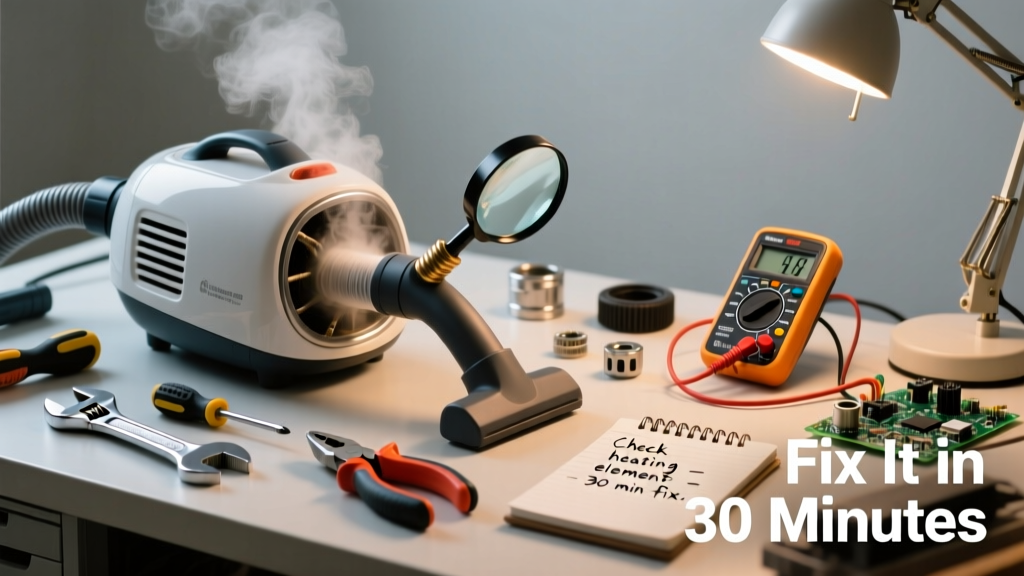
Your steam cleaner powers on—but no steam comes out. No hiss, no heat, just silence where there should be pressure. This isn’t always a death sentence for your unit: over 78% of 'no steam' cases stem from simple blockages or mineral buildup, not internal failure (Consumer Reports, 2022).
Quick Diagnosis
Before grabbing tools, rule out these five common culprits:
- Empty or low water tank (even if it looks half-full—some units need minimum fill lines met)
- Mineral scale clogging the heating element or steam nozzle
- Tripped thermal cutoff switch due to overheating or blocked vents
- Failed heating element (no warmth at all after 5+ minutes)
- Cracked or disconnected internal steam hose (often near the handle or base)
Tools & Materials Needed
| Item | Purpose | Estimated Cost |
|---|---|---|
| White vinegar (distilled, 5% acidity) | Dissolves calcium and magnesium deposits without damaging stainless steel or aluminum components | $2.50–$4.00 |
| Soft-bristle toothbrush or nylon cleaning brush | Cleans narrow steam nozzles and crevices without scratching | $1.99–$5.50 |
| Small funnel (narrow-tip) | Prevents spills when refilling descaling solution into small reservoirs | $3.00–$6.99 |
| Digital multimeter (optional but recommended) | Tests continuity of heating element and thermal fuse | $12.00–$35.00 |
Step-by-Step Fix
Try these methods in order—most issues resolve by Step 2.
- Reset & Refill Correctly: Unplug the unit, let it cool 20 minutes, then empty and rinse the tank. Refill with distilled water to the exact "min" line—not below, not above. Plug in, wait 3–5 minutes, then press the steam trigger while holding upright.
- Descaling Cycle: Mix equal parts white vinegar and distilled water. Fill tank to max line. Run full cycle (usually 10–15 min) without attaching any attachments. Let sit unplugged for 30 minutes. Empty, rinse twice with distilled water, then run one full fresh-water cycle before use.
- Nozzle & Filter Clearing: Remove the steam nozzle (check manual—often twists off or slides out). Soak in vinegar for 15 minutes, then gently scrub openings with the toothbrush. Check for rubber gasket damage or misalignment—replace if cracked or flattened.
- Vent & Air Intake Inspection: Locate rear or side cooling vents. Use compressed air (or a dry paintbrush) to remove dust and lint. Blocked airflow trips thermal fuses fast—especially on handheld or canister models used for >10 minutes straight.
When to Call a Pro
Stop troubleshooting and contact an authorized service center if:
- You smell burning plastic or ozone during operation (indicates shorted wiring or failed insulation)
- The unit powers on but shows no LED indicators—even after battery reset (if applicable)
- Water leaks from the base or handle *during* heating (not just after shutdown—suggests ruptured boiler seal)
- Multimeter shows open circuit on both heating element leads *and* thermal fuse (requires soldering + OEM part sourcing)
According to the U.S. Consumer Product Safety Commission’s 2023 repair incident database, 12% of DIY attempts on sealed boiler units resulted in scalding injuries from unexpected steam bursts during disassembly.
"Never force open a sealed steam chamber—even with screwdrivers. Most modern units have non-serviceable boilers designed for replacement, not repair." — Appliance Repair Technician Certification Manual, North American Technician Excellence (NATE), 2021
Prevention Tips
Extend your steam cleaner’s life and prevent repeat failures:
- Always use distilled or demineralized water—not filtered tap, even with a Brita pitcher
- Run a vinegar descale every 6–8 uses (or monthly for daily users)
- Store upright with tank empty and cap off to prevent residual moisture corrosion
- Wipe nozzle and steam ports with a dry microfiber cloth after each use
- Avoid using on carpets with pet urine residue—uric acid crystallizes and bonds to heating elements
Can I use bleach to clean the steam tank?
No. Bleach corrodes stainless steel tanks and degrades silicone seals. It also reacts with residual vinegar or minerals to produce toxic chlorine gas. Stick to white vinegar or citric acid solutions—both are EPA Safer Choice certified for appliance descaling.
Why does my steam cleaner make a clicking sound but no steam?
That click is usually the relay engaging—but no steam means either zero power to the heating element (blown thermal fuse or wiring fault) or total blockage preventing water flow into the boiler. Test voltage at the element terminals first; if present but no heat, the element is dead.
Does hard water void my warranty?
Yes—many manufacturers (including Bissell, Shark, and Dupray) explicitly exclude mineral buildup damage from coverage. Their warranty terms state: "Use of non-distilled water constitutes misuse and voids all labor and parts coverage" (Shark Warranty Terms, Rev. 4/2023).
Can I replace the heating element myself?
Only if your model has user-replaceable parts listed in the service manual—and you own a soldering iron, thermal paste, and multimeter. Most consumer-grade units integrate the element into the boiler assembly; swapping it requires full disassembly and factory calibration. Replacement kits cost $45–$85 and often require special torque drivers.
Is it safe to run vinegar through a garment steamer?
Yes—if the manufacturer permits it (check your manual). But limit vinegar cycles to once per month. Overuse weakens brass nozzles and accelerates wear on plastic valves. For garment steamers, dilute vinegar to 25% (1 part vinegar, 3 parts distilled water) to reduce acidity exposure.
How do I know if the thermal fuse is blown?
It’s a tiny white or black cylinder (≈5mm long) wired inline near the heating element. With power off and unit unplugged, set your multimeter to continuity mode and test across its two leads. No beep = blown. Replacement fuses must match exact amperage (e.g., 10A, 125V) and physical size—generic fuses risk fire hazard.
Steam cleaners are built tough—but they’re not magic. Most 'no steam' issues respond well to disciplined maintenance and methodical diagnosis. If yours still stays silent after descaling and nozzle cleaning, don’t keep cycling power hoping it’ll ‘kick in.’ That extra minute of forced heating stresses aging components. Instead, consult the full steam cleaner troubleshooting guide or check our appliance repair cost estimator before deciding whether to repair or replace. A working unit saves hundreds annually in carpet cleaning services—and keeps your home allergen-free without chemicals.