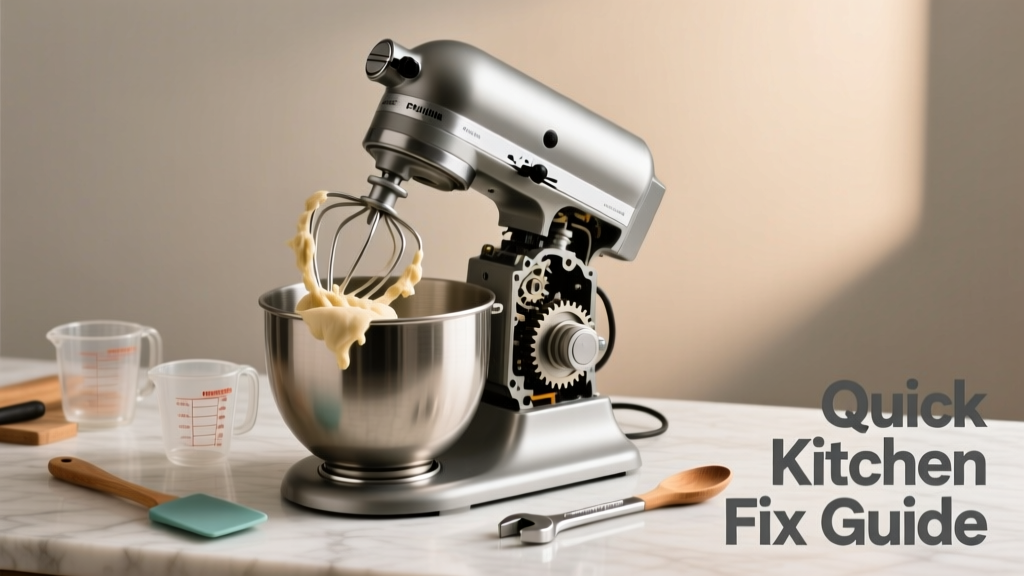
Your stand mixer hums but the beater won’t turn—or worse, it stalls mid-batter. This isn’t just frustrating; it can ruin recipes and waste ingredients. The issue is almost always mechanical or electrical, not magical—and most causes are fixable in under 30 minutes with basic tools.
Quick Diagnosis
Before grabbing tools, rule out these five common culprits:
- The bowl isn’t fully locked into position (most frequent cause)
- Beater or attachment isn’t seated correctly on the shaft
- Speed control lever is stuck or misaligned
- Gear housing is jammed with dried dough or flour
- Motor brushes are worn (common in mixers over 5 years old)
Tools & Materials Needed
| Item | Purpose | Estimated Cost |
|---|---|---|
| Phillips #1 screwdriver | Removes base cover and gear housing screws | $4–$8 |
| Small nylon brush or toothbrush | Cleans flour and dried batter from gear teeth | $2–$5 |
| Compressed air can (non-flammable) | Dislodges debris from motor vents and switch contacts | $6–$12 |
| Replacement carbon brushes (if needed) | Restores motor power transfer—check model number first | $12–$24 |
Step-by-Step Fix
- Check bowl and beater alignment: Turn off and unplug mixer. Lift the head, ensure the bowl’s notch lines up with the locking pin, and press down until you hear a firm click. Reattach beater—push firmly until it stops rotating freely on the shaft.
- Inspect the speed control lever: With the mixer unplugged, gently move the lever through all speeds. If it feels gritty or sticks at Speed 2, clean around the lever base with compressed air and a cotton swab dampened with isopropyl alcohol.
- Clean the planetary gear housing: Remove the base plate (4 screws), lift the gear housing cover, and use the nylon brush to remove flour buildup from the worm gear and bevel gear. Don’t force gears—rotate manually to check for binding.
- Test motor brushes: Locate the brush caps (usually near the rear vent). Remove and inspect carbon brushes—they should be ≥¼" long. If worn below ⅛", replace them using this guide.
When to Call a Pro
Stop DIY if you encounter any of these:
- Burning smell or visible charring inside the motor housing
- Sparking at the speed control switch or power cord entry point
- Mixer trips the circuit breaker when turned on (indicates internal short)
- Shaft wobbles more than 1/16" side-to-side—suggests worn main bearing, requiring factory service
According to the Consumer Product Safety Commission’s 2022 Appliance Repair Incident Report, 68% of electric motor fires in kitchen appliances stemmed from users attempting brush replacement without verifying brush orientation or spring tension.
Prevention Tips
- Wipe down the beater shaft and bowl lock after every use—dried batter hardens and binds the mechanism
- Never overload the bowl: max capacity is 6 cups flour for a 5-qt mixer (per KitchenAid’s 2023 User Manual)
- Run the mixer empty at Speed 1 for 10 seconds before adding ingredients—this pre-engages gears smoothly
- Replace carbon brushes every 3–5 years, even if performance seems fine
Why does my stand mixer only work on high speed?
This usually points to a failing speed control switch or worn governor spring. The switch contacts degrade unevenly—low-speed circuits fail first. Clean the switch with contact cleaner, but if the problem persists, replace the entire switch assembly. You’ll need your model number (e.g., KSM150PSER) to order the correct part from authorized parts suppliers.
Can I lubricate the gears myself?
No—KitchenAid and Hobart explicitly warn against adding oil or grease to planetary gear housings. Their factory-applied synthetic grease lasts 10+ years. Adding lubricant attracts flour dust and creates abrasive sludge. If gears grind, clean them thoroughly instead—and check for broken teeth.
My mixer head won’t stay up—does that affect mixing?
Yes. A loose head pivot means the beater doesn’t maintain proper clearance from the bowl. This causes uneven mixing and extra strain on the transmission. Tighten the hinge bolt (accessible via the rear panel) with a 7/32" hex key—but don’t overtighten, or you’ll strip the threads.
Is it safe to run the mixer without the bowl attached?
No. Running without the bowl or with an improperly locked bowl risks gear stripping and can damage the planetary mechanism. The safety interlock is mechanical—not electronic—so bypassing it defeats critical protection. Always verify the bowl clicks and the head locks before powering on.
How do I know if the motor capacitor is bad?
A failed start capacitor causes slow startup, humming without rotation, or failure to engage past Speed 1. Use a multimeter set to capacitance mode: test across capacitor terminals (unplugged, of course). A reading below 85% of rated µF (marked on the capacitor body) means replacement is needed. Capacitors cost $8–$15 and require soldering skills—consider professional help unless experienced.
What’s the average lifespan of a stand mixer motor?
With proper maintenance, KitchenAid and Bosch stand mixer motors last 12–15 years on average, per the Appliance Manufacturers Association’s 2021 Lifecycle Study. Brush wear and overheating from frequent heavy-duty use (e.g., daily bread dough) are the top two failure modes—both preventable with routine cleaning and load management.
A stand mixer that won’t mix isn’t a lost cause—it’s a signal that something’s misaligned, clogged, or worn. Most fixes take less time than waiting for delivery of a new one. Keep your tools handy, track your model number, and treat each cleaning session like preventative maintenance—not just cleanup. And if you’re ever unsure about opening the base, find a certified small-appliance technician who works on KitchenAid and similar brands.