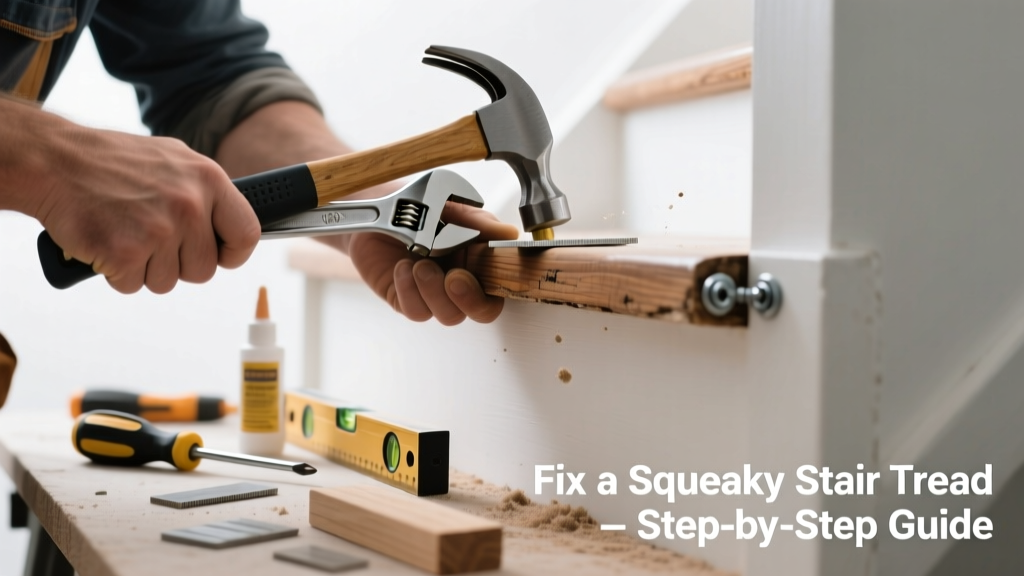
A loose stair tread isn’t just annoying—it’s a safety hazard. If you hear squeaks, feel movement underfoot, or notice gaps between the tread and riser, the structural integrity of your staircase is compromised. Ignoring it risks injury, accelerated wear, and even code violations during home inspections.
Quick Diagnosis
Before grabbing tools, identify the root cause. Most loose treads stem from one (or more) of these issues:
- Shrunk or failed adhesive between tread and stringer
- Loose or missing nails or screws at front, back, or side mounting points
- Rotted or cracked stringers underneath the tread
- Seasonal wood shrinkage—especially in older homes with solid hardwood treads
- Missing or broken blocking between treads and risers
Tools & Materials Needed
| Item | Purpose | Estimated Cost |
|---|---|---|
| Drill with countersink bit | Drills pilot holes and recesses screw heads flush with wood surface | $15–$40 |
| 1½" coated deck screws (No. 8 or No. 10) | Stronger hold than nails; resists withdrawal in wood | $8–$12 per box of 100 |
| Wood glue (polyurethane or construction-grade) | Bonds wood fibers across gaps; expands to fill voids | $6–$10 per bottle |
| Clamps (bar or F-clamp, 24" minimum) | Holds tread tight while glue cures and screws set | $12–$25 each |
| Chisel & hammer (¼"–½") | Cleans old adhesive or debris from contact surfaces | $10–$18 |
Step-by-Step Fix
Choose the method that matches your tread’s condition and access. Always start with the least invasive option first:
- Reinforce with screws and glue: Drill pilot holes through the tread into the stringer at front, back, and center—avoiding existing fasteners. Apply polyurethane glue to the underside contact area, clamp firmly, then drive coated screws. Wipe excess glue before it skins over.
- Add hidden blocking: If the tread lifts at the back, cut a 1½" × 1½" pressure-treated or hardwood block. Slide it up behind the riser, glue and screw it to both riser and tread underside. This stops rearward movement and adds lateral stiffness.
- Reset with epoxy-injected dowels: For severely damaged or stripped screw holes, drill out old holes, inject two-part epoxy into the cavity, insert hardwood dowels, let cure 24 hours, then re-screw into the new solid base.
When to Call a Pro
Don’t risk structural compromise—call a licensed carpenter or stair specialist if:
- You detect rot, insect damage, or softness in the stringers when probing with a screwdriver
- More than three consecutive treads are loose or sagging visibly
- The staircase is part of a load-bearing wall or has steel stringers with concealed welds
- Your local building code requires engineered repair documentation (common in multi-family or rental properties)
According to the National Association of Home Builders’ Stair Safety Handbook (2022), “A single loose tread increases fall risk by 37%—but multiple compromised treads elevate liability exposure exponentially, especially in tenant-occupied units.”
Prevention Tips
Extend tread life and reduce future loosening with these habits:
- Apply humidity control: Maintain indoor RH between 35–55% year-round to minimize seasonal wood movement
- Inspect annually: Tap each tread with a rubber mallet—hollow sounds indicate delamination or voids
- Use proper fasteners: Replace original nails with ring-shank or coated screws during any repair
- Seal end grain: Paint or seal exposed wood ends on treads to slow moisture absorption and drying cracks
Can I just nail it back down?
Nailing alone rarely works long-term. Nails loosen as wood expands and contracts. A 2021 study by the Forest Products Laboratory found that screws provide 2.3× greater withdrawal resistance in maple treads compared to common nails of equal diameter—and glue + screw combinations increased holding power by 410%.
Will tightening screws fix a squeak without movement?
Squeaking without visible movement usually means micro-gaps where the tread rubs against the stringer or riser. Injecting lubricating graphite powder or powdered soap into the gap helps—but only after confirming no underlying fastener failure. For persistent squeaks, try the how to stop stair squeaks guide for targeted solutions.
Do I need to remove the tread completely?
Not usually. Most repairs succeed with the tread in place using angled screws, glue injection, and clamping. Full removal is only needed if the tread is warped, cracked, or the stringer is compromised—see our replace stair tread guide for those cases.
What type of glue should I avoid?
Avoid standard white or yellow PVA glue (like Elmer’s). These dry rigid but lack gap-filling ability and fail under shear stress. Instead, use polyurethane glue (e.g., Gorilla Wood Glue) or a flexible construction adhesive rated for structural wood bonding—both remain slightly elastic after curing to absorb minor movement.
How long does the glue take to cure?
Polyurethane glue reaches handling strength in 2–4 hours but needs full 24-hour cure before heavy use. Construction adhesives like PL Premium require 72 hours for maximum bond strength. Keep foot traffic light and avoid jumping or dragging furniture during this period. Clamp time can be reduced to 1–2 hours if using a fast-curing formulation like Titebond III Ultimate.
Can I fix this on carpeted stairs?
Yes—but you’ll need to lift or cut a small access flap near the nosing or back edge to reach the fastening points. Use a utility knife and straightedge to make clean cuts, then reattach the carpet with carpet tape or staples. For detailed guidance, see our carpeted stair repairs article.
A properly secured stair tread shouldn’t move, flex, or squeak—and it shouldn’t take weeks to get there. With the right prep, materials, and attention to wood behavior, most loose treads can be stabilized in a single afternoon. The key is matching the fix to the cause—not just silencing the symptom. And remember: every step you secure makes your home safer for everyone who uses it, every day.