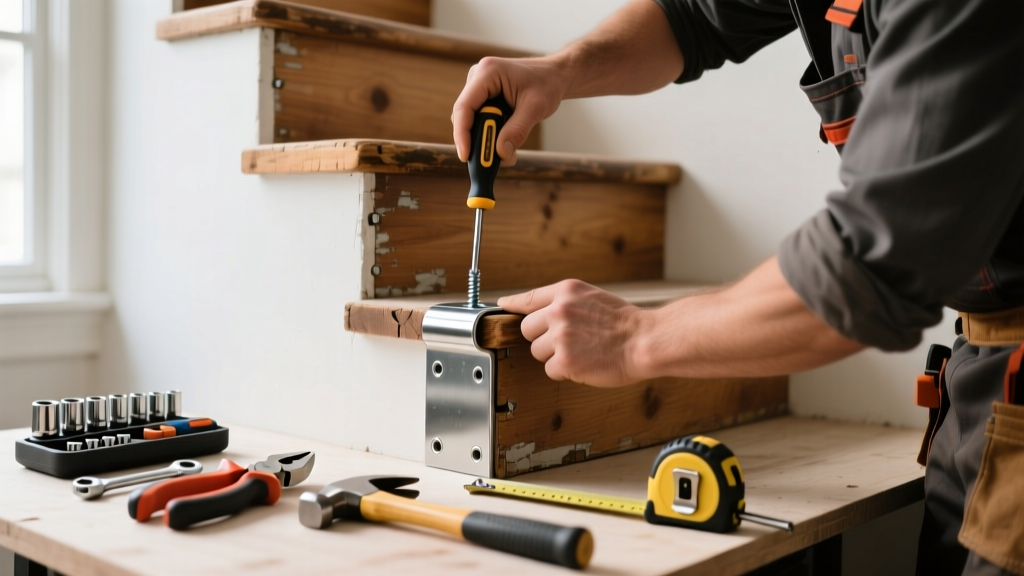
That one stair that groans every time you step on it isn’t just annoying—it’s a sign of loosening connections, worn wood, or failing fasteners. Ignoring it risks accelerated wear, instability, or even injury from unexpected movement. Most squeaks aren’t about the whole stairway; they point to one specific part needing replacement.
Quick Diagnosis
Squeaks rarely come from thin air—they’re clues. Start by walking slowly up and down each step, listening and feeling for where movement occurs. Then check these common culprits:
- Loose or corroded nails or screws at the tread-to-stringer joint
- Cracked or split tread board (especially near front edge or center)
- Worn or detached riser-to-tread glue line
- Rotted or warped stringer supporting the tread
- Missing or broken support block (also called a 'cleat') under the tread
Tools & Materials Needed
| Item | Purpose | Estimated Cost |
|---|---|---|
| 16d galvanized finish nails or 3-inch deck screws | Secure tread to stringer without splitting wood | $8–$12 |
| Wood shims (0.03"–0.06") | Firm up gaps between tread and stringer before fastening | $4–$7 |
| Cordless drill with clutch and Phillips bit | Drive screws precisely without overdriving or stripping | $45–$120 (if not owned) |
| Clamp (24" bar or F-style) | Hold tread flush while driving fasteners | $12–$25 |
| Small pry bar or cat’s paw | Remove old nails cleanly without damaging surrounding wood | $9–$18 |
Step-by-Step Fix
Once you’ve confirmed the issue is a failed component—not just loose fasteners—here’s how to replace it properly:
- Mark and remove the damaged part: If it’s a cracked tread, score cut lines with a utility knife, then carefully pry up the front and back edges using a pry bar. For a missing cleat, expose the underside by removing base trim or accessing from below.
- Inspect underlying structure: Check stringers for rot or cracks using a screwdriver tip—if it sinks in >1/8", the stringer needs repair or reinforcement before replacing the tread.
- Cut and fit replacement: Use the old tread as a template. Cut new pine or oak tread (1" thick x 11" wide) to match. Sand edges smooth and pre-drill pilot holes every 6" along each stringer contact point.
- Secure with modern fasteners: Apply construction adhesive (e.g., PL Premium) to stringer top surface, press tread into place, clamp, then drive 3" coated deck screws at each end and center—countersink slightly.
When to Call a Pro
DIY works well for isolated tread or cleat failure—but stop and call a licensed carpenter if you find any of these:
- Multiple consecutive squeaky steps with visible sagging or bounce
- Mold, water stains, or soft spots indicating structural rot in stringers or landings
- Stairs built into load-bearing walls or attached to steel framing
- Staircase lacks a permit-compliant handrail or violates local code (e.g., riser height variance >3/8")
According to the National Association of Home Builders’ 2023 Residential Construction Guidelines, stairs with more than two adjacent compromised treads require engineered evaluation before repair.
Prevention Tips
Squeaks return when moisture and movement go unchecked. Protect your fix with these habits:
- Run a dehumidifier in basements or crawlspaces—wood expands/shrinks most when humidity swings exceed 30–50% RH
- Re-torque stair screws every 2 years (especially in homes with seasonal HVAC use)
- Apply a bead of flexible caulk (like Sikaflex-11FC) along the rear riser-tread joint to absorb vibration
- Avoid dragging heavy furniture across stairs—use moving blankets and lift instead of slide
Can I just glue the squeaky part instead of replacing it?
Glue alone won’t hold long-term if the wood is split or the joint has significant gap movement. Construction adhesive helps—but only when combined with mechanical fasteners. As master carpenter Tom O’Rourke notes in Stair Building: Code-Compliant Techniques (Taunton Press, 2022): “Adhesive is the insurance policy—not the primary structural connection.”
How do I know if my stair stringer is rotten?
Probe the inner face and bottom edge with a sharp awl or screwdriver. If it penetrates deeper than 1/4" with light pressure—or crumbles into fibrous strands—the wood is compromised. Also look for dark discoloration, musty odor, or insect exit holes near joints.
Is it safe to replace just one tread on an older staircase?
Yes—if the adjacent treads are sound and level. But match species, thickness, and finish closely. Mismatched expansion rates cause new squeaks. Sand and stain the replacement to blend before final installation. For guidance on matching historic wood grain, see our stair tread wood matching guide.
Do I need to remove the carpet to fix this?
Only if the squeak originates under carpet and padding—and only if you suspect the sub-tread or cleat is damaged. Most carpeted stairs squeak due to loose tack strips or pad compression, not structural parts. Try the carpeted stair squeak fix first before cutting into flooring.
What’s the average cost to replace a single stair tread?
Materials run $25–$65 for oak or maple tread plus fasteners and adhesive. Labor from a pro averages $180–$320 per tread (HomeAdvisor 2023 national survey), but most homeowners complete this in under 3 hours with basic tools.
Can I use drywall screws for this repair?
No. Drywall screws lack shear strength and snap easily under stair load cycles. Use structural-rated fasteners: 3" #10 or #12 deck screws with corrosion-resistant coating (e.g., ceramic or zinc), or 16d ring-shank nails for traditional builds.
A well-replaced tread shouldn’t squeak again for 15+ years—if installed with adhesive, proper clamping, and climate-controlled conditions. Keep an eye on seasonal changes: if the same spot returns in winter, add a shim behind the tread’s front nosing to compensate for shrinkage. And remember: every stair repair starts with knowing exactly which part failed—not just silencing the noise.