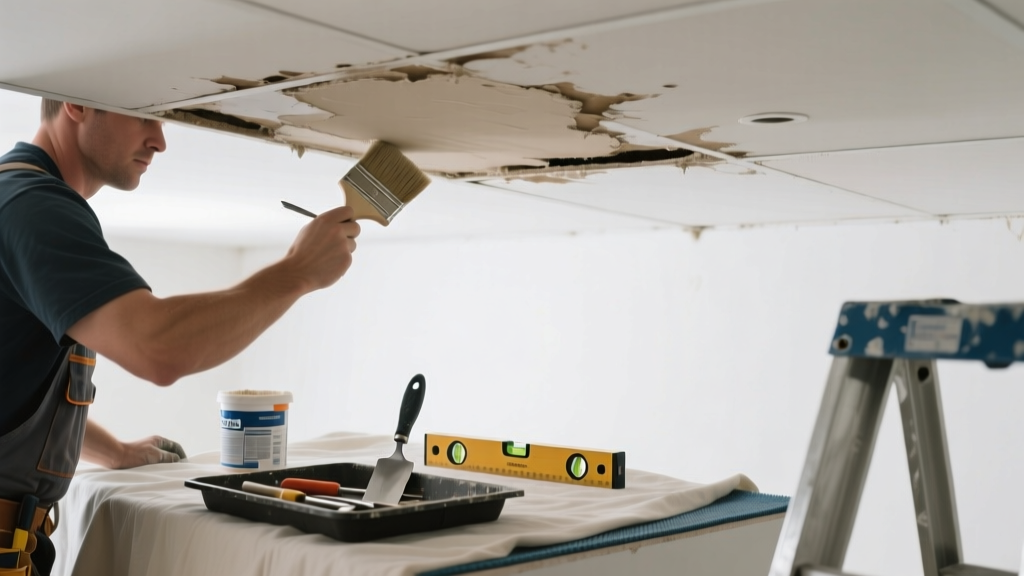
A stained ceiling isn’t just an eyesore—it’s a red flag. Water stains, yellowing, or bubbling plaster often signal hidden leaks, condensation buildup, or structural issues behind the surface. Ignoring it can lead to sagging drywall, mold growth, or even electrical hazards in recessed lighting fixtures.
Quick Diagnosis
Before grabbing tools, identify the root cause. Most stained ceilings stem from one of these five sources:
- Roof leak (especially after heavy rain or snowmelt)
- Clogged or improperly pitched attic ventilation ducts
- Faulty bathroom exhaust fan venting into attic instead of outside
- Leaking HVAC condensate drain line above the ceiling
- Plumbing leak in upstairs floor or wall cavity
Tools & Materials Needed
| Item | Purpose | Estimated Cost |
|---|---|---|
| Moisture meter (pin-type) | Detects residual dampness in drywall and framing—critical before sanding or painting | $45–$85 |
| Stain-blocking primer (oil-based or shellac) | Seals tannins, rust, and water marks so they don’t bleed through paint | $18–$32 |
| 100- and 220-grit sandpaper + pole sander | Smooths blistered texture and prepares surface for primer without ladder contortion | $12–$24 |
| LED work light with magnetic base | Illuminates attic access points and ceiling joists safely during inspection | $22–$38 |
| Heavy-duty trash bags & N95 respirator | Protects against mold spores and dust when scraping compromised drywall | $8–$15 |
Step-by-Step Fix
Start only after confirming the source is repaired and the area is fully dry (moisture reading <15% for >72 hours). Then follow these methods:
- Light stain (no texture damage): Clean with TSP substitute, let dry 48 hrs, apply Zinsser Cover Stain (oil-based), then two coats of ceiling paint.
- Bubbling or soft drywall: Cut out affected section with utility knife, install new drywall patch, tape, mud, sand, prime, and paint.
- Mold-tinged stain (visible black/green specks): Spray with Concrobium Mold Control (non-toxic, EPA-registered), let dry 24 hrs, then seal with Kilz Restoration primer.
- Recurring stain near light fixture: Remove fixture, inspect junction box for corrosion or condensation, reseal conduit entry with silicone caulk rated for electrical use.
When to Call a Pro
Some scenarios demand licensed expertise—not just experience. Call immediately if you find any of these:
- Water dripping from ceiling during active rain—even if stain appears dry now
- Electrical buzzing, warm outlets, or discolored switch plates near the stain
- More than 10 sq ft of sagging or crumbling drywall
- Stains spreading downward along interior walls (indicates major roof or plumbing failure)
According to the Insurance Institute for Business & Home Safety's 2023 report, 68% of water-damage insurance claims involving ceilings originated from undetected leaks that had been active for over three weeks before discovery.
Prevention Tips
Stains return when conditions repeat. Stop the cycle with these targeted upgrades:
- Install a hygrometer in attic space—keep humidity below 55% year-round
- Replace bathroom fans with models rated ≥110 CFM and ducted straight to roof cap (not soffit or attic)
- Inspect roof flashing around chimneys and vents every fall using binoculars from ground level
- Add rigid foam insulation to attic knee walls to reduce condensation on cold ceiling surfaces
Can I use bleach on this?
No—bleach doesn’t penetrate porous drywall and only kills surface mold, leaving roots intact. It also degrades drywall paper facing and creates toxic fumes when mixed with ammonia-based cleaners. Use Concrobium or vinegar solutions instead, per EPA guidelines for residential mold remediation (2022).
Why does the stain keep coming back after painting?
Because the underlying moisture source hasn’t been resolved—or you used latex primer instead of oil-based or shellac. Latex allows water-soluble stains (like rust from nails or tannins from wood framing) to wick through. Always test dryness with a moisture meter first: how to use a moisture meter.
Is it safe to paint over a stain without fixing the leak?
No. Painting over an active leak traps moisture inside drywall, accelerating rot and creating ideal conditions for hidden mold growth behind the surface. The U.S. EPA estimates that 14% of household water usage is from leaks—and undetected ceiling leaks account for nearly 22% of those losses (EPA WaterSense Report, 2023).
How long should I wait before repainting after a leak stops?
Minimum 72 hours with continuous air circulation (use fans and dehumidifier), but verify with a moisture meter: readings must be ≤15% at both surface and ½" depth. Rushing leads to peeling, blistering, and failed primer adhesion. For context, drywall repair timeline shows most pros wait 5–7 days for full stabilization.
Do ceiling stains always mean there’s mold?
Not always—but they’re a strong indicator. A 2021 study published in Indoor Air found visible water stains correlated with elevated airborne mold spores (>1,500 spores/m³) in 73% of tested homes, even when no visible mold was present. When in doubt, test with an ERMI-certified kit or hire a certified indoor air quality specialist.
Can I fix this myself if the stain is near recessed lighting?
Only if power is confirmed OFF at the breaker and the fixture is IC-rated and properly insulated. Non-IC fixtures installed in insulated ceilings cause heat buildup, melting wiring insulation and triggering thermal shutdowns that mimic moisture stains. If you smell burning plastic or see discoloration on the housing, stop and call a licensed electrician—recessed light safety checklist explains why.
A stained ceiling isn’t broken—it’s communicating. Listen carefully, act deliberately, and prioritize source control over cosmetic fixes. Most repairs take under a weekend, but skipping diagnostics risks repeating the same mistake—and turning a $120 patch job into a $3,000 attic rebuild.