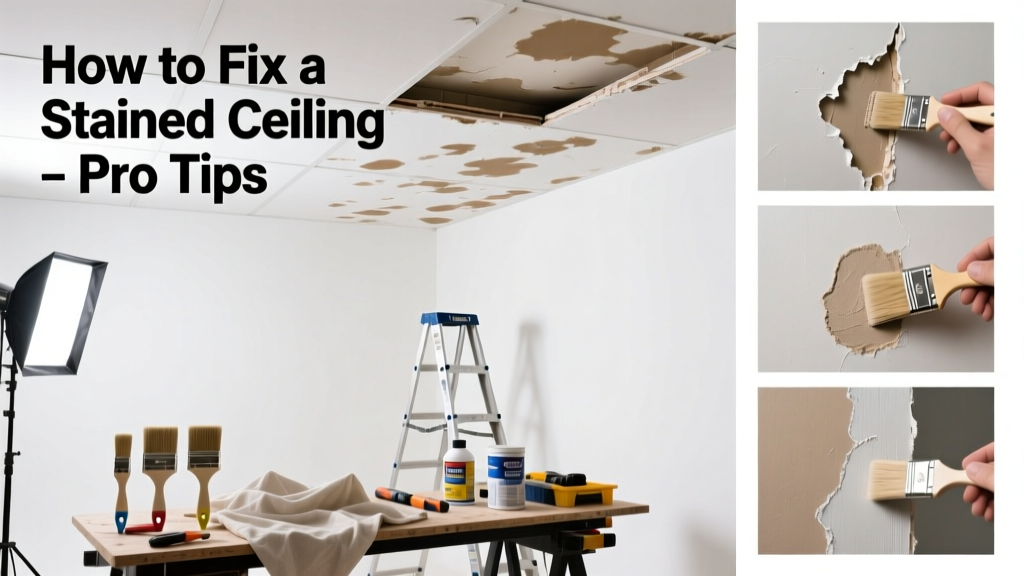
That brown or yellow splotch on your ceiling isn’t just ugly—it’s a red flag. Water stains mean moisture has breached your home’s envelope, and ignoring it invites mold growth, drywall decay, and even electrical hazards. Start here to assess, repair, and prevent recurrence—safely and effectively.
Quick Diagnosis
Before grabbing a brush or ladder, identify the source. Stains rarely appear where the leak originates—they travel along framing, insulation, or pipes before surfacing. Common culprits include:
- Roof leaks (especially around chimneys, vents, or damaged shingles)
- Clogged or leaking HVAC condensate lines (common in attics above bedrooms)
- Plumbing leaks from upstairs bathrooms or kitchens (often behind walls or under flooring)
- Poor attic ventilation causing condensation buildup in winter
- Leaking recessed lighting fixtures (particularly older IC-rated cans without proper gaskets)
Tools & Materials Needed
| Item | Purpose | Estimated Cost |
|---|---|---|
| Moisture meter (pin-type) | Detects hidden moisture in drywall and framing; confirms active leaks | $45–$85 |
| Kilz Original or Zinsser Cover Stain primer | Blocks water stains and prevents bleed-through; oil-based for severe stains | $18–$24 |
| 120-grit sandpaper + pole sander | Smooths blistered or chalky drywall surface before priming | $8–$15 |
| Drop cloths & painter’s tape | Protects floors, fixtures, and trim from overspray and drips | $12–$22 |
| Extension ladder (20-ft rated) | Provides stable access to ceilings without overreaching | $95–$220 |
Step-by-Step Fix
Fixing the stain is only half the job—the real work is stopping the leak first. Once confirmed dry, follow these methods based on severity:
- Surface prep & prime: Lightly sand stained area until smooth. Wipe dust with damp rag. Apply one coat of oil-based stain-blocking primer using a roller with 3/8" nap. Let dry 24 hours.
- Texture match (if needed): Use a spray texture kit (e.g., Homax Easy Touch) to replicate popcorn, knockdown, or orange peel. Practice on cardboard first.
- Paint over: Use interior flat or eggshell paint matching your ceiling. Two thin coats beat one thick one—prevents flashing and ensures uniform coverage.
- Replace drywall (for severe damage): Cut out sagging, soft, or mold-flecked sections with a utility knife. Install new 1/2" drywall, tape seams, mud, sand, prime, and paint.
When to Call a Pro
Some stains signal deeper trouble that exceeds DIY scope or safety limits. Call a licensed contractor or specialist if you see any of these:
- Stain expands or darkens after 48 hours of dry weather—indicates ongoing leak
- Musty odor or visible black/green fuzzy growth near the stain (mold requires EPA-certified remediation)
- Stain appears directly below an electrical fixture or junction box (risk of short circuit or fire)
- Multiple stains across different rooms or floors—suggests systemic plumbing or roof failure
- Water dripping or pooling—not just discoloration (immediate structural concern)
"Over 60% of water-damaged drywall repairs fail within a year when the moisture source isn’t fully resolved." — National Association of Home Builders, Residential Construction Performance Guidelines, 2022
Prevention Tips
Stop future stains before they start—target root causes, not symptoms:
- Inspect roof flashings and shingles annually, especially after wind or hail events
- Clean HVAC condensate drain lines every spring with vinegar and a wet/dry vac
- Install smart water leak detectors (like the Moen Flo) under sinks and near water heaters
- Ensure attic ventilation meets minimum requirements: 1 sq ft net free vent area per 300 sq ft of attic floor
- Seal recessed can lights with airtight retrofit kits (learn how here) to block warm, moist air from entering cold attic spaces
Can I use bleach on this?
No—bleach doesn’t penetrate deep enough to kill mold roots in drywall, and it degrades paper facing on gypsum board. It also produces hazardous fumes when mixed with ammonia (common in cleaners). For surface mold, use a detergent-and-water scrub; for embedded growth, replace the drywall.
Will painting over it make the stain disappear?
Not reliably. Standard latex paint won’t block tannins or minerals from water damage. You’ll get bleed-through within days or weeks. Oil-based primers like Kilz Original or Zinsser Cover Stain are non-negotiable for lasting coverage.
How long does it take to dry after fixing the leak?
Depends on humidity and airflow—but never rush it. Use a dehumidifier and fans for at least 72 hours post-repair. Confirm dryness with a moisture meter reading below 15% before priming. The U.S. EPA estimates that 14% of household water usage is from leaks—so catching them early saves both repair costs and resources.
Is a brown stain always from water?
Almost always—but exceptions exist. Rarely, nicotine residue from decades of smoking can mimic water stains, especially near ceilings in older homes. If no moisture is detected and the home has no recent plumbing or roof history, test with a damp white cloth: water stains won’t transfer color; nicotine will leave a yellow-brown smear.
Do I need to remove all the drywall if there’s a small stain?
Only if the drywall feels soft, crumbles under light pressure, or shows signs of mold beyond surface discoloration. Solid, firm drywall with only cosmetic staining can be sanded, primed, and painted. But if the paper layer is separating or bubbling, cut it out—full patching guidelines apply.
Can attic insulation cause ceiling stains?
Yes—if insulation is compressed, missing, or wet, it creates cold spots where condensation forms on the underside of the roof deck. That moisture then migrates down rafters and into drywall. Check for frost on roof sheathing in winter or damp, matted insulation—both signal inadequate R-value or vapor barrier issues.
A stained ceiling is rarely just a cosmetic issue—it’s your home’s way of sending an urgent message. Address the cause, not just the symptom, and you’ll avoid costly rework, health hazards, and insurance complications down the line. Take your time, verify dryness, and don’t skip the primer—even if it means waiting an extra day. Your ceiling—and your peace of mind—will thank you.